
UAE Warns Middle East Cannot Stay Trapped in ‘No War, No Peace’
UAE diplomat Anwar Gargash said the region's future could not be built around temporary arrangements that merely prevent the next escalation without addressing the underlying causes of instability.
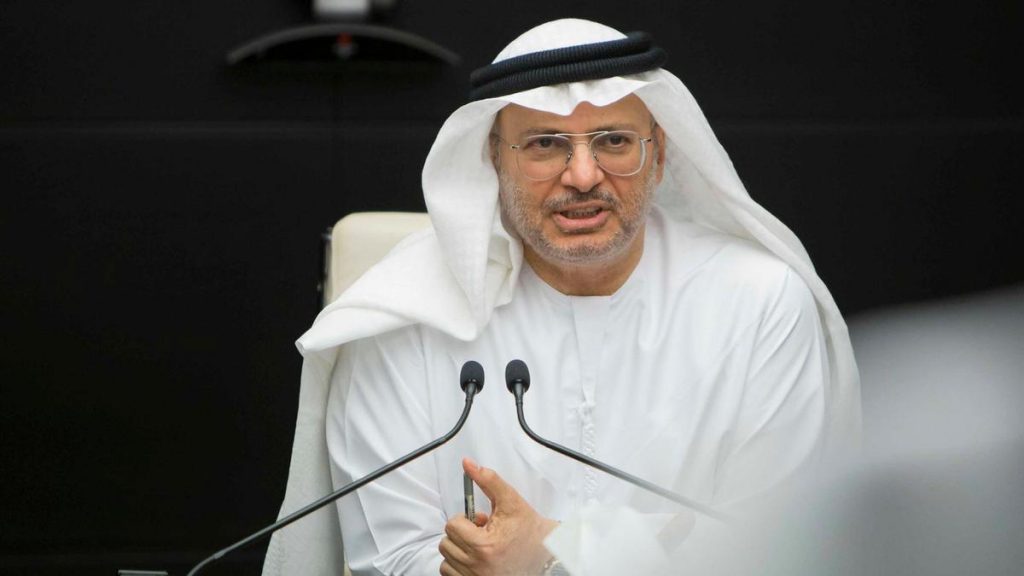
The Middle East cannot remain trapped indefinitely between open conflict and an uneasy ceasefire, a senior United Arab Emirates diplomat has warned, calling for a new regional order built around clear rules, international law and lasting stability.
Anwar Gargash, diplomatic adviser to UAE President Sheikh Mohamed bin Zayed Al Nahyan, made the remarks as tensions continue to unsettle the Gulf, with the Strait of Hormuz effectively closed to normal commercial traffic and efforts to secure a broader political settlement between Iran and its opponents facing major obstacles.
Gargash's warning was unusually direct.
He said the region's future could not be built around temporary arrangements that merely prevent the next escalation without addressing the underlying causes of instability. Instead, he argued that the ultimate objective should be “sustainable stability governed by clear and shared rules.”
That message comes at a particularly difficult moment for the Gulf.
The conflict involving Iran, the United States and Israel has already disrupted shipping and energy flows, with the Strait of Hormuz emerging as one of the biggest pressure points. The waterway is critical to global energy trade, and its disruption has forced Gulf producers and international shipping companies to search for alternatives while negotiations over reopening the route remain uncertain.
The UAE has itself suffered losses in the crisis. Abu Dhabi National Oil Company (ADNOC) said 15 of its vessels had been attacked by missiles and drones while transiting Hormuz since the conflict began, with one crew member killed and 20 injured, according to the UAE account.
Iran, meanwhile, has tied a full reopening of the strait to a sweeping set of demands, including an end to the conflict, the lifting of sanctions, the release of frozen Iranian assets and compensation for wartime damage. Tehran's position has effectively turned control of the waterway into a major bargaining instrument.
That leaves Gulf states facing a difficult calculation.
They need the waterway open for trade and energy exports, but any arrangement that gives Iran significant influence over shipping could create a new security problem even if it brings short-term relief.
Recent reporting has highlighted the dilemma. Gulf governments are exploring alternative pipelines, storage and shipping routes, but those options cannot fully replace Hormuz. Oil exports through the strait have fallen sharply, while attacks on alternative routes have demonstrated how difficult it is for the region to completely bypass the crisis.
Against that backdrop, Gargash's call for a rules-based settlement is about more than securing a ceasefire.
The UAE appears to be arguing that the region needs to move away from a cycle in which periods of military escalation are followed by temporary deals, only for tensions to return later. In that model, countries remain technically outside a full-scale war but continue operating under the constant threat of another one.
That uncertainty carries an economic price.
For Gulf economies that depend heavily on international trade, energy exports, tourism and foreign investment, prolonged instability can be almost as damaging as a conventional conflict. Companies may delay investment, shipping costs rise and businesses are forced to plan around risks that are difficult to predict.
The security landscape is also changing.
Saudi Arabia, Türkiye and Pakistan signed a joint defence agreement in Makkah on August 7, creating a new security arrangement that treats an attack on one member as an attack on all three. The agreement is another indication that regional powers are reassessing how they protect themselves as uncertainty grows around the wider Middle East security architecture.
But more alliances alone may not resolve the region's underlying problems.
The UAE's argument is that lasting stability will require commonly understood rules governing sovereignty, navigation and coexistence. That would require regional powers and their international partners to accept constraints on the use of force and establish mechanisms capable of managing disputes before they become military confrontations.
Whether that is achievable remains the difficult question.
Iran wants security guarantees and relief from sanctions while maintaining significant strategic capabilities. Its Gulf neighbours want assurances that their territory and infrastructure will not become targets. Washington wants freedom of navigation and limits on Iranian military power, while Israel remains focused heavily on its own security concerns.
Those positions remain far apart.
Yet Gargash's intervention reflects a growing recognition that the region cannot simply manage one crisis after another indefinitely.
The immediate priority may be reopening Hormuz and preventing another escalation, but the UAE diplomat is pointing to a much larger challenge: what comes after the next ceasefire?
For FollowGlobalTrends, that may be the most important question raised by the UAE's warning.
A region permanently suspended between war and peace is still a region living with insecurity. Until the major players can move from temporary crisis management toward a framework that makes stability more predictable, every ceasefire risks becoming little more than a pause before the next confrontation.
The UAE is now urging the Middle East to choose a different path—not simply no war, but a peace strong enough to last.
More on Middle East
Middle East
BRICS Calls for Maximum Restraint as Middle East Tensions Escalate
13 Sept 2026

Middle East
Middle East Tensions Push Crude to $105, Borrowing Costs Climb Worldwide
10 Sept 2026
Middle East
UAE President, Trump Discuss Middle East Crisis in Phone Call.
3 Sept 2026
Middle East
US, Iran Exchange Fresh Attacks as Middle East Tensions Spiral Again
2 Sept 2026
Middle East
Israel Orders British Consulate in East Jerusalem to Close Within 30 Days
9 Sept 2026
You may also like
Middle East
Houthis Reportedly Seize Yemen's Strategic Red Sea Port of Mokha
11 Sept 2026
Middle East
Saudi Aramco’s Jizan Oil Facilities Hit in Fresh Attacks
8 Sept 2026
Middle East
Iran Calls on World Leaders to Stop US Military Strikes After Fresh Attacks
5 Sept 2026
Middle East
Iran Says 18 Killed After U.S. Bombardment as Trump Warns of Fresh Attacks
3 Sept 2026
Middle East
More Than 1.27 Million UAE Students Return to School as New Academic Year Begins
31 Aug 2026
Middle East
Iran Warns Countries Joining US Sanctions They Will Be Treated as Enemies
23 Aug 2026