
More Than 1.27 Million UAE Students Return to School as New Academic Year Begins
More than 1.27 million students returned to classrooms across the UAE on Monday as the country opened a new academic year with fresh education reforms and renewed focus on future-ready skills.
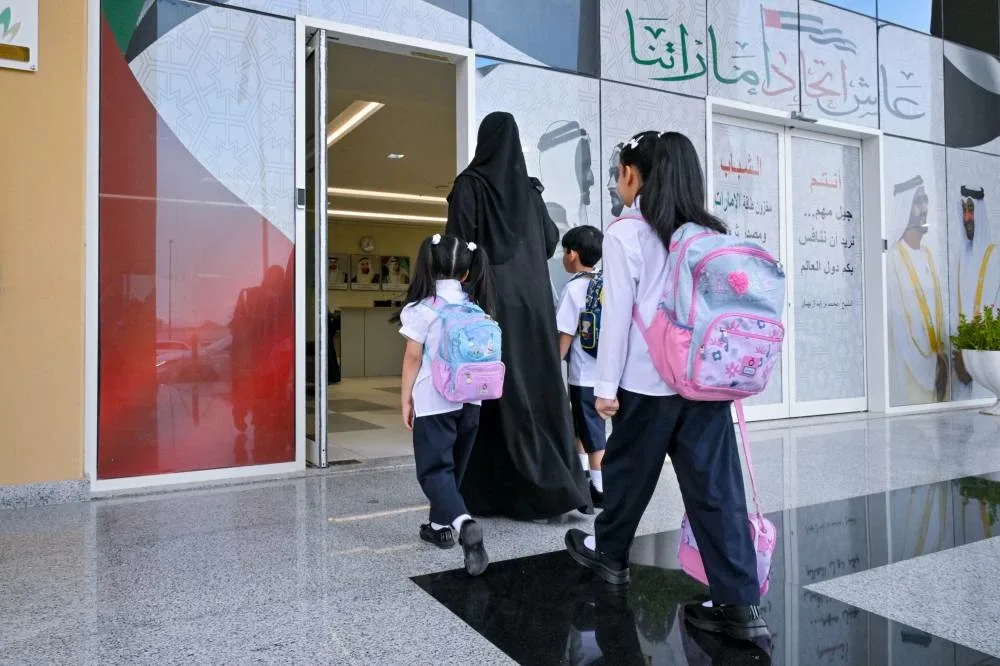
More than 1.27 million students returned to schools across the United Arab Emirates on Monday, August 31, marking the start of the 2026–2027 academic year and a fresh beginning for families, teachers and school communities across the country.
More than 1,180 public and private schools reopened their doors, with the Ministry of Education saying the education system was fully prepared for the new session. About 26,700 new students have joined public schools, while 11 new schools and educational complexes have been opened ahead of the academic year. Authorities have also deployed 5,810 school buses and distributed around 8 million textbooks.
The return has been accompanied by messages of optimism from the UAE leadership. President Sheikh Mohamed bin Zayed Al Nahyan welcomed students, teachers, administrators and parents back to the new academic year, urging students to approach their studies with ambition and determination. He described the country's children as its “true wealth” and called for continued cooperation between schools and families to develop both academic abilities and life skills.
Vice President and Prime Minister Sheikh Mohammed bin Rashid Al Maktoum, who is also the Ruler of Dubai, separately welcomed the more than 1.27 million students returning to classrooms. The messages from the UAE leadership have placed particular emphasis on learning, curiosity, national identity and preparing young people for the country's future.
This year's return also brings a number of changes to how students will learn and be assessed. The Ministry is expanding Project-Based Learning and Assessment, with more than 129,000 students across 366 schools expected to participate. A new Grade 7 integrated project will combine Arabic, English, mathematics and science, encouraging students to apply knowledge across subjects rather than treating each discipline entirely separately.
Assessment is also being adjusted. For Group A subjects in Cycle 3, school-based and central assessments will each account for 50 per cent of the final grade. Teachers will additionally conduct diagnostic assessments to identify learning gaps earlier and use the results to shape classroom instruction and targeted support.
For younger pupils, the school experience is changing in another noticeable way. Students from kindergarten through Grade 2 will no longer receive traditional homework, under a policy the Ministry says is intended to improve the quality of learning and create a better balance in children's daily routines. The wider reforms are part of a push towards skills-based education and the implementation of the UAE's National Education Charter.
The Ministry is also beginning a two-year programme to evaluate all public schools and private schools licensed by the federal ministry. The assessments will examine institutional and teaching performance against national standards, with the aim of identifying strengths and areas requiring improvement. An expanded Arabic Baseline Assessment will involve about 30,000 Grade 1 pupils across public and private schools.
The new academic year follows a difficult previous year in which schools had to adapt to periods of distance learning amid regional security disruptions. This year's reopening is therefore particularly significant for many families seeking a more predictable return to classroom learning. Schools have retained contingency plans developed during the previous disruptions should circumstances require them again.
The Ministry's official calendar sets July 2, 2027 as the final day of the academic year for students. The year includes a mid-term break in October, a winter break from December 14 to January 3 and a spring break in April. The ministry says the multi-year calendar is designed to give schools, families and students greater stability and allow earlier planning of academic and extracurricular programmes.
For parents, the first day brings the familiar mixture of excitement, new routines and first-day nerves. For the education system, however, the significance is considerably larger. The UAE is using the new academic year to test a model that places greater weight on practical skills, early identification of learning gaps, interdisciplinary projects and closer measurement of school performance.
The return of more than 1.27 million students is therefore more than the reopening of classrooms after summer. It marks another stage in the UAE's effort to reshape education around the skills, technologies and values it believes young people will need in the years ahead. Whether the reforms deliver better learning outcomes will take time to establish, but the scale of today's return makes clear that the country's schools remain central to its broader ambition to prepare a future workforce for a rapidly changing economy.
More on Middle East

Middle East
Saudi Aramco’s Jizan Oil Facilities Hit in Fresh Attacks
8 Sept 2026

Middle East
Emergency Alerts Sound Across Riyadh After Reported Explosions
20 Sept 2026
Middle East
Houthis Reportedly Seize Yemen's Strategic Red Sea Port of Mokha
11 Sept 2026
Middle East
US, Iran Exchange Fresh Attacks as Middle East Tensions Spiral Again
2 Sept 2026

Middle East
Hormuz Shipping Traffic Dwindles as Middle East Attacks Intensify
17 Sept 2026
You may also like
Middle East
Saudi Oil Pipeline Shut Down After Attack Triggers Fires
12 Sept 2026

Middle East
Hormuz Standoff Escalates as Iran and US Exchange Military, Economic Strikes
9 Sept 2026

Middle East
US and IRGC Trade Fire as Oil Tankers Come Under Attack in Hormuz
6 Sept 2026

Middle East
Iran Calls on World Leaders to Stop US Military Strikes After Fresh Attacks
5 Sept 2026
Middle East
Iran Says 18 Killed After U.S. Bombardment as Trump Warns of Fresh Attacks
3 Sept 2026
Middle East
Russia Secretly Helping Iran Develop Supersonic Missiles, Intelligence Reports Claim
2 Sept 2026