
Kenya Confirms First Ebola Case Linked to DR Congo as Patient Dies
Kenya has confirmed its first imported Ebola case after a citizen who lived in DR Congo died in Nairobi, triggering an urgent contact-tracing operation.
Kenya has confirmed its first imported case of Ebola after a Kenyan citizen who had been living in the Democratic Republic of Congo died in Nairobi, prompting health authorities to launch an urgent operation to trace people who may have been exposed to the virus.
Health Cabinet Secretary Aden Duale said Tuesday that the patient had lived in the DRC for seven years and became ill about a month ago while there. He received treatment at several health facilities before travelling by road from the DRC to Kampala, Uganda, and then flying to Nairobi on October 3 aboard Jambojet flight JM 8523.
The patient underwent routine screening at Jomo Kenyatta International Airport after arriving in Nairobi but was not identified as an Ebola case at that point. He was taken from the airport to Nairobi Hospital by a relative and a friend, where doctors isolated him after he developed symptoms including fever, intense fatigue, muscle pain, painful swallowing, sore throat and bleeding beneath the skin at injection sites. Laboratory testing subsequently confirmed Bundibugyo Ebola virus disease.
Despite receiving supportive treatment, the patient died late Monday night. Kenyan authorities are preparing a burial under Ebola infection-prevention protocols, while health officials work to establish everyone who may have had contact with him during his illness and journey.
The immediate concern is contact tracing. Duale said 28 people have already been identified as contacts, including family members and healthcare workers who attended to the patient. Authorities are also trying to locate 23 passengers and four crew members who travelled on the same Kampala-to-Nairobi flight. People considered at risk are being prepared for quarantine and monitoring, with contacts expected to remain under observation for 21 days.
The airline involved, Jambojet, said it was cooperating with the Ministry of Health and other authorities to identify and manage passengers and crew who may have been exposed. The airline has urged the public to rely on official information as the tracing exercise continues.
Kenyan officials say the country had already been preparing for the possibility that Ebola could cross its borders. The Ministry of Health has maintained heightened surveillance since the outbreak began in the region, screening hundreds of thousands of travellers and training nearly 5,000 healthcare workers in Ebola response, according to the latest government briefing.
The Kenyan case is directly connected to a much larger health emergency in the DRC. The current outbreak, caused by the relatively rare Bundibugyo species of Ebola virus, was declared in May and has spread across several provinces. WHO's latest detailed update before Kenya's case reported 7,890 confirmed cases and 3,799 deaths in the DRC as of September 23, with transmission continuing across 63 health zones in seven provinces.
The outbreak has already demonstrated how quickly the virus can cross borders through normal movement of people. Uganda recorded cases earlier in the year but was declared free of Ebola in August after containing its outbreak. WHO has classified the wider Ebola epidemic in the DRC and Uganda as a Public Health Emergency of International Concern, reflecting the risk posed by cross-border transmission and the difficulty of controlling the virus in areas affected by insecurity and limited healthcare access.
The particular strain involved also presents a challenge because there is currently no approved vaccine or specific treatment for Bundibugyo Ebola, although vaccine and treatment candidates are being studied in the DRC. Ebola spreads primarily through direct contact with the blood or other bodily fluids of infected people, including those who have died, making rapid identification and safe handling of cases central to stopping transmission.
For Kenya, the focus now is less on the single confirmed case than on what may follow. Authorities are racing to locate every potentially exposed traveller, family member and healthcare worker before any secondary transmission can take hold. The episode is also a reminder that in a region where people routinely cross borders for work, trade, healthcare and family reasons, containing an outbreak in one country depends heavily on surveillance and preparedness across its neighbours. Kenya's first imported case therefore marks not just a new chapter in its own public-health response, but another test of East Africa's ability to contain an Ebola outbreak that has already spread far beyond its original epicentre.
Health
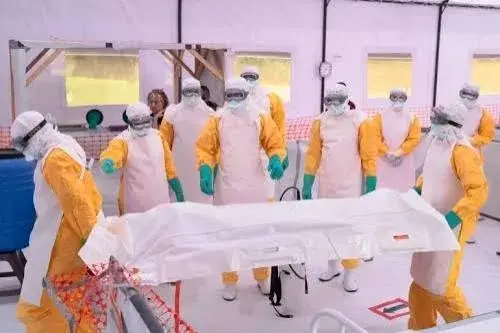
WHO Appeals for Global Support as Congo’s Worst Ebola Outbreak Overwhelms Health System
10 Sept 2026
Health
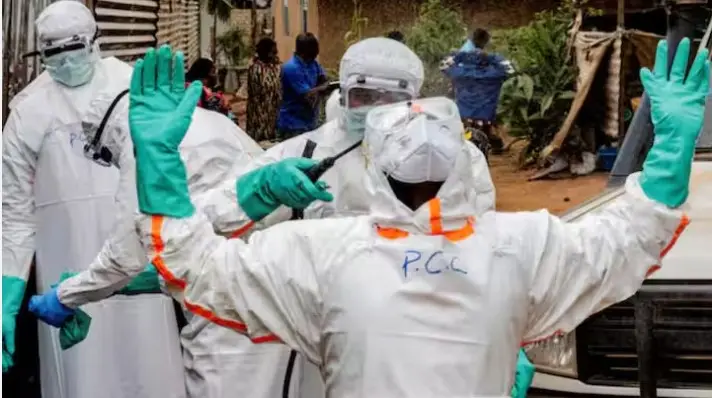
DR Congo Ebola Outbreak Spreads Exponentially, UN Warns as Death Toll Tops 2,500.
21 Aug 2026
Health
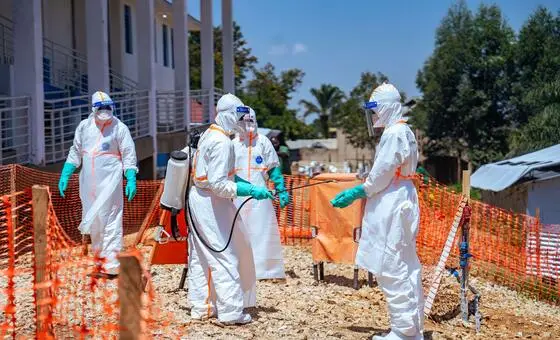
Ebola Breaks Deadliest-Outbreak Record in DR Congo as Death Toll Hits 2,325
17 Aug 2026

Health
Dubai Launches World’s First Authority Dedicated to Human Longevity
28 Sept 2026
Health
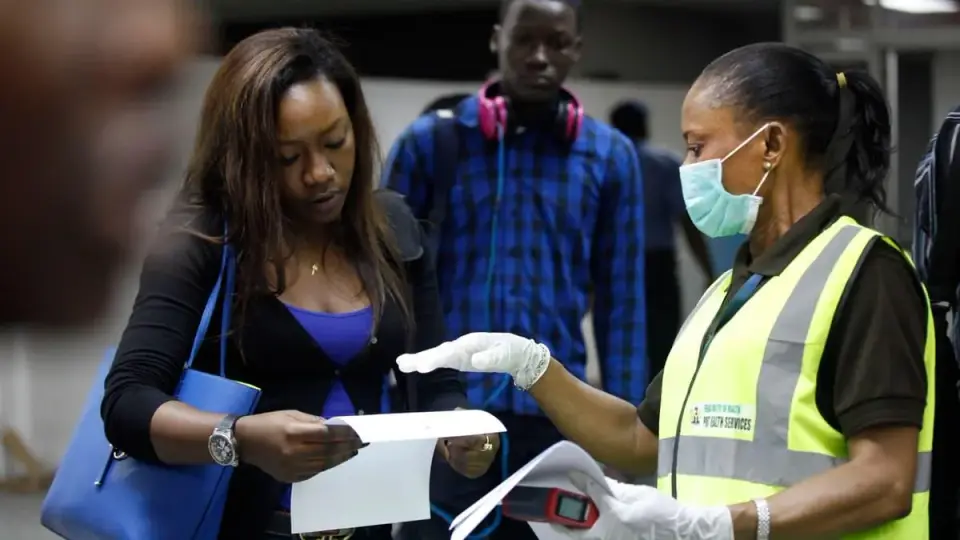
Nigeria Tightens Health Screening for Travellers From Ebola-Affected Countries
24 Sept 2026
You may also like
Health
Nigeria Records First Tele-Robotic Surgery as Doctors Remove Cancerous Kidney Tumour
21 Sept 2026

Health
Senegal Makes Africa’s First Locally Produced Sickle Cell Treatment
29 Aug 2026
Health
NAFDAC Confirms 48 Deaths, 182 Critical Cases in Ondo Methanol Poisoning Tragedy
19 Sept 2026
Health
UAE Becomes First Country to Approve Oral Treatment for Non-Segmental Vitiligo.”
20 Aug 2026

Health
Light Meets the Brain: Three Scientists Win 2026 Nobel Medicine Prize
5 Oct 2026

Health
Meet Chika Onochie, the Pharmacist Who Won CAD$100,000 for Male Fertility Research
2 Oct 2026