Senegal Makes Africa’s First Locally Produced Sickle Cell Treatment
A Senegalese pharmaceutical company is producing Africa’s first locally manufactured generic hydroxyurea treatment for sickle cell disease, offering a potential new route to cheaper and more reliable access.
A Senegalese pharmaceutical company has begun producing a locally manufactured treatment for sickle cell disease in what is being described as a major step towards reducing Africa’s dependence on imported medicines for one of the continent’s most serious inherited blood disorders.
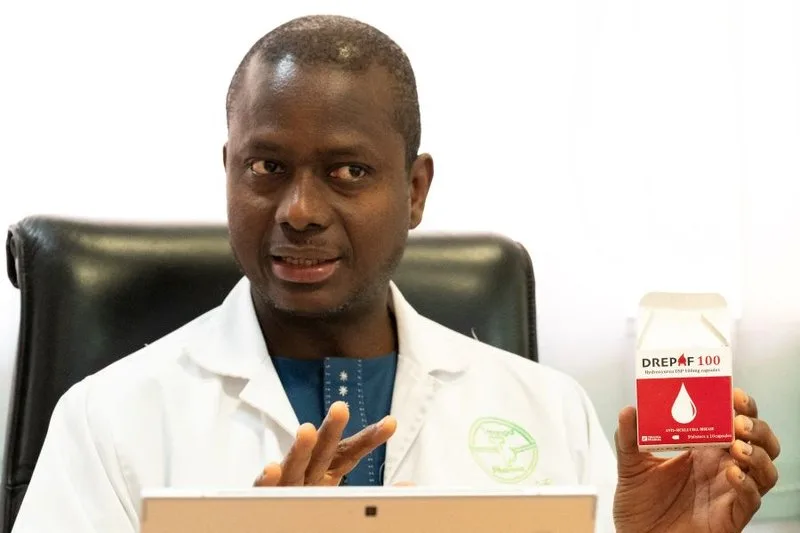
Teranga Pharma, based in Dakar, is manufacturing Drepaf, a generic form of hydroxyurea, the established treatment recommended for managing sickle cell disease. The company launched the medicine in Senegal in 2025 and is now seeking to expand production and distribution to other African countries.
The development matters because Africa carries the overwhelming share of the global sickle cell burden. Around 80 per cent of cases occur on the continent, yet patients in many African countries have traditionally depended on medicines imported from Europe and the Americas. That dependence can leave families exposed to high prices and supply disruptions.
Hydroxyurea is not a newly discovered drug. The World Health Organization recommends it as an important treatment because it can reduce painful crises, hospital admissions and the need for blood transfusions, while also lowering the risk of premature death. What is new is the local production of a generic version specifically aimed at improving access for African patients.
Teranga Pharma chief executive Mouhamadou Sow, a pharmacist, said the company developed Drepaf after recognising how difficult it could be for African patients to obtain the active ingredient. Before the local production effort, he said, doctors were often left treating the complications of sickle cell disease when patients could not obtain or afford the medication needed for longer-term management.
The company says Drepaf is available in 500mg capsules for adults and 100mg capsules for children. Its paediatric formulation is designed for use from around nine months of age, an important consideration because treating children early can help reduce the frequency and severity of complications. Senegal's national news agency reported in March that the paediatric formulation had been developed specifically with the needs of younger patients in mind.
Cost is another part of the equation. According to reporting based on Teranga Pharma's figures, the two Drepaf formulations are sold to pharmacies at wholesale prices of about 3,000 CFA francs and 1,500 CFA francs, with imported alternatives such as Hydrea and Siklos costing as much as three times more. The company says the local model is intended to make treatment more affordable while reducing dependence on overseas supply chains.
There is evidence that supply reliability remains a significant challenge. A 2023 study published in Blood, the journal of the American Society of Hematology, found that 78 per cent of healthcare professionals surveyed across 13 French-speaking sub-Saharan African countries reported frequent disruptions in hydroxyurea supplies. Local manufacturing could therefore address not only price but also the vulnerability created by relying almost entirely on imported medicines.
Patients and sickle cell advocates have welcomed the development. Magueye Ndiaye, president of the Senegalese Association for the Fight Against Sickle Cell Disease, described Drepaf as an important advance, particularly for children. One Senegalese mother interviewed by AFP also reported that her teenage son experienced fewer painful episodes after switching to the locally produced medicine, although individual experiences should not be treated as clinical evidence of the drug's overall effectiveness.
Teranga Pharma's ambitions extend well beyond Senegal. The company is working with an Indian technical partner to increase production and says it is already working with Burkina Faso, Guinea and Côte d'Ivoire, while receiving requests from the Democratic Republic of Congo, Gabon and Cameroon. It has set a goal of supplying the wider sub-Saharan African market by 2030.
The initiative is backed by about $7.1 million in funding, giving the company a platform from which to expand manufacturing capacity. Its partnership with Drep.Afrique has also helped position Drepaf as part of a wider effort to make hydroxyurea accessible at a price that is more realistic for African families. Senegal's medicines regulator granted marketing authorisation for Drepaf in 2025.
Still, local production is not by itself a solution to the wider sickle cell crisis. Patients require diagnosis, regular monitoring, access to trained healthcare professionals and consistent treatment. Early screening and diagnosis are also crucial, particularly for children, while public awareness remains a major part of reducing the disease's impact.
For families such as that of 18-year-old Mamadou Tahirou, whose illness has repeatedly disrupted his education and required hospital care, the significance is much more immediate. A medicine produced closer to home, at a lower cost and in a formulation suited to local patients could make the difference between treatment being available and treatment being out of reach.
The broader significance is that Drepaf represents more than another pharmaceutical product on African shelves. It is an example of what greater pharmaceutical sovereignty could look like on a continent that bears a huge share of the world's disease burden while importing many of the medicines it needs. If Senegal's model can be scaled safely and affordably across other African markets, the impact could extend well beyond sickle cell disease, strengthening local manufacturing, reducing supply-chain vulnerability and putting African patients closer to the centre of decisions about the medicines they depend on.
Health
Nigeria Records First Tele-Robotic Surgery as Doctors Remove Cancerous Kidney Tumour
21 Sept 2026
Health
WHO Warns of Rising Non-Communicable Disease Deaths in Africa, Seeks Safer Healthcare
17 Sept 2026
Health
UAE Becomes First Country to Approve Oral Treatment for Non-Segmental Vitiligo.”
20 Aug 2026
Health
Kenya Confirms First Ebola Case Linked to DR Congo as Patient Dies
6 Oct 2026

Health
Dubai Launches World’s First Authority Dedicated to Human Longevity
28 Sept 2026
You may also like
Health
NAFDAC Confirms 48 Deaths, 182 Critical Cases in Ondo Methanol Poisoning Tragedy
19 Sept 2026
Health
Nigeria Tightens Health Screening for Travellers From Ebola-Affected Countries
24 Sept 2026
Health
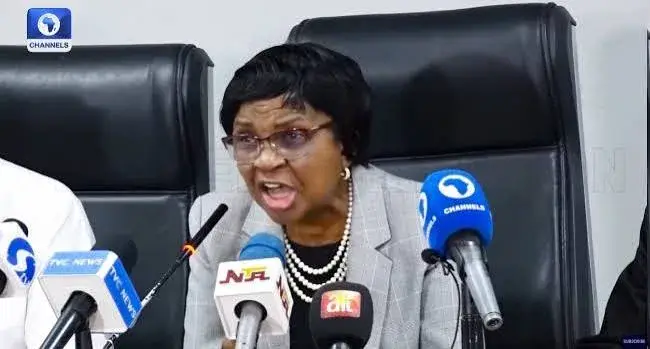
NAFDAC Blames Local Chinese Syndicates for Surge in Fake Goods Across Nigeria
9 Sept 2026
Health
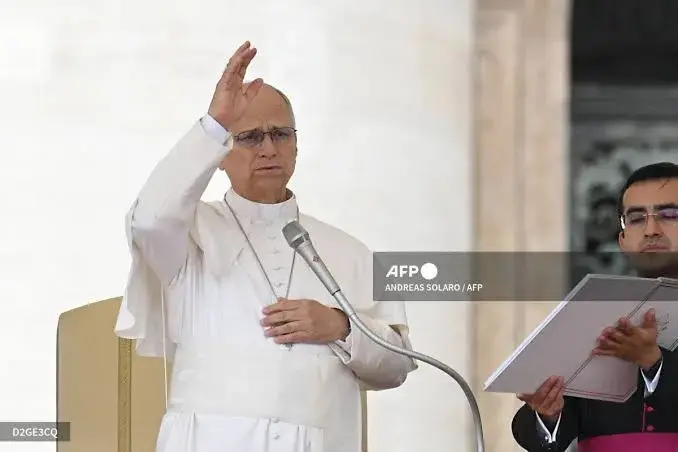
Pope Leo XIV to Undergo Surgery to Remove Early-Stage Lung Nodule
11 Oct 2026

Health
Light Meets the Brain: Three Scientists Win 2026 Nobel Medicine Prize
5 Oct 2026

Health
Meet Chika Onochie, the Pharmacist Who Won CAD$100,000 for Male Fertility Research
2 Oct 2026