
US Sanctions Cuban State Bank Over Links to Iranian Lender
The United States has sanctioned Cuba’s state-owned Banco Internacional de Comercio, accusing it of providing financial services to an Iranian bank already under US sanctions.
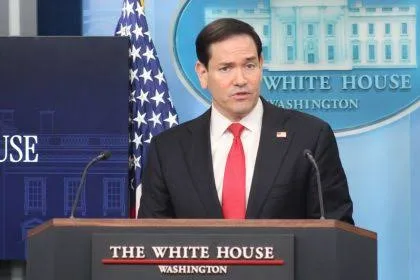
The United States has imposed sanctions on Cuba’s state-owned Banco Internacional de Comercio S.A. (BICSA), accusing the Havana-based bank of providing financial services to Iran’s sanctioned Karafarin Bank since at least 2022. The action, announced on Thursday, October 15, forms part of the Trump administration’s broader campaign to restrict Iran’s access to international financial networks.
US Secretary of State Marco Rubio announced the designation, accusing the Cuban government of allowing the country to serve as a channel for activities by US adversaries. Washington said BICSA was designated under Executive Order 14404, which provides authority for sanctions relating to Cuba’s financial services sector. The US Treasury Department confirmed the action in a wider announcement targeting institutions and individuals it says help Iran evade sanctions.
Karafarin Bank was sanctioned by the United States in 2020 under Executive Order 13902, which targets parts of Iran’s economy, including its financial and petroleum sectors. The Treasury Department says Iran relies on networks of foreign banks, exchange houses and intermediaries to move money internationally despite existing restrictions. It argues that these channels can help Tehran obtain foreign currency, conduct transactions and sustain activities that Washington is seeking to constrain.
Under US sanctions rules, assets belonging to designated entities that fall within US jurisdiction must generally be blocked and reported to the Treasury Department’s Office of Foreign Assets Control. US persons are also generally prohibited from conducting transactions involving blocked entities unless an applicable authorization or exemption applies. The government has warned that some dealings by foreign financial institutions with sanctioned parties can also expose them to further sanctions risks.
The designation of BICSA was announced alongside a wider round of measures targeting what the Treasury Department describes as Iran’s international financial networks. Those actions included sanctions against Iraq’s International Development Bank for Investment and Finance, which Washington accused of facilitating Iranian access to US dollars, as well as Iranian-linked offshore banks, currency exchanges and individuals allegedly involved in moving funds. These are US government allegations underpinning the sanctions, rather than independent judicial findings presented in the announcement.
The move adds a financial dimension to the increasingly confrontational relationship between Washington and Havana, while extending US pressure on Tehran beyond Iranian institutions themselves. By targeting a bank in a country that maintains close political ties with Iran, the administration is signalling that financial institutions operating outside Iran may also face consequences if Washington believes they are helping sanctioned entities maintain access to international banking. The practical effect will depend on the bank’s exposure to US-linked transactions and on whether other financial institutions choose to reduce or end their dealings with it.
More on Global
Global
Trump Sanctions ICC Over Prosecution of Americans, Vows to Cripple Court
10 Oct 2026

Global
Trump Announces Immediate Energy Ceasefire Between Russia and Ukraine After Russian Diesel Deal
11 Oct 2026

Global
German Export Recovery Loses Steam as U.S. Trade Falls Sharply
8 Oct 2026

Global
Trump Ally Kimberly Guilfoyle Quits Greece Ambassador Role After $100,000 Payment Allegation
13 Oct 2026
Global
Israeli Strike Kills Two Palestinians in Southern Gaza as Ceasefire Strains Deepen
12 Oct 2026
Partner with Follow Global Trends
Display banners, sponsored stories and founder spotlights.
You may also like

Global
China Asks Nigerian Media to Align Taiwan Coverage With One-China Position
10 Oct 2026
Global
US Suspends Microsoft, Infosys, Wipro and Major IT Firms From Green Card Programme
8 Oct 2026

Global
Nearly 1 Million Americans Begin Receiving $500 Obamacare Refund Checks
1 Oct 2026

Global
Andy Burnham Unveils 10-Year Plan to Reshape Britain’s Public Services
29 Sept 2026
Global
US Treasury Seeks Global Support to Rename AI ‘Super Intelligence’
15 Oct 2026
Global
Starlink Restrictions Disrupt Ukraine’s Military Operations, Zelensky Adviser Says
15 Oct 2026