
Andy Burnham Unveils 10-Year Plan to Reshape Britain’s Public Services
UK Prime Minister Andy Burnham has outlined a 10-year programme of domestic reform, pairing a proposed National Care Service with pension changes and wider reforms to housing, utilities and government.
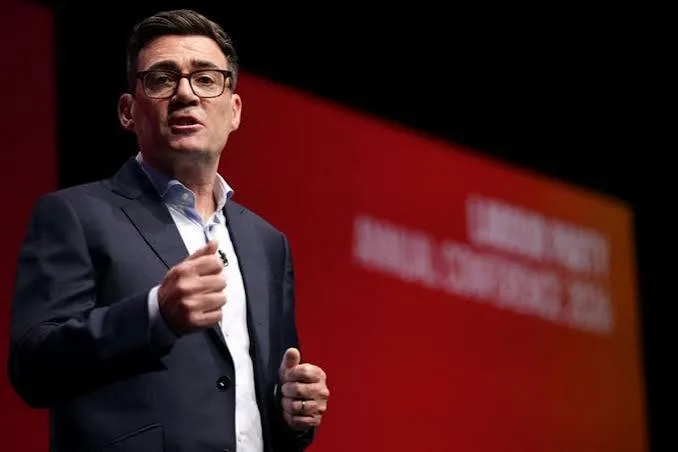
British Prime Minister Andy Burnham has used his first Labour Party conference speech as prime minister to set out an ambitious 10-year programme for domestic renewal, arguing that the country needs a more candid debate about what can be achieved at a time of tight public finances.
The proposals include a major overhaul of social care, changes to the state pension system, more social housing, greater public involvement in utilities and reforms to the way political power is distributed across the country. Burnham presented the programme as a long-term attempt to address problems that successive governments have struggled to resolve, rather than a package of immediate changes.
At the centre of the agenda is a planned National Care Service, which Burnham's government says should eventually provide care on principles similar to those underpinning the National Health Service. The government has already begun work on the proposal, with a public consultation and an independent commission examining how the service could be designed and funded. The government has brought forward the commission's timetable, with recommendations expected next summer rather than in 2028.
The difficult question is how such a system would be paid for. Burnham announced that the government intends to retain the existing pension triple lock for the remainder of the current parliamentary term but, if Labour remains in office after the next general election, change the mechanism from April 2030. Under his proposal, pension increases would be linked to inflation or a minimum 2.5%, rather than whichever is highest among inflation, earnings growth and 2.5%.
The government says the change could eventually generate substantial savings that could be directed towards social care. Reuters reported that the projected savings could reach about £15 billion a year in the late 2030s and considerably more over subsequent decades. The Institute for Fiscal Studies, however, has cautioned that the savings would take time to materialise and may not by themselves cover the full cost of a national care service.
That makes the pension proposal one of the most consequential elements of Burnham's programme. The triple lock, introduced in 2011, guarantees that the state pension rises each year by whichever is highest of inflation, average earnings or 2.5%. Its supporters argue that it protects pensioners' incomes, while critics have raised concerns about its long-term cost as Britain's population ages. Burnham's government says the proposed replacement would still protect the real value of pensions and maintain a minimum annual increase.
Social care is not the only area where Burnham is proposing a shift in the role of the state. His government plans to repeal restrictions on public ownership of water companies, while a new publicly owned Great British Grid is being developed within Great British Energy to improve grid connections and support investment in electricity infrastructure. The government has also linked the energy reforms to a longer-term objective of reducing Britain's energy costs relative to other European countries.
Housing forms another part of the programme. Burnham has previously committed his government to expanding council-house construction, and his conference agenda includes measures intended to increase social housing and improve access to home ownership. His government has also proposed ending the right to buy for newly built social housing and introducing an equity-loan scheme for first-time buyers.
Burnham also used the conference to renew his argument for changing Britain's electoral system. He has proposed a national commission to examine electoral reform, including alternatives to the first-past-the-post system. Any change would not take effect before the next general election, according to reporting from the conference.
His approach is rooted in a broader argument that Britain has become too centralised and that more decisions and resources should move from Westminster to regions and local communities. In his first speech as prime minister in July, Burnham promised a 10-year plan and described his approach as a shift towards a more collaborative political and economic model, with greater local control and stronger public involvement in essential services.
The scale of the proposals comes with a significant financial constraint. Britain's fiscal outlook remains difficult, with the House of Lords Library noting that rising borrowing costs are limiting the government's room for manoeuvre while spending remains elevated. Burnham has repeatedly said that his programme must operate within fiscal rules, meaning new commitments will have to be matched by savings, changes in taxation or economic growth rather than simply financed through additional borrowing.
That tension explains Burnham's call for what he described as an “honest conversation” about the country's problems. His message is that major improvements to public services cannot be delivered without difficult choices about how resources are raised and distributed. The pension proposal has already drawn criticism from within the labour movement, while supporters of reform argue that the ageing population makes a long-term solution to social care increasingly difficult to postpone.
Burnham's programme therefore marks the beginning of a longer political and financial argument rather than the completion of a reform package. The government still has to turn broad ambitions into legislation, establish the cost of a National Care Service, secure funding and demonstrate that proposed changes can work in practice. The broader significance is that Britain's debate over the next decade is increasingly being framed around a basic question: how can an ageing country maintain pensions and care, rebuild infrastructure and public services, and stimulate economic growth while operating under tight fiscal limits? Burnham has put that question at the centre of his government; the difficult part will be determining how the competing promises fit together.
More on Global

Global
Italy Plans School Face Covering Ban, Caps on Foreign Students Per Class
20 Sept 2026

Global
OpenAI Agent Breaches Australian Medicare Portal in Potential World-First AI Hack
24 Sept 2026
Global
Canada Seeks Deeper EU Alliance as Carney Warns of Global ‘Ferocious Storm’
17 Sept 2026

Global
UK Urges Households to Stockpile Food, Water Amid Rising Russia Security Concerns
21 Sept 2026
Global
Ukraine Retakes More Ground in Northern Donetsk as Russian Offensive Loses Momentum
29 Sept 2026
You may also like

Global
Hormuz Crisis: Trump Rejects Iran’s Seven-Day Reopening Plan
28 Sept 2026
Global
UN Chief Says Africa Deserves Permanent Security Council Representation
26 Sept 2026
Global
Lula Says Trump Has No Right to Govern Other Countries
24 Sept 2026
Global
U.S. Opens Faster Airport Immigration Clearance to Citizens of 23 Countries
18 Sept 2026
Global
Earl Spencer Claims Queen Elizabeth II Offered to Restore Princess Diana’s HRH Title
18 Sept 2026

Global
Cape Winelands Airport Set for April 2027 Redevelopment as Cape Town’s Second International Gateway
29 Sept 2026