
Cape Winelands Airport Set for April 2027 Redevelopment as Cape Town’s Second International Gateway
Cape Winelands Airport is targeting April 2027 to begin its major redevelopment, with passenger flights now planned for late 2029 as Cape Town prepares for a second commercial aviation hub.
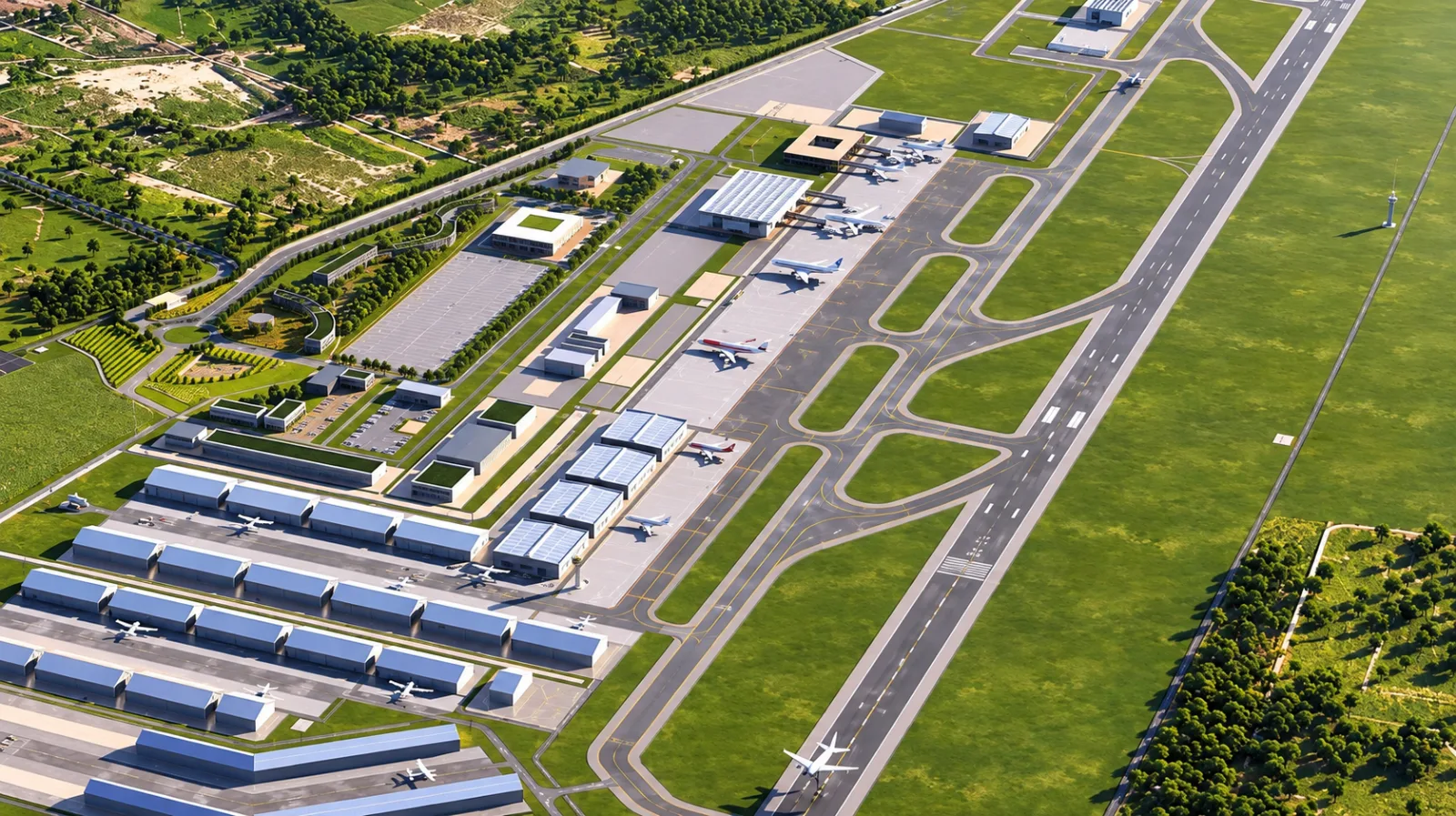
A historic airfield north-east of Cape Town is moving closer to a major transformation that could give the city a second international commercial airport, with developers now targeting April 2027 for the start of redevelopment and late 2029 for the first passenger flights.
Cape Winelands Airport, formerly known as Fisantekraal Airfield, is being developed by RSA Aero as a privately owned aviation hub intended to complement rather than replace Cape Town International Airport. The project will transform the existing general aviation facility into an airport capable of handling scheduled domestic and international services, cargo and other commercial operations.
The latest timeline was disclosed by RSA Aero managing director Nicholas Ferguson in a September interview with CNN. He said construction is targeted to begin in April 2027 and could take about two and a half years, putting the expected opening to the public and passenger aircraft in late 2029. Ferguson also said the airport already has agreements with five major airlines, although the carriers have not been publicly identified.
That timetable represents another adjustment to a project whose completion date has shifted as planning, regulatory and financing processes have progressed. Earlier project documents had pointed to an earlier opening, while more recent industry reporting had placed commissioning in late 2028. The latest 2029 target should therefore be viewed as the developer’s current ambition rather than a guaranteed opening date.
The redevelopment is planned on the site of the former Fisantekraal airfield, which dates back to 1943 and was originally established as a South African Air Force base. Today, Cape Winelands Airport operates primarily as a general aviation facility, supporting flight training, private aircraft and other light-aircraft operations. It is located about 13 kilometres north-east of Durbanville and roughly 25 kilometres from Cape Town International Airport.
Under the redevelopment plans, the airport will receive a new 3.5-kilometre runway and associated airside infrastructure, together with a passenger terminal, cargo facilities and wider logistics and commercial development. Transport planning documents indicate an initial passenger capacity of about 1.7 million annually when operations begin, rising to approximately 2.5 million by 2032 and a longer-term target of 5.2 million passengers a year by 2050.
The airport's developers say the project is intended to address several constraints facing Cape Town's aviation network. A second airport would provide additional airline capacity during busy periods and create a nearby alternative if Cape Town International experiences runway closures, equipment failures, poor visibility or other operational disruptions.
There is also a less visible aviation benefit. Cape Winelands Airport could become a much closer destination alternate for airlines flying into Cape Town. The developer says long-haul flights currently have to factor in distant alternatives, potentially requiring significant additional reserve fuel. A closer alternate could reduce the amount of fuel aircraft need to carry, freeing payload capacity and potentially reducing fuel consumption and associated emissions. These are projected operational benefits rather than savings that airlines are already realizing.
The project has also attracted major private-sector partners. WBHO was appointed as the technical development and construction partner, while Growthpoint Properties has taken an equity position and is involved in the development and management of the wider logistics, commercial and hospitality precinct. Boogertman + Partners has been appointed lead architect, working with Berlin-based airport development specialist amd.sigma on the airport's design and integration.
The project is expected to extend well beyond an airport terminal. Plans envisage logistics, warehousing, commercial property, hospitality and other aviation-related activities around the site, creating a broader development corridor in the northern part of the Cape Town metropolitan area. Previous project estimates have placed the first phase at about R8 billion, with the wider precinct potentially requiring substantially more investment over time.
Regulatory requirements remain an important part of the timetable. Cape Winelands Airport received environmental authorization in October 2025, following extensive environmental assessment and public participation. The project has also been pursuing the approvals needed for international operations, including an international licence application. Until the necessary regulatory and licensing processes are completed, scheduled international passenger services cannot begin.
For Cape Town, the project comes as aviation demand continues to grow and Cape Town International itself is preparing for major infrastructure expansion. Airports Company South Africa has announced a programme worth about R10.14 billion for Cape Town International, including a new realigned runway and terminal upgrades, with parts of that programme scheduled to begin in April 2027.
The two developments therefore point to a broader change in the Western Cape's aviation landscape. Cape Town International will remain the city's principal airport, while Cape Winelands is being positioned as a complementary second gateway with a particular interest in additional capacity, regional African connectivity, cargo and alternative-airport capability. If the April 2027 construction target holds and the remaining approvals are secured, the former military airfield could move from being a training and general aviation base to becoming another entry point to one of Africa's major tourism and business destinations. That would not simply add another runway to the region; it could reshape how Cape Town handles future passenger growth, cargo demand and connections across the African continent.
More on Global

Global
White House Launches “Trump TV” After Major US Networks Lose Access
23 Sept 2026
Global
India Leads Dubai Property Demand in 2026 as US Climbs to Second
23 Sept 2026

Global
Trump–Media Clash Escalates as US Networks Suspend Coverage
21 Sept 2026

Global
North Korea Launches Two Ballistic Missiles Days After Condemning US Drills
20 Sept 2026
Global
U.S. Opens Faster Airport Immigration Clearance to Citizens of 23 Countries
18 Sept 2026
You may also like
Global
Earl Spencer Claims Queen Elizabeth II Offered to Restore Princess Diana’s HRH Title
18 Sept 2026

Global
Andy Burnham Unveils 10-Year Plan to Reshape Britain’s Public Services
29 Sept 2026
Global
Ukraine Retakes More Ground in Northern Donetsk as Russian Offensive Loses Momentum
29 Sept 2026

Global
Hormuz Crisis: Trump Rejects Iran’s Seven-Day Reopening Plan
28 Sept 2026
Global
Fury and Joshua to Pocket Record Paydays for December 11 Cardiff Showdown
26 Sept 2026
Global
UN Chief Says Africa Deserves Permanent Security Council Representation
26 Sept 2026