
North Korea Launches Two Ballistic Missiles Days After Condemning US Drills
Pyongyang carried out its second missile test in about a week, accusing Washington of escalating tensions on the Korean Peninsula.
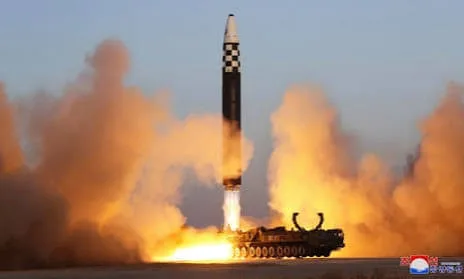
North Korea launched two ballistic missiles off its eastern coast on Sunday, marking its second round of missile tests in roughly a week and further raising tensions on the Korean Peninsula amid a renewed confrontation with the United States over joint military exercises.
The missiles were fired toward the East Sea (Sea of Japan) and were detected by South Korea’s military, which said it was closely monitoring the launches alongside U.S. and Japanese defence authorities. While officials continued analyzing the missiles’ range and flight characteristics, the launches were viewed as another demonstration of Pyongyang’s advancing missile capabilities.
The tests came just days after North Korea accused the United States of heightening regional instability through a series of large-scale military drills involving South Korea. Pyongyang has repeatedly condemned the exercises as rehearsals for invasion, while Washington and Seoul maintain that the drills are defensive and intended to strengthen regional deterrence.
The latest launches follow another set of missile tests conducted earlier in the week, suggesting North Korea is maintaining a pattern of frequent weapons demonstrations as diplomatic relations with Washington remain stalled. Analysts say the timing indicates Pyongyang is seeking to send a political and military message in response to allied security cooperation in the region.
South Korea’s Joint Chiefs of Staff said its military had enhanced surveillance and maintained a full readiness posture, while the United States reaffirmed its commitment to defending its allies under existing security agreements. Japan also condemned the launches and continued monitoring the trajectory of the missiles.
The Korean Peninsula has experienced repeated cycles of military exercises, missile launches and diplomatic breakdowns in recent years. Despite periodic calls for dialogue, negotiations over North Korea’s nuclear and ballistic missile programmes have remained largely frozen, with both sides accusing the other of escalating tensions.
Security experts warn that continued missile testing increases the risk of miscalculation, particularly as military activity intensifies across Northeast Asia. The absence of sustained diplomatic engagement has made confidence-building measures increasingly difficult, leaving deterrence and military preparedness at the centre of regional strategy.
Sunday’s launches underscore the fragile security environment in Northeast Asia, where missile tests and military drills continue to reinforce a cycle of confrontation. As regional powers respond with heightened vigilance, the challenge remains finding a path back to dialogue before strategic rivalry further destabilizes the Korean Peninsula.
More on Global

Global
Trump Approves $2.8 Billion Arms Sale to Israel Amid Rising Middle East Tensions
16 Sept 2026

Global
U.S. to Let Iranian Leaders Attend U.N. General Assembly Despite Wartime Tensions
17 Sept 2026

Global
Canada Seeks Deeper EU Alliance as Carney Warns of Global ‘Ferocious Storm’
17 Sept 2026
Global
U.S. Denies Visas to Palestinian Officials Ahead of U.N. General Assembly
16 Sept 2026

Global
Russia Strikes Near Poland Border as Ukraine Warns of New Campaign Against Gas Stations
13 Sept 2026
You may also like

Global
Russia Threatens Nuclear Response if Lithuania Hosts NATO Weapons
11 Sept 2026

Global
Italy Plans School Face Covering Ban, Caps on Foreign Students Per Class
20 Sept 2026
Global
Ukraine Drone Attack Kills Two in Moscow Region as Russia Says 450 Drones Shot Down
20 Sept 2026

Global
Trump Announces AI Force and White House AI Czar While Rejecting New AI Guardrails
20 Sept 2026

Global
CNN, MS NOW and Politico Reporters Denied White House Access After Trump’s Ban
19 Sept 2026

Global
Trump Says CNN, MS NOW and Politico Are Banned From the White House
19 Sept 2026