
Trump Says CNN, MS NOW and Politico Are Banned From the White House
The White House says the move is part of a broader overhaul of media access, drawing sharp criticism from press freedom advocates.
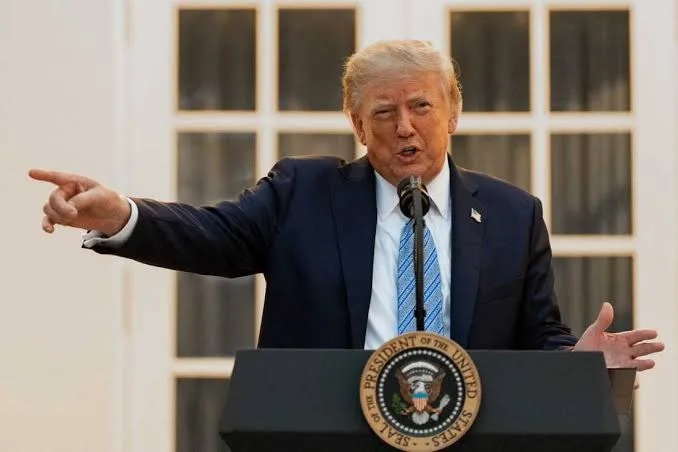
WASHINGTON, D.C. — U.S. President Donald J. Trump has said CNN, MS NOW and Politico are banned from the White House, making the announcement in a post on his social media platform, Truth Social, and escalating his administration’s latest confrontation with major American news organizations.
In the post published on Thursday, Trump wrote that the ban was “effective immediately”, saying he was “proud to announce” that the three outlets were being barred from the White House because of what he described as their constant reporting of “FAKE NEWS.” He further argued that media organizations “shouldn’t be able to constantly write or report FICTION and LIES” while covering the president and his administration, before warning that “other Fake News Media Outlets” could follow.
The president later reinforced the message during remarks to reporters in the Oval Office, where he said the decision stemmed from what he called years of cumulative negative coverage. Trump also suggested that additional media organizations, including The New York Times and The Washington Post, could face similar restrictions in the future, although no formal action against those outlets was announced.
The announcement immediately raised questions about how the proposed ban would be enforced. As of Friday, journalists from CNN, MS NOW and Politico were still working on White House grounds, and there was no public indication that their press credentials had been revoked or that they had been physically removed from the presidential complex.
CNN rejected the president’s claim, saying its White House team would continue its work and describing any attempt to block its journalists as an unconstitutional interference with press freedom. Politico similarly said it would continue to report fairly on the White House and vowed to defend its First Amendment rights, while press freedom advocates argued that restricting access based on editorial viewpoint could face significant legal challenges.
The dispute is the latest chapter in Trump’s long-running battle with the American press. Since returning to office, his administration has pursued lawsuits against several media companies, tightened control over White House press access and repeatedly accused mainstream news organizations of political bias. Previous attempts to restrict journalists have also been challenged successfully in U.S. courts, with judges emphasizing constitutional protections for a free press.
Legal experts note that while the White House has authority to manage security and logistics within the presidential complex, any exclusion of credentialed journalists based solely on the content of their reporting is likely to invite constitutional scrutiny under the First Amendment. Whether Trump’s Truth Social declaration becomes an enforceable policy may ultimately be decided in court rather than on social media.
Beyond the immediate political drama, the controversy highlights a broader question confronting democratic institutions: who controls access to those in power, and how far can governments go in restricting critical journalism while preserving constitutional guarantees of a free and independent press?
More on Global
Global
25 Years After 9/11, Trump Says Iran Fight Is Part of the Same Mission
12 Sept 2026
Global
U.S. House Votes to Rein In Trump’s War Powers Over Iran
16 Sept 2026
Global
Trump Signs Russia Sanctions Bill, But Keeps Door Open for Strategic Deals
19 Sept 2026
Global
U.S. Denies Visas to Palestinian Officials Ahead of U.N. General Assembly
16 Sept 2026
Global
Trump Approves $2.8 Billion Arms Sale to Israel Amid Rising Middle East Tensions
16 Sept 2026
You may also like
Global
Trump doubles down on United Ireland, calls reunification “natural”
14 Sept 2026
Global
Trump Rejects AI Slowdown Calls, Says U.S. Must Stay Ahead of China
13 Sept 2026
Global
Trump Begins Two-Day Ireland Visit with Taoiseach Meeting and Irish Open Stop
13 Sept 2026

Global
Trump Promises $5,000 to Every Adult if Republicans Win Congress
10 Sept 2026
Global
U.S. to Let Iranian Leaders Attend U.N. General Assembly Despite Wartime Tensions
17 Sept 2026
Global
Harry and Meghan Move Archie and Lilibet to New School Over Security Fears
15 Sept 2026