
U.S. to Let Iranian Leaders Attend U.N. General Assembly Despite Wartime Tensions
The Trump administration says Iranian officials will be granted visas to attend the United Nations, even as hostilities between the two countries continue.
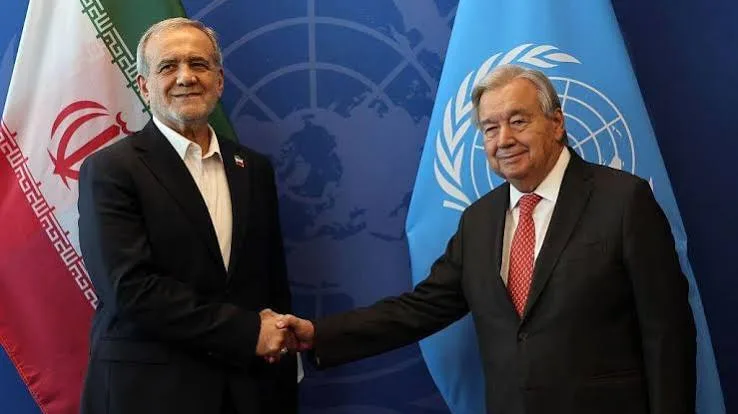
The United States has agreed to allow senior Iranian leaders to travel to New York for next week’s United Nations General Assembly, signalling that it will honour its obligations as the host nation despite the ongoing conflict between Washington and Tehran.
The decision by the Trump administration means Iran’s delegation, including its top political leadership, will be permitted to enter the U.S. to participate in the annual gathering of world leaders at the U.N. headquarters. The move comes at a time of heightened military tensions, making the diplomatic exception one of the most closely watched developments ahead of the General Assembly.
Although the United States and Iran remain adversaries and have been locked in a conflict since February, American officials have said the decision is consistent with Washington’s responsibilities under international agreements governing the United Nations. In a statement, the U.S. State Department said, “Consistent with our host country obligations, the core delegation from the Iranian regime will be able to attend UN General Assembly High-Level Week.”
The department added that Iran’s delegation this year would be smaller than in previous years and would face additional restrictions while in the United States, including prohibitions on the purchase of luxury and certain other goods. Officials stressed that the visa approvals should not be interpreted as a shift in U.S. policy toward Tehran or a relaxation of existing sanctions.
The move is rooted in the 1947 Headquarters Agreement that established the United Nations headquarters in New York. Under the treaty, the United States is generally prohibited from creating obstacles to the travel of accredited representatives attending official U.N. meetings, with visas expected to be issued without charge and as quickly as possible. The arrangement has historically required Washington to admit officials from countries with which it has deep political or military disagreements.
The General Assembly is expected to bring together presidents, prime ministers and foreign ministers from nearly every member state to discuss global security, economic development, climate challenges and ongoing conflicts. Iran’s participation ensures it will retain a platform to present its position before the international community despite its confrontation with the United States.
The visa decision also highlights the unique role of the United Nations as neutral diplomatic ground. Even during periods of armed conflict, rival governments have historically used the annual assembly to maintain diplomatic channels, hold bilateral meetings and communicate positions that might otherwise be impossible through direct negotiations.
Analysts note that allowing Iranian officials into New York reflects a longstanding distinction between diplomatic obligations and political disputes. While Washington continues to oppose Tehran on multiple security issues, its responsibilities as the host of the United Nations require it to separate international diplomacy from broader bilateral hostilities.
As the world’s attention turns to New York, the presence of both American and Iranian leaders at the same global forum underscores an enduring reality of international relations: even in times of war, diplomacy often survives through institutions designed to keep dialogue alive when direct engagement is at its most difficult.
More on Global
Global
U.S. Denies Visas to Palestinian Officials Ahead of U.N. General Assembly
16 Sept 2026
Global
Trump Approves $2.8 Billion Arms Sale to Israel Amid Rising Middle East Tensions
16 Sept 2026
Global
Trump doubles down on United Ireland, calls reunification “natural”
14 Sept 2026
Global
Trump Rejects AI Slowdown Calls, Says U.S. Must Stay Ahead of China
13 Sept 2026
Global
Trump Begins Two-Day Ireland Visit with Taoiseach Meeting and Irish Open Stop
13 Sept 2026
You may also like

Global
Russia Threatens Nuclear Response if Lithuania Hosts NATO Weapons
11 Sept 2026
Global
U.S. House Votes to Rein In Trump’s War Powers Over Iran
16 Sept 2026
Global
25 Years After 9/11, Trump Says Iran Fight Is Part of the Same Mission
12 Sept 2026

Global
BRICS Summit Opens in New Delhi as Leaders Push for a Stronger Global South
11 Sept 2026

Global
Trump Promises $5,000 to Every Adult if Republicans Win Congress
10 Sept 2026
Global
Canada Seeks Deeper EU Alliance as Carney Warns of Global ‘Ferocious Storm’
17 Sept 2026