Trump doubles down on United Ireland, calls reunification “natural”
Donald Trump has intensified his support for Irish reunification, describing a united Ireland as the “natural” long-term outcome while insisting any constitutional change must be decided democratically.
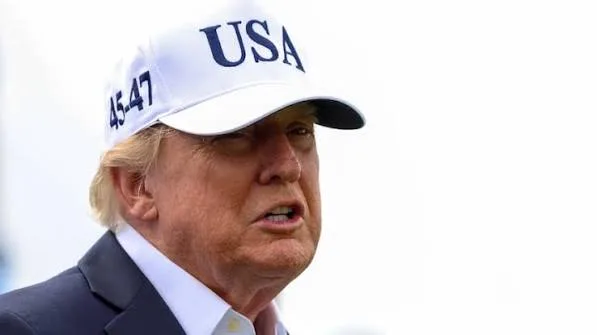
WASHINGTON, D.C. — U.S. President Donald Trump has reignited one of Europe’s most sensitive constitutional debates by declaring that the reunification of Ireland is the “natural” future of the island, while maintaining that any change to Northern Ireland’s status must come through democratic consent.
On Sunday, speaking to reporters at his Trump International Golf Links in Doonbeg during the Irish Open, Trump intensified his support for Irish unity just a day after telling Taoiseach Micheál Martin that he would “love” to see a united Ireland. “You have Northern Ireland and you have Ireland,” he said. “It would seem to me that one of the naturals of all time is to put them together.” Trump described the remark as his personal opinion, adding that many people shared the same view, while stressing that any constitutional change must ultimately be decided democratically.
Trump’s remarks represent his strongest endorsement yet of a united Ireland, placing him at the centre of an issue that has long been governed by the principles of the 1998 Good Friday Agreement. While expressing his personal view that reunification is a logical long-term outcome, he stopped short of calling for immediate constitutional action and said the decision ultimately belongs to the people of Ireland, north and south.
The comments have drawn sharply different reactions across the political spectrum. Irish nationalist parties welcomed the renewed international attention on the prospect of reunification, arguing that demographic and political changes have made the conversation increasingly relevant. Unionist leaders, however, criticized the intervention, insisting that Northern Ireland’s place within the United Kingdom cannot be shaped by external political opinion.
The debate comes at a time of heightened constitutional discussion across the UK, with Scotland, Wales and Northern Ireland’s devolved leaders recently advocating greater self-determination and closer ties with the European Union. Although those developments are politically distinct, they have reinforced wider questions about the future structure of the United Kingdom.
Constitutionally, the UK is made up of four constituent countries—England, Scotland, Wales and Northern Ireland—but it operates through three separate legal systems. England and Wales share one legal jurisdiction, Scotland has its own distinct system based on Scots law, and Northern Ireland maintains an independent legal system rooted in English common law and its own legislation. Any alteration to Northern Ireland’s constitutional status would therefore require legal and political processes established under existing agreements rather than unilateral political declarations.
The Good Friday Agreement remains the cornerstone of that framework. It provides that Northern Ireland will remain part of the UK unless a majority of its people vote otherwise, while also allowing for a future border poll if the UK government believes there is sufficient evidence that public opinion has shifted in favour of reunification. The agreement also recognizes the legitimacy of both British and Irish identities on the island, making democratic consent its defining principle.
For the United States, Irish affairs have long carried diplomatic significance because of America’s historic role in supporting the peace process and its deep Irish-American community. Successive U.S. administrations have generally avoided taking explicit positions on reunification, instead emphasizing support for the Good Friday Agreement and peaceful democratic processes.
Trump’s intervention is therefore notable not because it changes the legal path to Irish unity, but because it adds fresh international weight to an already evolving constitutional conversation. As debates over identity, sovereignty and Europe continue to reshape British and Irish politics, the question of Ireland’s future is increasingly moving from historical legacy to contemporary political reality.
More on Global
Global
Trump Rejects AI Slowdown Calls, Says U.S. Must Stay Ahead of China
13 Sept 2026
Global
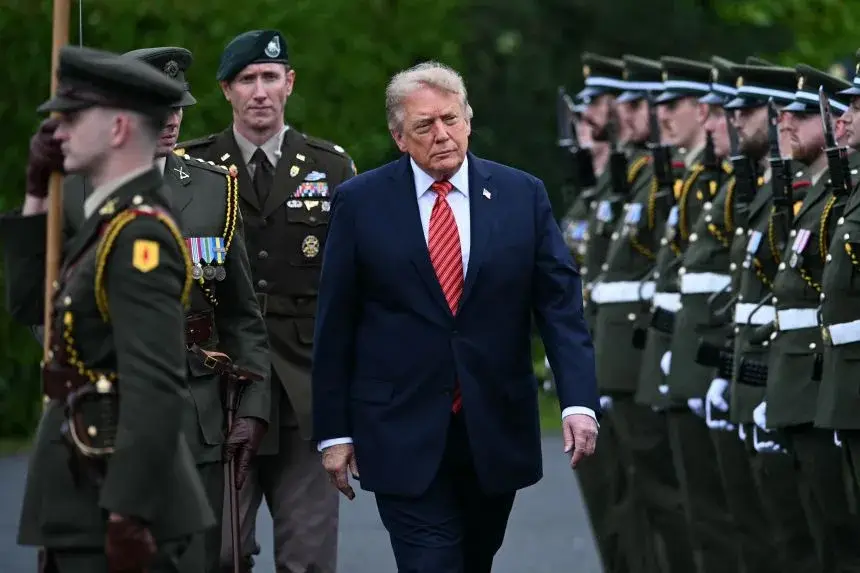
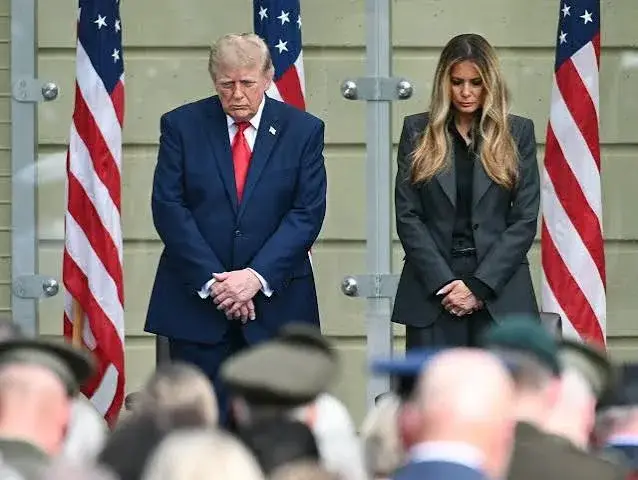
Trump Begins Two-Day Ireland Visit with Taoiseach Meeting and Irish Open Stop
13 Sept 2026
Global
25 Years After 9/11, Trump Says Iran Fight Is Part of the Same Mission
12 Sept 2026

Global
Trump Promises $5,000 to Every Adult if Republicans Win Congress
10 Sept 2026
Global
BRICS Summit 2026: Nigeria Calls for UN Security Council and Global Financial Reform
14 Sept 2026
You may also like
Global
UK, France and Canada to Sanction West Bank Settlers as US Opts Out
9 Sept 2026
Global
Trump Proposes Renaming Strait of Hormuz, Then Appears to Backtrack
4 Sept 2026
Global
UAE, Saudi Arabia, Türkiye and Five Others Back Britain’s Settlement Goods Ban
9 Sept 2026
Global
Britain Faces US Pressure Over West Bank Boycott as Israel Raises Falklands Issue
8 Sept 2026
Global
Iran’s President Calls for National Solidarity Amid Fresh US Sanctions
6 Sept 2026
Global
UN Adopts Africa-Led Proposal for New World Map Showing the Continent’s True Size
5 Sept 2026