
UAE, Saudi Arabia, Türkiye and Five Others Back Britain’s Settlement Goods Ban
Eight foreign ministers have jointly welcomed Britain’s decision to ban imports from illegal Israeli settlements, describing it as an important step toward upholding international law in the occupied Palestinian territories.
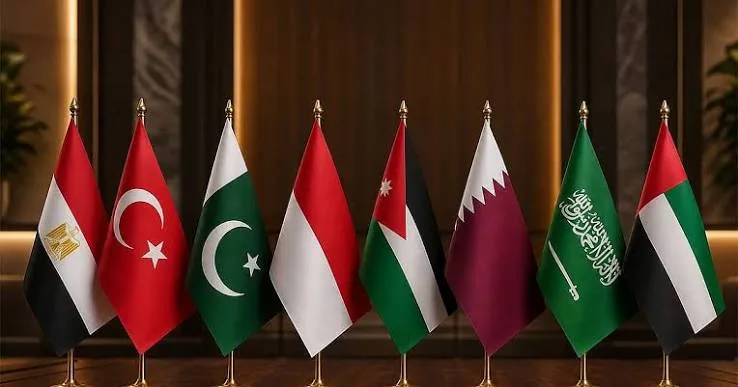
The foreign ministers of the United Arab Emirates, Türkiye, Egypt, Indonesia, Jordan, Pakistan, Qatar and Saudi Arabia have jointly welcomed the United Kingdom’s decision to ban the import of goods produced in illegal Israeli settlements in the Occupied Palestinian Territory, describing the move as an important step toward enforcing international law and increasing accountability for settlement activities.
In a coordinated statement, the eight ministers also praised Britain’s decision to introduce restrictions on services linked to illegal settlements, expressing hope that the policy would encourage other countries to adopt similar measures and deny economic support to settlement enterprises operating in occupied territory.
The ministers said they believe the UK’s action could help mobilize broader international support for concrete measures against organizations and individuals involved in illegal settlement activity, arguing that accountability is essential to preserving the rules-based international order.
Their endorsement goes beyond Britain’s policy alone. The group also welcomed a separate Joint Statement on the Two-State Solution issued by the foreign ministers of Canada, Denmark, Finland, France, Iceland, Ireland, Norway, Poland, Portugal, Spain, Sweden and the United Kingdom. That declaration confirmed the participating countries’ intention to introduce national measures—or support European Union restrictions—on trade in goods originating from settlements considered illegal under international law, while actively examining additional policy options through their respective legal procedures.
The coordinated diplomatic support reflects growing international momentum behind efforts to distinguish Israel’s internationally recognized territory from settlements established in the occupied West Bank and East Jerusalem. Most countries regard those settlements as illegal under the Fourth Geneva Convention, while Israel rejects that interpretation and maintains that the status of the territories should be resolved through direct negotiations.
Britain’s settlement measures have already contributed to a sharp deterioration in relations with Israel. Israeli officials have criticized the restrictions as discriminatory and politically motivated, while diplomatic tensions have intensified amid reports that Israel has ordered the British Consulate in East Jerusalem to cease operations within 30 days.
The eight ministers concluded their statement by urging the wider international community to build on the UK’s decision through concrete political and economic action aimed at ending activities that support or sustain illegal settlements in the occupied Palestinian territories. Their message signals an increasingly coordinated diplomatic front that extends beyond Europe, bringing together Arab and Muslim-majority nations in support of stronger international measures on one of the Israeli-Palestinian conflict’s most contentious issues.