Iran’s President Calls for National Solidarity Amid Fresh US Sanctions
Iran’s president has urged national unity as Washington expands economic pressure, deepening the confrontation between the two longtime rivals.
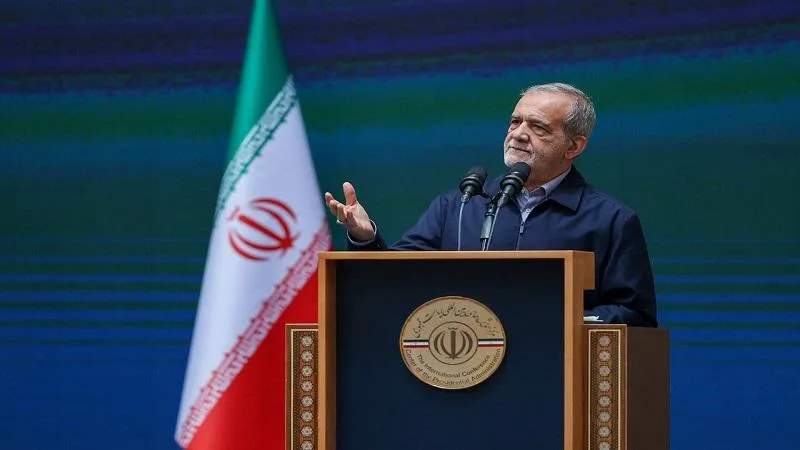
Iranian President Masoud Pezeshkian has called on the country to remain united in the face of mounting American economic pressure, warning that national resilience, not division, will determine how Iran weathers its latest confrontation with Washington.
Speaking during a nationally broadcast address, Pezeshkian said Iran was entering a critical period as new US measures target the country’s oil revenues, shipping networks and financial channels. He urged political factions and the public to set aside internal disagreements, arguing that economic challenges should become a catalyst for greater national solidarity rather than deeper polarization.
The appeal comes as the United States intensifies its campaign of economic pressure through fresh sanctions aimed at individuals, companies and vessels allegedly involved in facilitating Iranian oil exports. US officials say the measures are designed to curb revenue streams that Washington believes help fund the Islamic Revolutionary Guard Corps (IRGC) and other regional activities, while maintaining that humanitarian goods remain exempt.
Tehran has rejected the sanctions as unlawful and politically motivated. Iranian officials insist the country’s energy exports and commercial shipping operate within international law, accusing the United States of using economic coercion to weaken Iran’s economy and undermine its sovereignty.
The economic standoff has unfolded alongside rising military tensions across the Gulf. Recent exchanges involving US forces and Iranian-linked assets in and around the Strait of Hormuz have heightened concerns about the security of one of the world’s most important maritime trade routes, reinforcing fears that economic and military pressure are becoming increasingly intertwined.
For ordinary Iranians, the consequences are being felt most acutely through inflation, currency volatility and the rising cost of imported goods. Economists inside and outside the country have long argued that sanctions, combined with domestic structural challenges, continue to place significant strain on household purchasing power despite Iran’s efforts to expand trade with regional partners.
Pezeshkian, who campaigned on promises of economic reform and broader engagement with the international community, has repeatedly emphasized dialogue while also defending Iran’s right to pursue its national interests. His latest remarks suggest his administration is attempting to balance calls for internal cohesion with growing external pressure from the United States.
The renewed sanctions battle underscores a familiar reality in the Middle East: economic policy has become as strategically important as military power. As Washington seeks to isolate Iran financially and Tehran rallies domestic support, the outcome will shape not only Iran’s economic future but also the stability of regional energy markets and diplomatic relations across the Gulf.
More on Global
Global
25 Years After 9/11, Trump Says Iran Fight Is Part of the Same Mission
12 Sept 2026
Global
Milei Threatens Sanctions on Falklands Oil Firms in Sovereignty Escalation
4 Sept 2026
Global
Trump Rejects AI Slowdown Calls, Says U.S. Must Stay Ahead of China
13 Sept 2026

Global
Russia and North Korea Inaugurate First-Ever Highway Border Crossing
10 Sept 2026
Global
Zelensky Expects War to Continue Into Winter as Peace Talks Stall
7 Sept 2026
You may also like
Global
Trump Begins Two-Day Ireland Visit with Taoiseach Meeting and Irish Open Stop
13 Sept 2026

Global
Russia Threatens Nuclear Response if Lithuania Hosts NATO Weapons
11 Sept 2026
Global
UK, France and Canada to Sanction West Bank Settlers as US Opts Out
9 Sept 2026
Global
Britain Faces US Pressure Over West Bank Boycott as Israel Raises Falklands Issue
8 Sept 2026
Global
Tens of Thousands Protest Across Spain Over Ceuta Border Crisis
4 Sept 2026
Global
Trump Proposes Renaming Strait of Hormuz, Then Appears to Backtrack
4 Sept 2026