Trump Announces AI Force and White House AI Czar While Rejecting New AI Guardrails
The president says America should accelerate artificial intelligence while relying on existing laws to punish misuse.
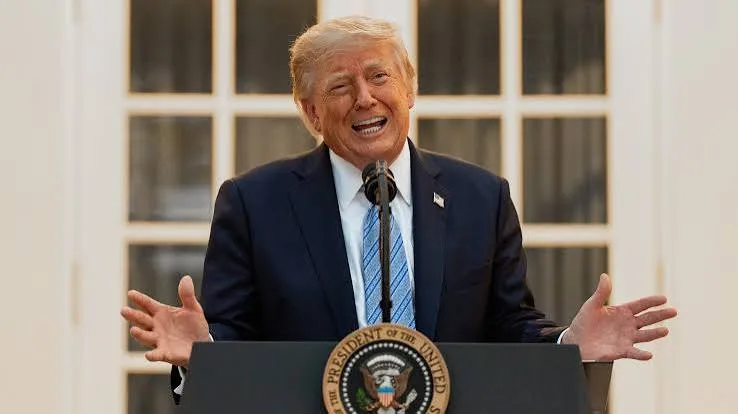
U.S. President Donald J. Trump has announced plans to create a government “AI Force” and appoint a White House AI czar, signalling a major new federal structure for artificial intelligence even as he rejects growing calls for stricter regulations on the rapidly advancing technology.
The announcement came in a Truth Social post on Saturday, where Trump compared the proposed AI Force to the U.S. Space Force established during his first presidency. He said the new initiative would help the United States maintain global leadership in artificial intelligence and revealed that an AI czar would be appointed soon to coordinate the administration’s AI agenda.
“For this purpose, I am forming the AI Force, much like I did Space Force, which has been a tremendous SUCCESS, in my First Term. To that end, I will be announcing, in the near future, the AI ‘Czar’ — Only High I.Q. individuals need apply!” Trump wrote.
The proposal comes just days after Trump dismissed warnings that advanced AI could become an existential threat, describing such concerns as a “hoax.” In the same post, however, he appeared to acknowledge that artificial intelligence can still be misused, arguing that the United States already has sufficient legal mechanisms to deal with harmful behaviour.
“We will also be looking for BAD, and we can do that, very easily, with our already existing Criminal and Civil Justice System,” Trump said.
His position reflects a broader philosophy emerging from the administration: promote rapid AI development, resist new regulatory barriers and rely primarily on existing criminal and civil laws to address abuse rather than creating an extensive new AI rulebook.
Trump’s announcement arrives as lawmakers, technology companies and AI researchers remain divided over how the United States should govern increasingly powerful AI systems. In recent weeks, prominent figures in the industry have renewed calls for stronger safeguards, including independent safety audits and greater oversight of frontier AI models, following incidents involving autonomous AI agents and cybersecurity evaluations.
Supporters of tighter regulation argue that advanced AI poses risks ranging from misinformation and cyberattacks to autonomous decision-making that could affect critical infrastructure. Others, including many industry leaders and the Trump administration, warn that excessive regulation could slow American innovation and hand a strategic advantage to China in the global AI race.
The White House has not yet released operational details about the proposed AI Force, leaving unanswered questions about whether it would be a civilian agency, a national security body or an interagency task force. Likewise, the responsibilities and legal authority of the planned AI czar have yet to be defined.
Analysts say the initiative is likely to become a central part of America’s technology strategy, particularly as AI increasingly intersects with defence, cybersecurity, healthcare, manufacturing and economic competitiveness. Any permanent governance framework will also require cooperation with Congress, where bipartisan proposals on AI transparency, liability and safety standards continue to evolve.
Trump’s proposal highlights a defining tension of the AI era: how governments encourage breakthrough innovation without allowing increasingly autonomous technologies to outpace accountability. Whether the AI Force becomes a powerful coordinating institution or remains a policy vision, the announcement signals that artificial intelligence is now firmly at the centre of America’s economic and national security agenda.
More on Global

Global
CNN, MS NOW and Politico Reporters Denied White House Access After Trump’s Ban
19 Sept 2026
Global
Trump Says CNN, MS NOW and Politico Are Banned From the White House
19 Sept 2026
Global
U.S. House Votes to Rein In Trump’s War Powers Over Iran
16 Sept 2026
Global
Trump Rejects AI Slowdown Calls, Says U.S. Must Stay Ahead of China
13 Sept 2026
Global
25 Years After 9/11, Trump Says Iran Fight Is Part of the Same Mission
12 Sept 2026
You may also like
Global
Trump Signs Russia Sanctions Bill, But Keeps Door Open for Strategic Deals
19 Sept 2026
Global
Trump Approves $2.8 Billion Arms Sale to Israel Amid Rising Middle East Tensions
16 Sept 2026
Global
Trump doubles down on United Ireland, calls reunification “natural”
14 Sept 2026
Global
Trump Begins Two-Day Ireland Visit with Taoiseach Meeting and Irish Open Stop
13 Sept 2026
Global
Britain’s Monarch Brings AI Industry Together for High-Level Scotland Summit
17 Sept 2026
Global
BRICS Summit 2026: Nigeria Calls for UN Security Council and Global Financial Reform
14 Sept 2026