German Export Recovery Loses Steam as U.S. Trade Falls Sharply
Germany’s exports fell unexpectedly in August, with a sharp drop in shipments to the United States raising fresh concerns about the strength of Europe’s largest economy.
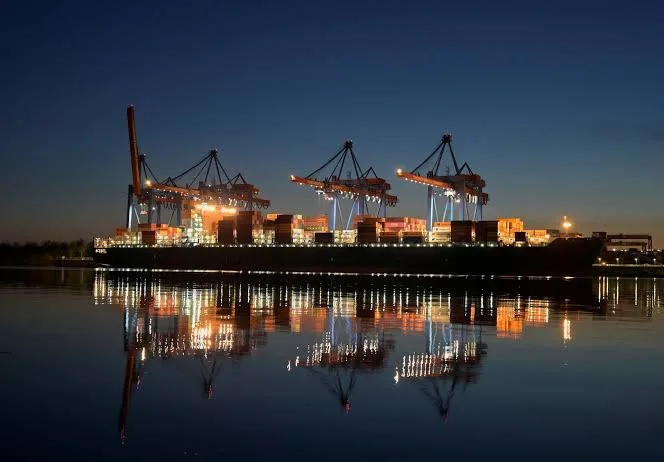
Germany’s exports fell 0.8% in August from the previous month, missing expectations for growth and adding to signs that the recovery in Europe’s largest economy is losing some of its momentum.
Data released by Germany’s Federal Statistical Office, Destatis, showed that imports moved in the opposite direction, rising 0.9% in August on a calendar- and seasonally-adjusted basis. The result narrowed Germany’s trade surplus to €19.5 billion, from €21.6 billion in July.
The weakness was particularly pronounced in Germany’s trade with the United States. Exports to the U.S. dropped 6.3% from July, while shipments to other European Union countries fell 0.6%. Exports to countries outside the EU declined 1.1%.
There were some brighter spots. German exports to China increased 4.7%, while shipments to the United Kingdom jumped 16.7%. However, imports from China rose even faster, climbing 11%, a development that could add to pressure on German manufacturers already facing intense competition from Chinese producers.
The August figures came as a surprise to economists. A Reuters poll had forecast exports would rise by 0.6% during the month. Instead, the decline followed a 0.8% fall in July, suggesting that the export sector has not yet established a sustained recovery.
The United States has become an increasingly complicated market for German exporters amid higher American tariffs and continuing uncertainty over global trade policy. The 6.3% monthly decline in German exports to the U.S. in August is therefore likely to attract particular attention from manufacturers, especially in sectors such as automobiles, machinery and industrial equipment.
Germany's export industry had appeared more optimistic only weeks earlier. The ifo Institute's export expectations index rose to 9.6 points in August, its strongest reading since February 2022, before easing to 8.0 points in September. Ifo said the September deterioration was driven largely by renewed pessimism in the automotive sector, although many other industrial industries continued to expect export growth.
The latest trade figures also arrive alongside a mixed picture for German industry. Industrial production increased 2.0% in August from July, according to preliminary Destatis data released earlier this week. That suggests the weakness in exports has not yet translated into a uniform decline across industrial activity.
However, manufacturing orders were considerably weaker. Real new orders in German manufacturing fell 10.6% in August from July. Destatis said the exceptionally large decline was largely caused by a collapse in orders in the “other vehicle” sector, including aircraft, ships, trains and military vehicles, after unusually large orders had pushed that category sharply higher in July. Without large-scale orders, total manufacturing orders were down only 0.1%.
The figures therefore do not point to a simple collapse in German industry. Instead, they highlight the volatility facing an economy heavily dependent on manufacturing and international trade. Germany has spent much of the past several years struggling with weak industrial growth, high energy costs, competition from China and uncertainty surrounding global trade.
There is also a more complicated economic picture emerging from Berlin. On Thursday, the German government raised its forecast for economic growth in 2026 to 1.3%, from 0.5%, and its 2027 forecast to 1.1%, from 0.9%. The government said the economy grew 0.3% in the second quarter and has proved more resilient than previously expected.
Economy Minister Katherina Reiche cautioned, however, that the early recovery still needs to develop into sustainable economic momentum. Government forecasts show exports growing 3.7% this year, but slowing to 2.1% in 2027 and 1.1% in 2028.
The broader environment remains challenging. Germany is dealing with higher energy and import costs linked to the conflict in the Middle East, while U.S. tariffs continue to create uncertainty for exporters. The country's industrial base is also undergoing a longer-term adjustment as manufacturers respond to technological change, the energy transition and growing competition from China.
For Germany, the August export decline is therefore less a standalone crisis than another warning about the fragility of its recovery. The economy is showing enough strength for Berlin to raise its growth forecasts, but the latest trade figures underline how dependent that recovery remains on Germany's manufacturers finding reliable markets abroad. If demand in major export destinations continues to weaken while competition intensifies, Europe's biggest economy may find that turning a statistical recovery into durable growth remains a much harder task.
More on Global

Global
U.S. Pulls Bombers From UK Base After Suspected Terror Plot
5 Oct 2026
Global
India Leads Dubai Property Demand in 2026 as US Climbs to Second
23 Sept 2026
Global
London’s Super-Rich Are Leaving and $160 Billion of Wealth Is at Stake
5 Oct 2026
Global
Russian Strikes Hit Kyiv’s Dnipro Crossings, Triggering Traffic Chaos
3 Oct 2026

Global
Nearly 1 Million Americans Begin Receiving $500 Obamacare Refund Checks
1 Oct 2026
You may also like
Global
Ukraine Retakes More Ground in Northern Donetsk as Russian Offensive Loses Momentum
29 Sept 2026
Global
Trump Welcomes Xi to Washington Amid Talks on Trade and Global Security
25 Sept 2026
Global
US Suspends Microsoft, Infosys, Wipro and Major IT Firms From Green Card Programme
8 Oct 2026
Global
Syria Weighs Military Support for Saudi Arabia as Houthis Escalate
8 Oct 2026

Global
Anne Carson Wins 2026 Nobel Prize in Literature for Genre-Bending Work
8 Oct 2026
Global
Costa Rica’s Grynspan Tops Fifth UN Chief Poll, but Veto Threat Remains
8 Oct 2026