
Starlink Restrictions Disrupt Ukraine’s Military Operations, Zelensky Adviser Says
Ukraine says Starlink speed restrictions have disrupted military operations, highlighting the Ukrainian armed forces’ reliance on SpaceX’s satellite internet network for battlefield communications and drone operations.
Ukraine has reported disruptions to military drone operations after new speed restrictions affected satellite communications terminals used by its armed forces, prompting Kyiv to seek urgent discussions with SpaceX, the United States and NATO partners.
Serhiy Beskrestnov, an adviser to Ukrainian President Volodymyr Zelensky on defence technology, said on Wednesday, October 14, that the restrictions were introduced without prior warning and had disrupted several military missions.
The restrictions reportedly affected Starshield, the military-oriented satellite communications system associated with SpaceX’s Starlink technology, particularly terminals operating on moving platforms at speeds above approximately 160 kilometres per hour. Ukrainian officials said some units experienced connection interruptions at lower speeds, complicating the operation of certain drones.
According to Ukraine’s Defence Ministry, the disruption affected attack drones, interceptor drones used against incoming aerial threats, frontline logistics, reconnaissance and communications relays. A source in the ministry told Ukraine’s state news agency Ukrinform that officials were collecting reports from military units, contacting Washington, SpaceX and NATO partners, and reviewing alternative communications arrangements.
The development raised immediate concerns because Ukrainian forces depend heavily on satellite connectivity to coordinate operations across a sprawling frontline and control unmanned aircraft. Drones have become central to Ukraine’s efforts to strike Russian military targets, monitor troop movements and counter aerial attacks.
Beskrestnov said the absence of advance notification had contributed to the disruption of missions. He also suggested the timing could be connected to the wider political situation, although no independently verified evidence has established that the restrictions were imposed for political reasons.
SpaceX chief executive Elon Musk responded by distinguishing between the company’s commercial Starlink service and Starshield, which is designed for government and national-security use. In a post on X, Musk said Starshield systems are owned and controlled by the United States government, adding that decisions on speed and usage restrictions ultimately rest with the US military and the president.
Musk also said Starlink is a commercial service controlled by SpaceX and that its use is limited to civilian or defensive activities, rather than offensive military operations. The distinction is important because the two systems have different control arrangements, even though they are associated with the same satellite technology ecosystem.
Ukrainian President Zelensky criticised the disruption, warning in an interview with journalist Piers Morgan that the restrictions could result in additional casualties. His concern centred on the impact on military operations and Ukraine’s ability to defend its territory against Russian attacks.
The restrictions also prompted a response from former Ukrainian defence minister Mykhailo Fedorov, who said later on Wednesday that Starlink connectivity at speeds of up to 160 kilometres per hour was being restored. He said this should allow attack and interceptor drones to resume operations, while calling for the speed restriction on Starshield to be removed altogether. The announcement indicated a partial improvement in connectivity, although it did not establish that all operational limitations had been lifted.
The episode underscores Ukraine’s dependence on privately developed satellite infrastructure during the war and the complications that can arise when military operations rely on systems whose access and operating conditions are controlled by external organizations or governments. As Kyiv continues to seek reliable communications for its armed forces, the incident has renewed attention on the resilience of battlefield technology, the terms governing its use and the availability of alternative systems.
More on Global

Global
Ukraine Accuses Musk’s SpaceX of Disrupting Starlink as Russian Strikes Leave 600,000 Without Power
14 Oct 2026
Global
Ukraine Retakes More Ground in Northern Donetsk as Russian Offensive Loses Momentum
29 Sept 2026

Global
Trump Announces Immediate Energy Ceasefire Between Russia and Ukraine After Russian Diesel Deal
11 Oct 2026
Global
Syria Weighs Military Support for Saudi Arabia as Houthis Escalate
8 Oct 2026
Global
Russian Strikes Hit Kyiv’s Dnipro Crossings, Triggering Traffic Chaos
3 Oct 2026
Partner with Follow Global Trends
Display banners, sponsored stories and founder spotlights.
You may also like

Global
Russia Launches Massive Strikes On Ukraine’s Energy Infrastructure
30 Sept 2026
Global
Israeli Strike Kills Two Palestinians in Southern Gaza as Ceasefire Strains Deepen
12 Oct 2026
Global
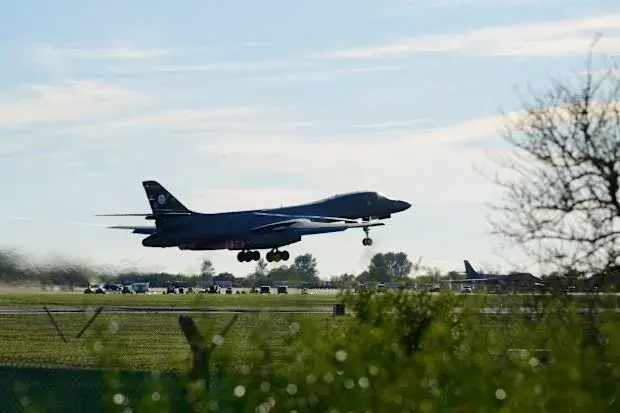
U.S. Pulls Bombers From UK Base After Suspected Terror Plot
5 Oct 2026
Global
US Treasury Seeks Global Support to Rename AI ‘Super Intelligence’
15 Oct 2026

Global
Protester Punched at Trump Rally as President Mocks Her Appearance
14 Oct 2026

Global
Trump Ally Kimberly Guilfoyle Quits Greece Ambassador Role After $100,000 Payment Allegation
13 Oct 2026