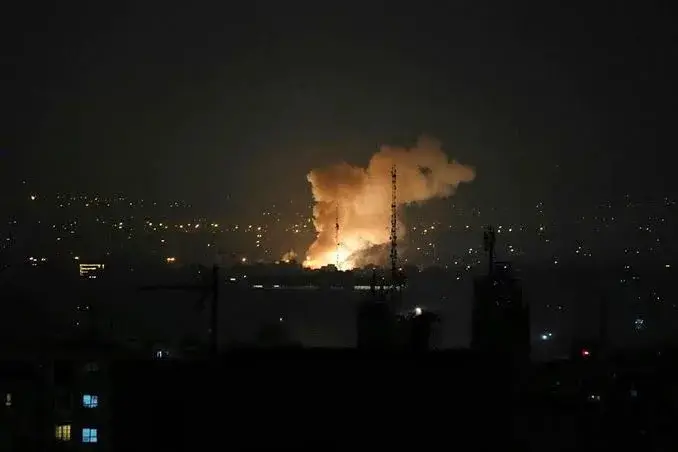
A United States military jet intercepted and disabled a commercial cargo vessel in the Gulf of Oman on Thursday, 26 November 2026, enforcing an ongoing maritime embargo against Iranian seaports.
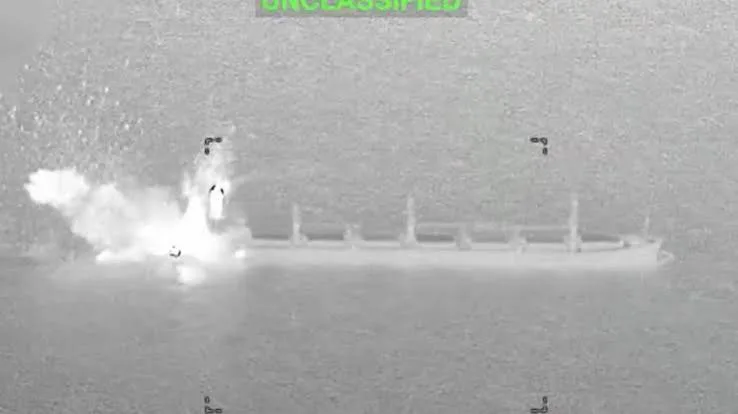
U.S. Central Command (CENTCOM) confirmed the military action in a statement on Friday, releasing unclassified video footage of the engagement. The target was identified as the M/V Pacific Archer, a commercial bulk carrier sailing under the flag of Palau.
According to military officials, the vessel had loaded cargo and departed Bandar Abbas, a major naval and commercial port city on Iran’s southern coastline. As the carrier entered open regional waterways approaching the Strait of Hormuz, U.S. naval patrol units issued repeated radio warnings ordering the vessel to turn back.
When the ship’s captain refused to comply and attempted to run the blockade line, an American combat aircraft launched precision-guided munitions directly into the vessel’s stern. The kinetic strike destroyed the ship's steering and engine systems, rendering it dead in the water without causing casualties among the civilian crew.
Strict Enforcement of the Months-Long Iran Blockade
The strike represents the latest escalation in the United States' comprehensive maritime blockade of Iranian maritime commerce, which has been in place since mid-July.
CENTCOM operational data indicates that American and allied naval forces have stopped and redirected 158 commercial vessels that complied with maritime rerouting orders. However, the M/V Pacific Archer became the sixth commercial ship to be forcibly disabled after refusing military directives.
The naval enforcement effort aims to sever commercial revenues flowing to Iran’s Islamic Revolutionary Guard Corps (IRGC). Vice Admiral Brad Cooper, commander of CENTCOM, recently stated that the blockade has deprived Tehran of an estimated $25 billion in maritime trade, effectively halting seaborne oil exports and industrial container traffic.
“All mariners operating in the Gulf of Oman and approaches to the Strait of Hormuz are urged to heed blockade warnings issued by CENTCOM forces,” Central Command reiterated in its Friday advisory.
Escalating Naval Threats and Tehran's Response
The airstrike has intensified friction across Persian Gulf shipping lanes as the broader regional conflict enters its ninth month.
In Tehran, Iranian military leadership issued a stern response to the blockade enforcement. Speaking on Iranian state television on Friday, the commander of the Iranian Navy, Rear Admiral Shahram Irani, condemned the interception of commercial shipping.
Irani declared that Iranian naval forces would launch upcoming maritime operations “that will not only break the naval blockade but also drive the enemy out of the region’s waters.”
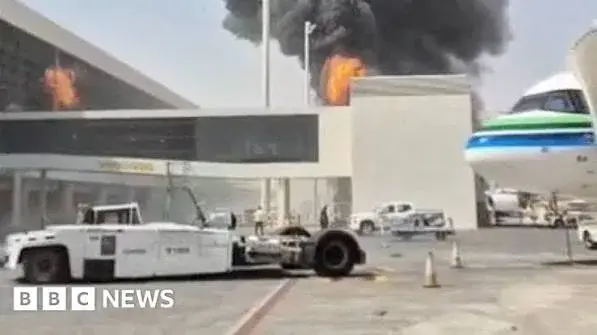
The threat comes amid a flurry of hostile encounters across the Gulf. Regional tensions flared earlier this month following drone strikes in Kuwait and Bahrain, as well as separate incidents involving naval mines placed near the Strait of Hormuz.
Strategic Implications for Regional Shipping Lanes
The direct disabling of commercial vessels underscores the severe operational risks facing global merchant fleets operating near the Arabian Peninsula.
International maritime insurers have escalated hull and cargo risk premiums across the Persian Gulf, the Gulf of Oman, and the northern Arabian Sea. Shipping syndicates have advised commercial operators to strictly verify passage clearance before entering territorial approaches near Iranian waters.
With the M/V Pacific Archer immobilised, naval salvage tugs and maritime safety authorities were monitoring the drifting hull to prevent navigational hazards for passing international traffic.
CENTCOM officials confirmed that American carrier strike groups and land-based air wings will maintain active surveillance over maritime choke points, warning that non-compliant merchant vessels attempting to exit Iranian terminals will continue to face interdiction.