Regional tensions spiked sharply across the Arabian Peninsula on Tuesday as Saudi Arabia intercepts missiles over Riyadh following coordinated aerial launches from Yemen.
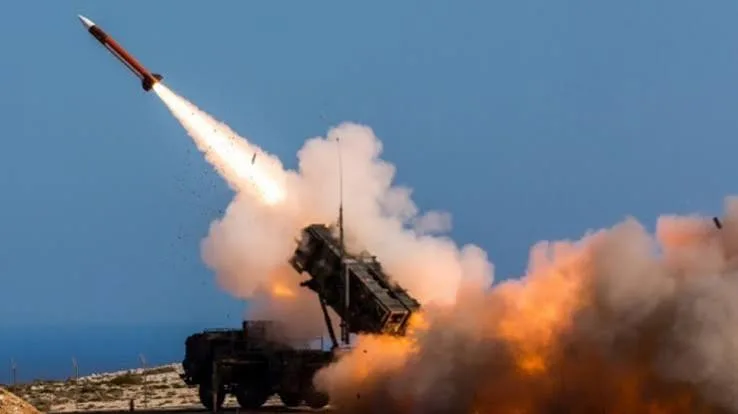
Military commanders confirmed that national air defence batteries detected incoming projectiles and engaged them in mid-air over the capital and southern provinces.
Residents across central Riyadh reported hearing loud concussive blasts as interceptor missiles struck the incoming targets, leaving smoke trails visible above the urban skyline.
Interceptions Over Capital and Southern Border
Major General Turki al-Maliki, spokesperson for the Saudi-led coalition, issued an official briefing detailing the defensive operation.
He confirmed that Royal Saudi Air Defence Forces intercepted and destroyed one ballistic missile and one cruise missile in the skies above Riyadh. A second ballistic missile aimed at targets in the kingdom’s southern territory was downed shortly after.
Civil defence authorities sent urgent text-message notifications instructing residents across affected metropolitan districts to take shelter immediately upon detection of the incoming salvos.
A follow-up alert issued thirty minutes later confirmed that all incoming projectiles were neutralized and that immediate danger had passed without ground casualties.
Infrastructure Scrutiny and Retaliatory Air Operations
The cross-border missile barrage occurred hours after regional security teams reported damage to sections of the kingdom's East-West petroleum transit corridor.
Yemen's Houthi movement did not immediately release a formal statement claiming responsibility for the launches, though regional tracking networks traced the trajectory to launch sites in northern Yemen.
Meanwhile, official media outlets in Yemen reported reciprocal airstrikes targeting military and industrial installations across the capital city of Sanaa.
Civil protection crews in Sanaa worked to contain blazes at gas distribution stations and fuel storage yards following reported air raids on Tuesday afternoon.
Intensifying Pressures on Regional Energy Security
The escalation highlights persistent vulnerabilities across civilian and industrial infrastructure throughout the Gulf corridor.
International security analysts noted that repeated missile and drone attempts against population centres and energy nodes threaten ongoing diplomatic efforts to stabilize regional waterways.
Gulf Arab states reaffirmed joint defence agreements earlier this week, stepping up automated surveillance networks and intelligence-sharing hubs to counter aerial attacks.
Saudi security officials confirmed that technical investigation teams are currently collecting scattered missile fragments to determine the precise weapon variants used in the assault.