Nigerian Governors Spend ₦512bn on Offices and Travel in Six Months
Nigerian states spent at least ₦512.1 billion on executive offices and travel in the first half of 2026, raising fresh questions about the cost of political administration.
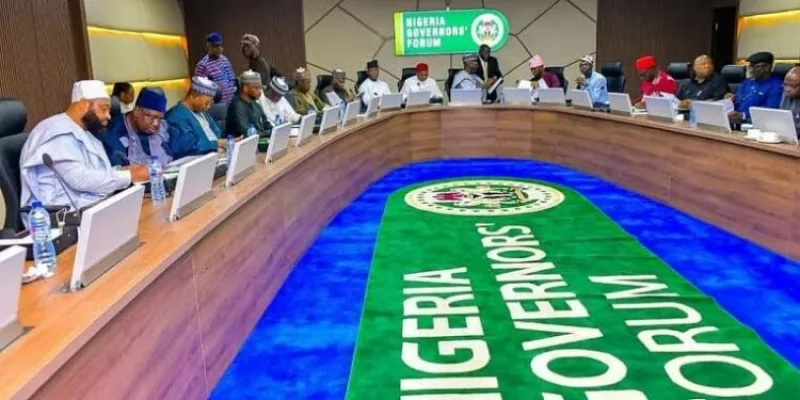
Nigerian state governments spent at least ₦512.10 billion on Government Houses, governors’ offices, related executive administration and travel during the first six months of 2026, according to an analysis of available state budget implementation reports.
The figure, covering 33 states with comparable records, combines about ₦420.01 billion spent under Government House, Governor’s Office and related executive administration headings with another ₦92.09 billion recorded under travel and transport. The data do not cover Edo, Osun and Rivers because comparable figures were unavailable.
The scale of the spending stands out when compared with governors’ official basic salaries. At a reported monthly basic salary of ₦503,000, the combined basic salaries of Nigeria’s 36 governors over six months would amount to roughly ₦108.65 million. The ₦512.10 billion expenditure is therefore about 4,700 times that combined salary figure.
But the comparison needs an important qualification. The ₦512.10 billion was not paid to governors personally. Government House and Governor’s Office expenditure can cover staff, administration, official residences, maintenance, utilities, security-related activities, protocol and other executive operations, while travel and transport spending can extend across the wider state public service.
The figures nevertheless raise a broader question about how much it costs to maintain Nigeria’s state executive machinery, particularly at a time when governments are under pressure to demonstrate that increased public revenues are translating into better services.
The analysis also shows that spending has not increased uniformly across the country. Government House, Governor’s Office and related executive expenditure fell from ₦465.07 billion in the first half of 2025 to ₦420.01 billion during the same period of 2026, a reduction of about ₦45.05 billion, or 9.69 per cent. Travel and transport spending was comparatively stable, falling from ₦92.73 billion to ₦92.09 billion. Combined expenditure therefore declined by about ₦45.70 billion, or 8.19 per cent, from the previous year.
There were, however, sharp differences between individual states. Kogi recorded the highest identifiable expenditure under Government House and Governor’s Office-related headings among the states covered, at about ₦65.34 billion. Ogun and Lagos followed with roughly ₦45.26 billion and ₦45.04 billion respectively, while Kano recorded about ₦25.87 billion and Ekiti ₦25.22 billion.
Travel spending produced a different picture. Plateau recorded the highest identifiable travel and transport expenditure at approximately ₦10.11 billion, followed by Lagos at ₦8.23 billion and Taraba at about ₦5.16 billion. Again, those figures cover budget categories that can include the wider state administration and should not automatically be interpreted as the personal travel bills of governors.
Some states also recorded significant increases in executive-related expenditure despite the overall national decline. Cross River, for example, saw identifiable Government House and Governor’s Office spending rise substantially compared with the first half of 2025, while Lagos and Bayelsa also recorded notable increases. Such variations can reflect differences in accounting structures, capital projects, one-off expenditure, arrears or changes in how states classify spending, meaning the figures alone cannot establish that an increase represents waste.
That distinction is important because broad budget headings can conceal as much as they reveal. A large Government House allocation does not necessarily mean the money was spent on the governor's personal activities, just as a lower allocation does not automatically demonstrate greater efficiency.
The real accountability question is therefore what sits underneath the figures: what was purchased, which contracts were awarded, whether procurement rules were followed, what services were delivered and whether the expenditure produced measurable value for citizens.
The issue also puts the spotlight on state Houses of Assembly, which have constitutional responsibility for scrutinising budgets and overseeing public spending. Effective oversight would require legislators to go beyond approving large executive allocations and examine implementation records, procurement documents and the outcomes associated with major expenditures.
For citizens, the debate is especially relevant as state governments receive larger revenues and face competing demands for investment in roads, schools, hospitals, security, water and employment. Administrative spending is unavoidable, but the public interest depends on ensuring that the machinery of government does not consume a disproportionate share of resources that could otherwise improve essential services.
The latest figures should therefore be read as a starting point for scrutiny rather than proof of financial misconduct. They are based on available implementation reports, and differences in accounting classifications mean the ₦512.10 billion figure is not a complete audit of every executive or travel expense across Nigeria's 36 states.
Still, the number is large enough to raise a fundamental question about governance in Nigeria: if hundreds of billions of naira are being spent maintaining the institutions around political office, how much public value is being created in return? The answer will depend not on what governors officially earn, but on how transparently their governments spend, how rigorously those expenditures are audited and, ultimately, whether Nigerians can see the money reflected in better public services and living conditions.
More on Nigeria
Nigeria
G100 Summit: ADC, PDP and NDC Back Single-Term National Unity Administration
31 Aug 2026
Nigeria
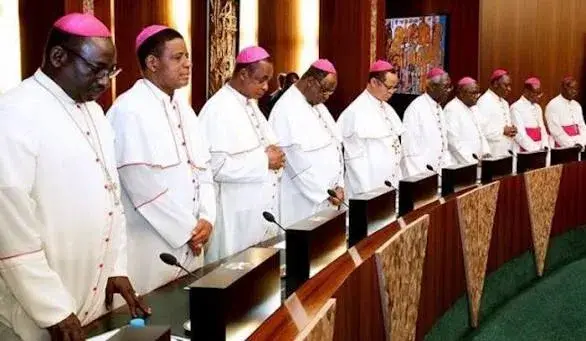
Catholic Bishops Warn Political Leaders Against Manipulating 2027 Elections
14 Sept 2026
Nigeria
Nigerian UN Envoy Rejects Claims of US Restrictions on Tinubu’s UNGA Trip
7 Sept 2026

Nigeria
Mystery Deepens Over Nigerian Woman Who Vanished After Landing in Qatar
6 Sept 2026
Nigeria
Wike: If Atiku or Peter Obi wins, I'll be the first politician they come after
3 Sept 2026
You may also like
Nigeria
Nigerian NHS Worker Faces Driving Ban After Wrong-Way M61 Incident
24 Aug 2026
Nigeria
Oluremi Tinubu Reaffirms Education as Cornerstone of Renewed Hope Agenda
17 Sept 2026
Nigeria
National Assembly Transmits 2026 Constitution Amendment Bill to 36 State Assemblies
17 Sept 2026
Nigeria
Yola Hosts Thousands as Elder Statesman Bamanga Tukur Is Buried
13 Sept 2026

Nigeria
Soludo Endorses Tinubu for 2027 During First Lady’s Awka Reception
12 Sept 2026

Nigeria
Peter Mbah Unveils 10,000+ Milestones Compendium as Enugu Transformation Accelerates
10 Sept 2026