
G100 Summit: ADC, PDP and NDC Back Single-Term National Unity Administration
A coalition of six Nigerian opposition parties has proposed a one-term “government of national competence” as a transitional administration ahead of the 2027 general election.
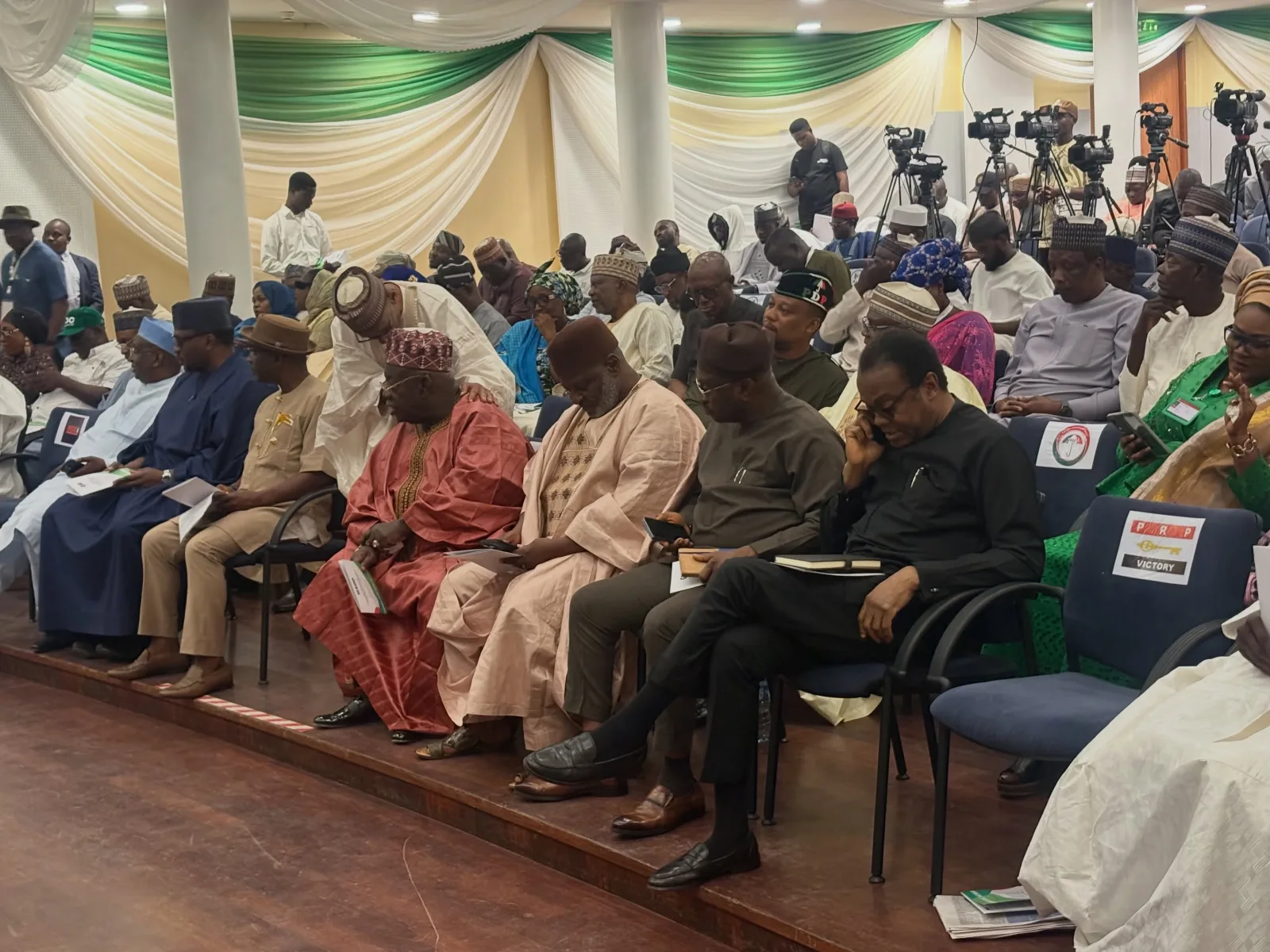
Nigeria’s opposition politics took a significant turn on Monday as six political parties jointly proposed the formation of a Government of National Competence that would govern for a single four-year term if elected in 2027, presenting it as a transitional model aimed at rebuilding national institutions and restoring public confidence.
The proposal emerged at the G100 Opposition Political Parties Summit in Abuja, where representatives of the African Democratic Congress (ADC), Peoples Democratic Party (PDP), Nigeria Democratic Congress (NDC) and three other opposition parties discussed a unified strategy for challenging the ruling All Progressives Congress (APC) in the next presidential election.
Rather than advocating a conventional coalition government, participants described the idea as a competence-driven transitional administration that would serve only one constitutional term. According to the proposal, the government’s primary objective would be to stabilize the economy, strengthen democratic institutions, improve security and implement governance reforms before handing over to a fully competitive electoral cycle.
The summit reflected growing efforts by opposition parties to overcome years of fragmentation that have often benefited the APC in national elections. Leaders at the gathering argued that Nigeria’s challenges, including inflation, unemployment, insecurity and declining public trust, require collaboration that goes beyond party loyalties and places expertise at the centre of governance.
Although no presidential candidate was endorsed at the meeting, the proposal is expected to shape negotiations among opposition leaders over the coming months. Both the ADC and PDP have been exploring broader alliance discussions, while the NDC has positioned itself as a key participant in efforts to build a united opposition platform ahead of 2027.
Supporters of the initiative say a single-term transitional government would reduce the incentives of incumbency by removing the pursuit of re-election and allowing difficult reforms to be pursued without immediate electoral calculations. Critics, however, are likely to question how such an arrangement would operate within Nigeria’s existing constitutional framework, where elected presidents are entitled to seek a second term rather than being restricted to one by political agreement alone.
The ruling APC has not formally responded to the proposal, but the governing party has consistently argued that opposition coalitions are driven more by electoral arithmetic than by coherent policy alternatives. The opposition, by contrast, insists that national renewal requires a broader consensus built around competence rather than partisan dominance.
While the Abuja summit did not produce a binding political pact, it marked one of the clearest attempts yet to redefine the opposition’s message ahead of 2027. Whether the proposed Government of National Competence evolves into a genuine electoral alliance or remains an aspirational framework, it signals that the battle for Nigeria’s next presidency is increasingly being framed around institutional reform, unity and the question of who is best equipped to govern in a period of profound national challenges.