
Brazil Election Shock: Flávio Bolsonaro Beats Lula in First Round
Flávio Bolsonaro has stunned Brazil by finishing ahead of Lula in the first round, turning the October 25 runoff into a major test of the country's political direction.
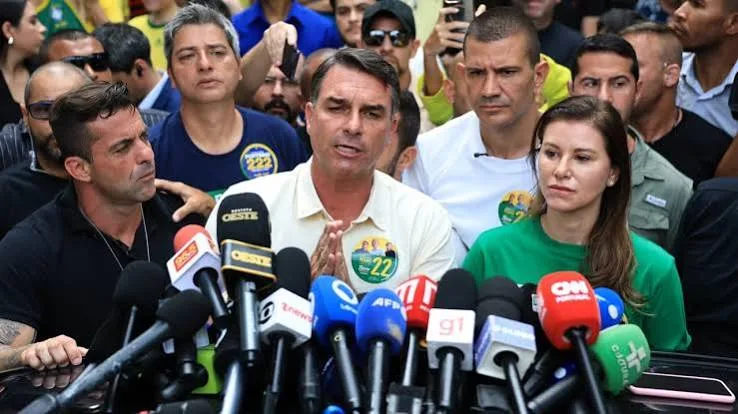
Brazil's presidential race has taken an unexpected turn after right-wing Senator Flávio Bolsonaro finished ahead of incumbent Luiz Inácio Lula da Silva in Sunday's first-round election, giving the Bolsonaro family its strongest route back to power since Jair Bolsonaro left office.
With 99.99% of voting machines counted, Brazil's Superior Electoral Court said Flávio Bolsonaro won 56,104,268 votes, or 47.03% of valid ballots, while Lula received 53,876,617 votes, or 45.16%. Neither crossed the 50% threshold required for an outright victory, sending the two candidates into a runoff on October 25.
The result was striking because most final pre-election surveys had placed Lula narrowly ahead or showed the two candidates effectively tied. A Datafolha poll published shortly before voting had Lula leading Flávio 45% to 42% in first-round support, while a separate runoff scenario had Lula ahead by three percentage points. Flávio's performance therefore represented a significant break from the polling picture.
The senator's victory in the first round does not, however, make the runoff a foregone conclusion. The two candidates now need to compete for voters who supported the other presidential candidates, while attempting to consolidate their existing coalitions without alienating undecided and moderate voters. AP noted that both candidates enter the runoff without majority support among the electorate.
For Flávio, the result is nevertheless a major political breakthrough. The 45-year-old senator is the eldest son of former President Jair Bolsonaro, who remains a powerful figure among Brazil's conservative voters despite being convicted over an attempt to overturn the 2022 election result. Flávio has positioned himself as the candidate who can return the political right to the presidency while maintaining close ties with his father's movement.
He is also an ally of U.S. President Donald Trump, making the election particularly significant for Brazil's future relationship with Washington. Flávio has advocated closer relations with the United States, while Lula has repeatedly criticised what he sees as external interference in Brazilian politics and defended the country's strategic autonomy.
The election is also producing a broader rightward shift in Congress. Flávio's Liberal Party significantly increased its representation, becoming the largest party in both the Senate and Chamber of Deputies. Reuters reported that the party won 28 Senate seats and 121 lower-house seats, while center-right parties together are expected to command a substantial majority in the lower house.
That congressional result could matter almost as much as the presidential vote. If Flávio wins, he would enter office with a potentially favourable legislative environment for his economic and security agenda. It could also strengthen efforts within his political camp to seek amnesty for Jair Bolsonaro and challenge institutions involved in the former president's prosecution.
Lula, meanwhile, faces the task of rebuilding momentum after an unexpectedly poor first round. At 80, he is seeking a fourth non-consecutive presidential term and had entered the election arguing that his administration's record on employment, social programmes and the economy deserved another mandate. His campaign must now persuade voters who rejected both major candidates or supported other contenders that another Lula presidency is preferable to a Bolsonaro return.
Economic concerns are likely to dominate the next three weeks. The campaign has been shaped by the cost of living, public debt, crime, corruption and the direction of government spending. Flávio's stronger-than-expected performance immediately boosted Brazilian financial markets, with the country's main stock index rising sharply and the real strengthening against the dollar as investors anticipated a more market-oriented administration.
But market enthusiasm is not the same as an electoral mandate. Investors are now watching whether Flávio can broaden his coalition beyond the core Bolsonaro electorate and provide greater detail on how he would manage Brazil's fiscal challenges. His limited experience in executive government is another factor that will receive greater attention as the runoff campaign intensifies.
The election also carries consequences beyond Brazil's borders. Latin America's largest economy is a major agricultural exporter, energy producer and member of the BRICS grouping, while its policies on the Amazon, climate change, trade and relations with China and the United States have international implications. A Bolsonaro victory would represent a significant change in Brazil's foreign-policy orientation, while a Lula victory would preserve the broad direction of the current government.
The next three weeks will therefore be less about whether Brazil has moved to the right, Sunday's results clearly demonstrated that the right has gained substantial ground, and more about whether that momentum is large enough to carry Flávio Bolsonaro across the final electoral threshold. Lula remains within striking distance, and millions of voters who did not choose either candidate in the first round will now become central to the contest.
Brazil's October 25 runoff is consequently shaping up as more than a conventional contest between an incumbent and his challenger. It is a decision over whether the country continues with Lula's left-leaning government or returns the Bolsonaro political movement to the presidential palace, this time under the former president's son. The first round has changed the balance of the race, but the final verdict remains with Brazilian voters.
More on Politics
Politics
Brazil’s Lula Wins Fourth Term Over Flávio Bolsonaro
26 Oct 2026
Politics
Brazil Cuts Fuel Taxes as Lula Faces Crucial Presidential Runoff
13 Oct 2026

Politics
Brazil Votes in Tight Run-Off Between Lula and Bolsonaro’s Son
25 Oct 2026
Politics
Brazil Votes in Pivotal Election as Lula and Bolsonaro Rival Vie for Presidency
4 Oct 2026
Politics
Vance Declines to Endorse Netanyahu Ahead of Israeli Election
21 Oct 2026
Partner with Follow Global Trends
Display banners, sponsored stories and founder spotlights.
You may also like
Politics
Bus Shortages Disrupt Voting in Salvador and São Paulo on Runoff Day
25 Oct 2026
Politics
Elon Musk Sets US Political Donation Record With $446 Million
25 Oct 2026
Politics
Atiku Calls Tinubu’s 90-Day Relief Plan ‘Election Bait’, Demands Answers
24 Oct 2026
Politics
NDC Unveils 2027 National Campaign Council
25 Oct 2026
Politics
2027 Elections: Atiku Demands Access to Nigeria’s 103m Voters
23 Oct 2026
Politics
Trump Approval Rating Hits New Low Ahead of US Midterm Elections
22 Oct 2026