South African Jurist Navi Pillay Wins 2026 Nobel Peace Prize for Human Rights Work
South African jurist Navi Pillay has won the 2026 Nobel Peace Prize for her decades of work advancing international law, human rights and accountability for war crimes and genocide.
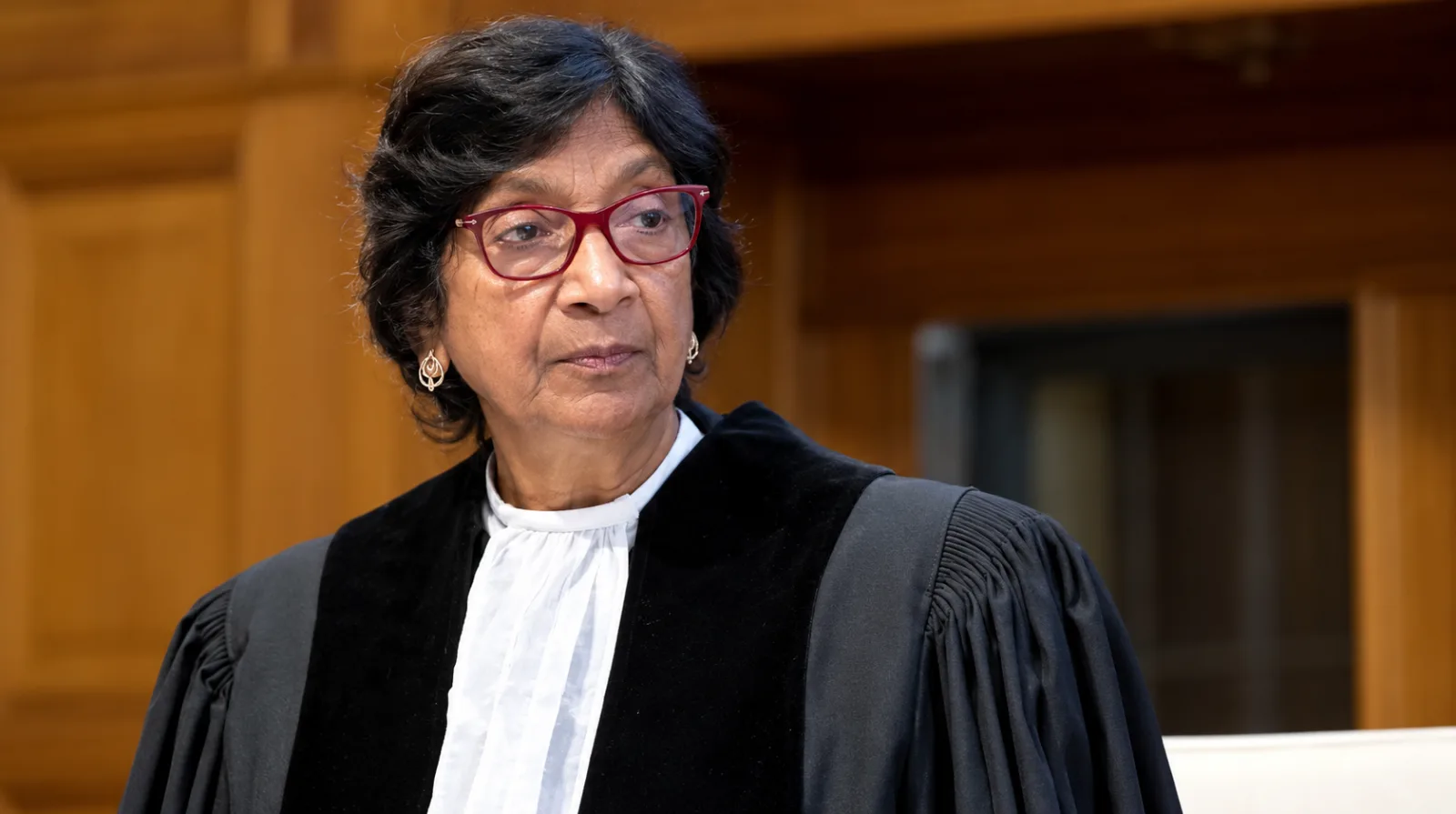
South African jurist and former United Nations human rights chief Navanethem “Navi” Pillay has won the 2026 Nobel Peace Prize, with the Norwegian Nobel Committee recognising a career spent strengthening international justice and challenging impunity for some of the world’s gravest crimes.
The committee announced the award on Friday, October 9, citing Pillay’s efforts to promote peace and international law. It praised her as a figure who, through “exceptional courage and integrity”, has helped advance a more comprehensive global legal order and the prosecution of war crimes, crimes against humanity and genocide.
The 85-year-old received the news while attending the Nuremberg Forum in Germany, a gathering focused on international law in the city where the post-Second World War trials of Nazi leaders helped establish important foundations for modern international criminal justice. The setting gave particular resonance to an award centred on the principle that political power should not place individuals beyond the reach of the law.
Pillay’s career began under South Africa’s apartheid system, which imposed racial segregation and systematically excluded the country’s Black majority from political and economic rights. Born in Durban in 1941 to a family of Indian Tamil descent, she became a lawyer and defended anti-apartheid activists, including political prisoners associated with Nelson Mandela’s struggle against white-minority rule.
After apartheid ended, Mandela appointed Pillay to South Africa’s High Court in 1995, making her the first non-white woman to hold that judicial position. Her career subsequently moved from domestic courts into international institutions responsible for investigating atrocities and determining individual criminal responsibility.
One of her most influential appointments came in 1999, when she joined the International Criminal Tribunal for Rwanda, later becoming its president. The tribunal was established to prosecute those responsible for the 1994 genocide, in which an estimated 800,000 people, predominantly Tutsi, were killed.
Pillay played an important role in developing international criminal law on sexual violence. The tribunal’s landmark 1998 Akayesu judgment recognized that rape and sexual violence could constitute acts of genocide when committed with the required intent and circumstances. The ruling helped establish a legal precedent for prosecuting sexual violence as an international crime rather than treating it as an incidental consequence of conflict.
She later served as a judge at the International Criminal Court from 2003 to 2008 before becoming the UN High Commissioner for Human Rights, a position she held from 2008 to 2014. In those roles, she worked on issues ranging from accountability for atrocities to discrimination and the protection of vulnerable communities. She currently serves as an ad hoc judge at the International Court of Justice in proceedings concerning Myanmar’s treatment of the Rohingya minority.
Her work on the occupied Palestinian territories has also placed her at the centre of one of the most contentious international legal disputes of recent years. Pillay chaired the UN Human Rights Council’s Independent International Commission of Inquiry on the Occupied Palestinian Territory and Israel. In a report issued in 2025, the commission concluded that Israel had committed genocide in Gaza, an allegation Israel has strongly rejected.
The commission also reported on violations of international humanitarian law by Hamas during its October 7, 2023, attack on Israel. Pillay’s work in the inquiry has attracted sharp criticism from Israeli officials and supporters, who accuse her of bias. She and the commission’s findings have become part of a wider international dispute over how legal institutions investigate alleged crimes during armed conflict. The commission’s conclusions are its findings, not a final judgment by an international court.
The Nobel announcement drew praise from human rights organizations and international officials. UN High Commissioner for Human Rights Volker Türk described the award as a collective victory for those seeking justice and accountability, arguing that international criminal institutions remain essential in a world where the rule of law faces increasing pressure.
South African President Cyril Ramaphosa also welcomed the decision, praising Pillay’s contribution to peace, human dignity and justice. Human Rights Watch said her career had demonstrated the importance of impartial human rights work and international legal accountability.
The response from Israel was sharply different. Its Foreign Ministry condemned the selection, describing the award as an attempt to legitimize what it called anti-Israel prejudice. Prime Minister Benjamin Netanyahu also criticized the decision, reflecting the continuing dispute over Pillay’s Gaza inquiry and the legitimacy of international institutions examining alleged Israeli violations.
The award also comes amid renewed pressure on international justice institutions. The International Criminal Court has faced sanctions and criticism from the United States over its investigations and prosecutions involving Americans and Israelis. On Friday, the Trump administration announced additional sanctions against the court, further highlighting the tensions surrounding international criminal accountability. The timing places Pillay’s recognition within a broader debate over whether international legal bodies can operate independently when their investigations involve powerful states.
The 2026 Peace Prize is worth 12 million Swedish kronor, approximately $1.2 million, and will be presented in Oslo on December 10, the anniversary of Alfred Nobel’s death. It is the fifth Nobel award announced this week, following the prizes for medicine, physics, chemistry and literature.
Pillay’s recognition is significant because her career connects several defining chapters in the development of international justice: the fight against apartheid, the prosecution of genocide in Rwanda, the creation of permanent international criminal institutions and contemporary investigations into alleged atrocities. Her work has not been free from controversy, particularly where legal findings challenge governments with considerable political influence.
The broader significance of the award lies in the question at the heart of her career: whether international law can provide meaningful accountability when allegations involve powerful governments, military forces or political leaders. By honouring Pillay, the Nobel Committee has placed renewed attention on the institutions and legal principles designed to ensure that grave crimes are investigated regardless of who is accused. The challenge now is not simply to celebrate those principles, but to preserve their credibility, independence and practical ability to protect people affected by conflict.
More on Global

Global
Anne Carson Wins 2026 Nobel Prize in Literature for Genre-Bending Work
8 Oct 2026

Global
Nigeria to Host CANEX 2026 as Government Targets Global Creative Markets
2 Oct 2026

Global
Cape Winelands Airport Set for April 2027 Redevelopment as Cape Town’s Second International Gateway
29 Sept 2026
Global
India Leads Dubai Property Demand in 2026 as US Climbs to Second
23 Sept 2026
Global
US Suspends Microsoft, Infosys, Wipro and Major IT Firms From Green Card Programme
8 Oct 2026
You may also like
Global
Syria Weighs Military Support for Saudi Arabia as Houthis Escalate
8 Oct 2026

Global
German Export Recovery Loses Steam as U.S. Trade Falls Sharply
8 Oct 2026
Global
Costa Rica’s Grynspan Tops Fifth UN Chief Poll, but Veto Threat Remains
8 Oct 2026

Global
Norway Unveils $63.6 Billion Wealth Fund Withdrawal Plan for 2027
7 Oct 2026

Global
Trump Approves Firing Squad Execution of Nidal Hasan 17 Years After Fort Hood Massacre
7 Oct 2026
Global
London’s Super-Rich Are Leaving and $160 Billion of Wealth Is at Stake
5 Oct 2026