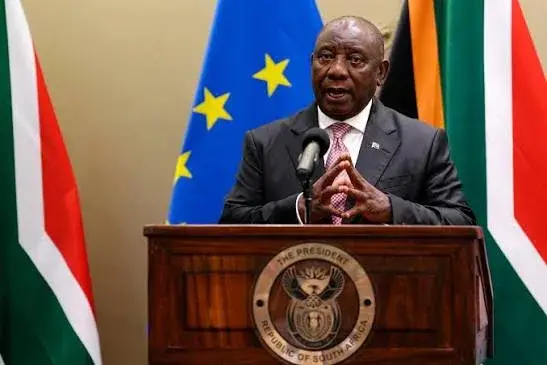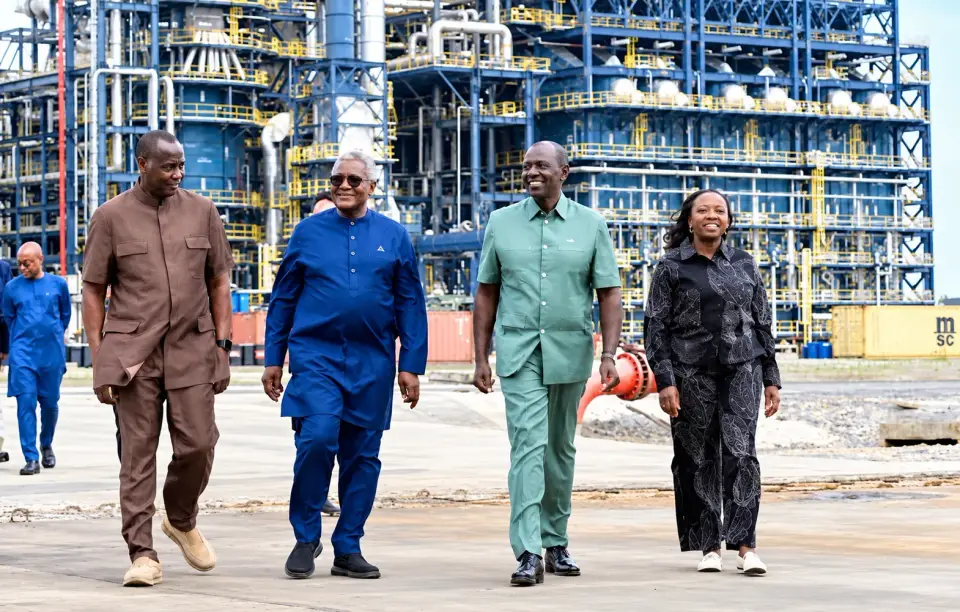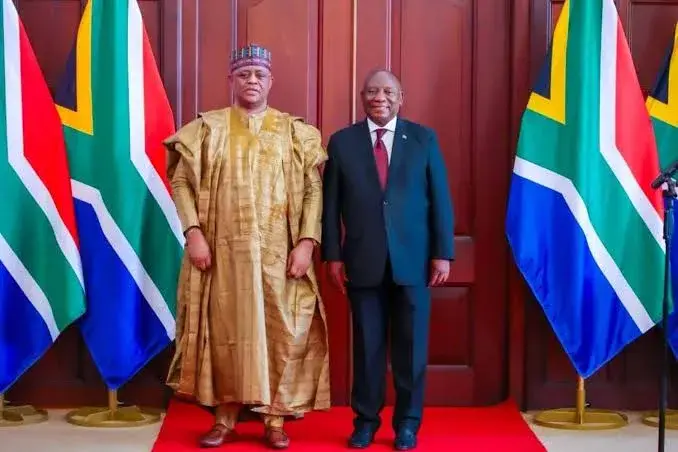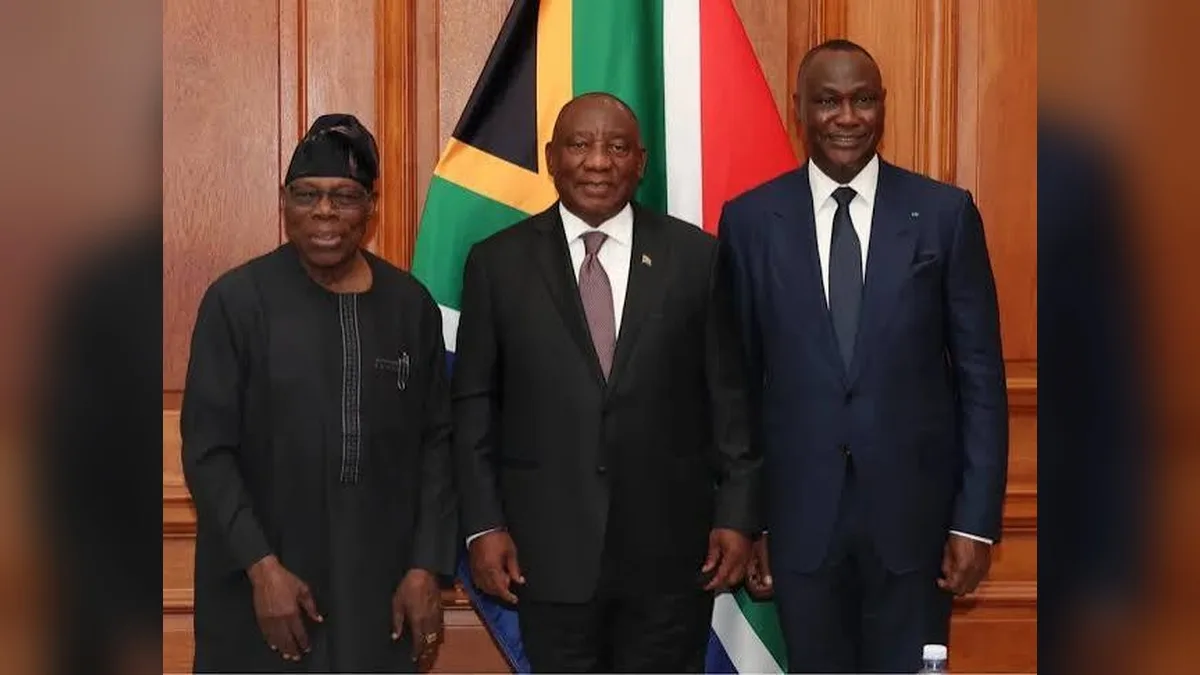
South African President Cyril Ramaphosa met with former Nigerian President Olusegun Obasanjo and leaders of the Africa Finance Corporation (AFC) on Thursday, 26 November 2026, to advance continental infrastructure financing.
The high-level discussions took place at the Union Buildings in Pretoria, South Africa. The AFC delegation was led by the multilateral financial institution’s President and Chief Executive Officer, Samaila Zubairu.
According to an official statement released by the South African Presidency, talks focused primarily on preparations for the upcoming Africa We Build Summit. The major investment conference is scheduled to take place in Johannesburg from 28 to 30 April 2027.
The summit will bring together heads of state, sovereign funds, institutional financiers, and private investors to convert Africa's long-term infrastructure ambitions into bankable, construction-ready projects.
Unlocking Financing for 69 PIDA Priority Projects
A central focus of the Pretoria meeting was the Programme for Infrastructure Development in Africa (PIDA), the African Union's flagship infrastructure initiative.
Continental data shows that 69 priority cross-border projects are currently at various stages of preparation and implementation under the PIDA framework. These projects span regional transport corridors, clean energy networks, cross-border water systems, and digital telecommunications backbones.
However, moving these initiatives from design blueprints to physical completion requires reliable, long-term capital that public budgets alone cannot provide.
“Through the Programme for Infrastructure Development in Africa, 69 priority projects are at various stages of implementation, requiring sustainable and predictable financing to move them forward,” the South African Presidency stated. “The discussions underscore the importance of mobilising investment and strengthening partnerships to turn Africa’s infrastructure ambitions into tangible progress.”
Mobilising Domestic Capital and Private Investors
The meeting highlighted the growing consensus among African leaders that public-sector borrowing has reached its limits in many jurisdictions, making private capital mobilization essential.
Obasanjo, who remains a prominent African Union special envoy and development advocate, emphasised that African countries must pool institutional capital and remove regulatory barriers that delay regional trade. The leaders stressed that domestic pension funds, sovereign wealth managers, and local commercial lenders must take a leading role in financing regional assets alongside international development finance institutions.
The forthcoming 2027 Johannesburg gathering builds on the inaugural Africa We Build Summit held in Nairobi, Kenya, in April 2026. That initial forum, co-hosted by the AFC and the Kenyan government, established regional transport corridors and domestic energy generation as the principal drivers of African industrialisation.
Regional Connectivity and What Comes Next
Closing Africa's annual infrastructure financing gap, estimated by multilateral lenders at between $68 billion and $108 billion, is essential to unlocking the full potential of the African Continental Free Trade Area (AfCFTA).
Without integrated freight rail, modern ports, dependable electricity grids, and seamless border crossings, intra-African trade remains constrained by high freight costs and logistics bottlenecks.
Following the Pretoria consultations, joint working groups from the South African government and the Africa Finance Corporation will begin project-packaging sessions with participating regional member states. These technical teams will finalize the investment prospectuses for the 69 PIDA projects before global capital markets convene in Johannesburg in April 2027.