Kenya’s Ruto Tours Dangote Refinery Ahead of Lamu Refinery Launch
Kenyan President William Ruto toured the Dangote Petroleum Refinery in Lagos ahead of Kenya’s planned Lamu refinery project, signalling deeper energy cooperation between East and West Africa.
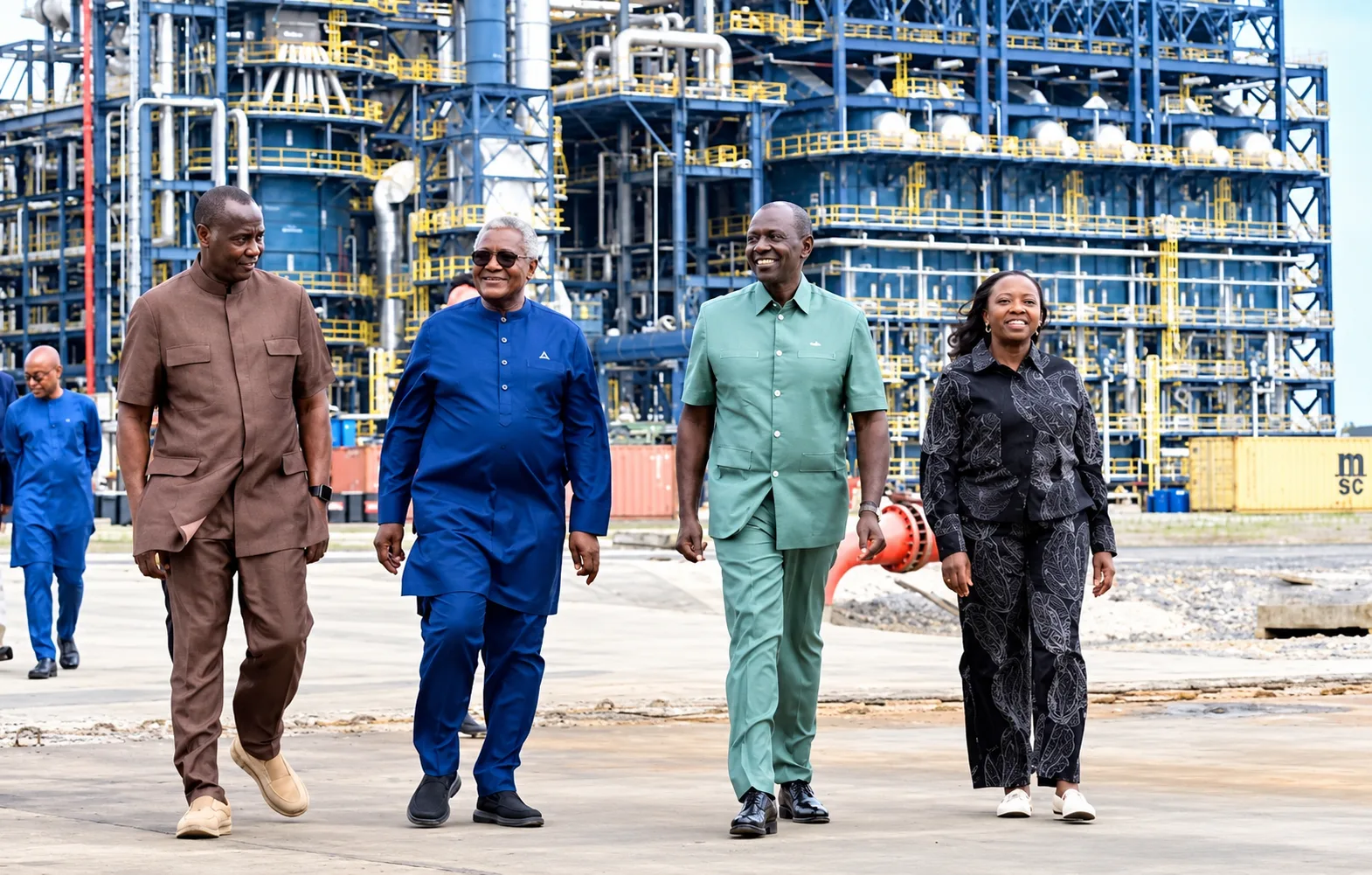
Kenyan President William Ruto has toured the Dangote Petroleum Refinery in Lagos ahead of the groundbreaking ceremony for Kenya’s proposed Dangote East African Refinery in Lamu, describing the Nigerian facility as a powerful demonstration of what African governments, investors and financial institutions can achieve when they work together.
The visit took place on Friday at the invitation of Aliko Dangote, President and Chief Executive of Dangote Industries Limited, and comes just days before construction is scheduled to begin on the $16 billion refinery and petrochemical complex in Kenya’s coastal Lamu County.
During the inspection, Ruto toured the refinery’s processing units, marine infrastructure and fuel loading facilities, saying the Lagos complex offers a blueprint for Africa’s industrial future. He praised the scale and ambition of the project, noting that it demonstrates the continent’s capacity to deliver world-class infrastructure through homegrown investment and strategic partnerships.
Ruto revealed that the planned Dangote East African Refinery in Lamu is expected to be larger than the Nigerian refinery, describing it as a transformative investment for East Africa’s petroleum industry. He said the project would significantly improve fuel reliability and energy security across the region while positioning Kenya as a major downstream energy hub.
According to the Kenyan president, the refinery is projected to create about 60,000 jobs during its construction and operational phases, while also stimulating the growth of related industries including fertilizer production, chemicals and packaging manufacturing. He said the development would accelerate Kenya’s industrialization agenda by retaining more value within the country rather than exporting raw resources.
Highlighting the scale of the Lagos facility, Ruto said the Dangote Refinery has a refining capacity of 700,000 barrels of crude oil per day and produces more than 100 million litres of petrol, diesel and aviation fuel daily. He also praised the engineering behind the project, noting that the Dangote Group constructed 120 kilometres of subsea pipelines and sea cables to transport crude oil directly from offshore vessels to the refinery.
The Lagos refinery has rapidly transformed Nigeria’s downstream petroleum sector, dramatically reducing the country’s dependence on imported petrol while expanding exports of refined products across West Africa. Its success has increasingly become a reference point for African countries seeking to strengthen domestic refining capacity and improve energy self-sufficiency.
The proposed Lamu refinery will process approximately 700,000 barrels of crude oil per day and will include an integrated petrochemical complex alongside supporting logistics infrastructure. Earlier this week, Engineers India Limited (EIL) signed a $450 million engineering and project management contract for the project, building on its previous role in developing and expanding the Dangote Refinery in Lagos.
Plans also include pipeline connections linking Lamu to Ethiopia, as well as a proposed Djibouti–Ethiopia corridor, forming part of Dangote’s broader vision for an interconnected East African energy network spanning roughly 4,000 kilometres.
Ruto’s visit underscores a broader shift in Africa’s approach to industrial development. Rather than exporting crude oil and importing refined fuels, countries across the continent are increasingly investing in domestic processing, regional value chains and large-scale manufacturing. If the Lamu refinery delivers on its promise, it could strengthen energy security, create tens of thousands of jobs and deepen economic integration between East and West Africa, making it one of the continent’s most consequential industrial projects in decades.
More on Africa
Africa
Crackdown on Foreign Traders Triggers Panic in Kenya Following Ruto’s Order
8 Sept 2026
Africa
After Immigration Panic, Kenya Offers 90 Days for Foreign Businesses to Comply
10 Sept 2026
Africa
Mahama Challenges Global Financial System Over Africa’s Wealth Outflows
16 Oct 2026
Africa
Nigeria–South Africa Tensions Rise as Fani-Kayode Issues Strong Warning
13 Sept 2026
Africa
Formula 1 Returns to Africa After 33 Years With Historic Rwanda Grand Prix Deal
13 Oct 2026
Partner with Follow Global Trends
Display banners, sponsored stories and founder spotlights.
You may also like
Africa
Mahama: Africa’s Youth Need Affordable Finance to Build Businesses
13 Oct 2026
Africa
South Africa Reverses Asylum Policy After Vehicles Burned and Foreign-Owned Shops Looted
10 Oct 2026

Africa
Multi-Car Crash Kills 21 in South Africa’s Western Cape
14 Sept 2026
Africa
Business Forum 2026: Mauritius Pitches Itself as Africa’s Financial Bridge
13 Sept 2026
Africa
Former Sierra Leone President Koroma Returns Home Under Nigerian Escort
6 Sept 2026
Africa
ECOWAS Swears In Five Judges as Faye Calls for Stronger Public Trust in Regional Justice
7 Oct 2026