
Mahama Challenges Global Financial System Over Africa’s Wealth Outflows
Ghanaian President John Dramani Mahama says Africa loses far more wealth through illicit financial flows, debt repayments and high borrowing costs than it receives in foreign aid, calling for reforms to the global financial system.
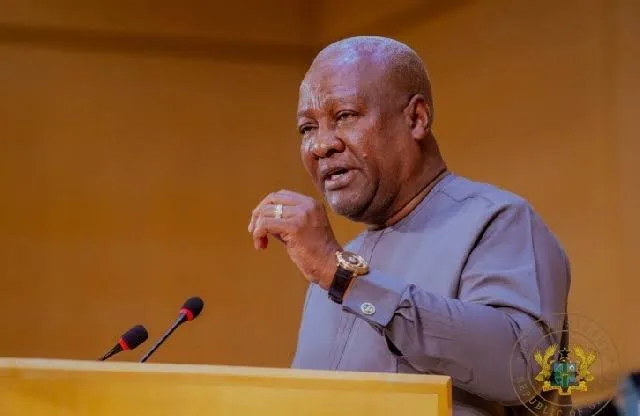
Ghanaian President John Dramani Mahama has challenged the fairness of the global financial system, arguing that Africa loses more than $240 billion annually through illicit financial flows, debt servicing and high borrowing costs while receiving substantially less in development assistance.
Speaking at the Council on Foreign Relations (CFR) in New York on September 25, Mahama said the imbalance exposed structural problems in how African economies access international finance, manage debt and benefit from the natural resources they export. He argued that the continent needed more affordable borrowing, stronger representation in global financial institutions and greater capacity to retain wealth generated within its economies.
Mahama broke down his estimate of the annual outflow into three main components. He put illicit financial flows at about $90 billion, attributing them in part to practices such as trade misinvoicing and transfer pricing, which can allow companies to shift profits across borders and reduce the tax paid in the countries where economic activity takes place. He estimated that debt servicing accounted for another $80 billion, while risk premiums added approximately $40 billion to the cost of financing for African countries. Together, he said, these outflows exceeded $240 billion annually.
The president contrasted that figure with what he described as a sharp fall in official development assistance to Africa, from $70 billion in 2023 to $30 billion in 2025. His comparison was intended to highlight the gap between the money leaving the continent and the development funding flowing in, although the figures are Mahama’s estimates and should not be treated as a single independently verified measure of all financial flows into and out of Africa.
International data nevertheless confirms that foreign aid has come under significant pressure. The Organization for Economic Co-operation and Development (OECD) reported that official development assistance from its member countries and associates fell by 23.1 per cent in real terms in 2025, reaching $174.3 billion worldwide. Bilateral aid to sub-Saharan Africa declined by 26.3 per cent, reflecting the broader contraction in development funding. The OECD’s figures cover assistance from donor countries across the world, rather than Africa alone, and therefore are not directly interchangeable with Mahama’s estimate.
High borrowing costs formed another central part of Mahama’s argument. At the CFR event, he said African countries borrowed at rates up to eight times higher than those available to other parts of the world, making it harder for governments to finance infrastructure, healthcare, education and responses to climate-related disasters. He argued that debt restructuring addresses the consequences of the problem but does not resolve the underlying conditions that make borrowing expensive in the first place.
The World Bank’s debt data illustrates the wider pressure facing developing economies. Its December 2025 International Debt Report found that developing countries paid $741 billion more in principal and interest on external debt than they received in new financing between 2022 and 2024. The Bank also reported that borrowing through international bond markets remained costly, with interest rates around 10 per cent for some issuances, roughly twice the levels seen before 2020. The figures cover developing countries as a whole, not Africa alone, but they underline the financing constraints facing many lower-income economies.
Mahama also called for changes in the way African countries are assessed by financial markets, arguing that risk premiums can make financing disproportionately expensive. He urged reforms that would give the continent greater influence within multilateral institutions, including the International Monetary Fund, and allow African governments to secure loans on more favourable terms. His proposals form part of a wider push to change the relationship between Africa and international development partners from one centred on aid dependency to one based on investment, trade and greater economic self-reliance.
The debate carries particular significance as African governments face competing demands on public finances, including debt repayments, infrastructure investment, job creation and essential social services. For countries rich in oil, minerals and agricultural commodities, the challenge is not only attracting capital but also retaining a greater share of the value generated from their resources. Mahama’s argument places the terms of borrowing, the prevention of illicit financial flows and the scale of development assistance at the centre of discussions about whether Africa can convert its economic resources into sustained development.
More on Africa
Africa
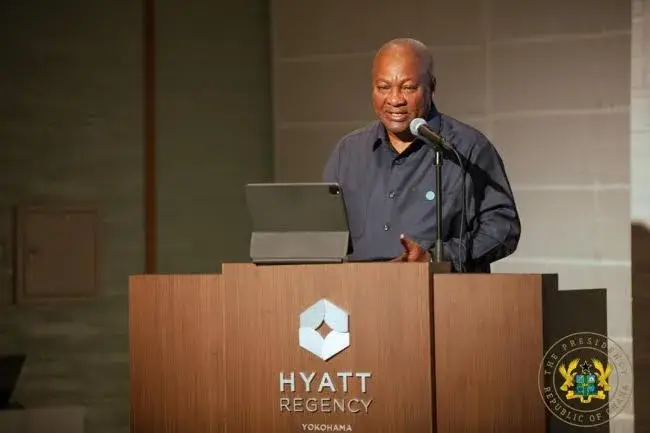
Mahama: Africa’s Youth Need Affordable Finance to Build Businesses
13 Oct 2026
Africa
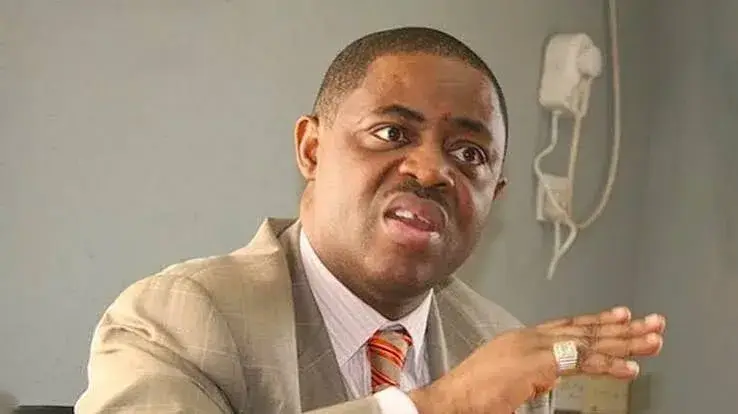
Nigeria–South Africa Tensions Rise as Fani-Kayode Issues Strong Warning
13 Sept 2026
Africa
Business Forum 2026: Mauritius Pitches Itself as Africa’s Financial Bridge
13 Sept 2026
Africa
South Africa Reverses Asylum Policy After Vehicles Burned and Foreign-Owned Shops Looted
10 Oct 2026
Africa
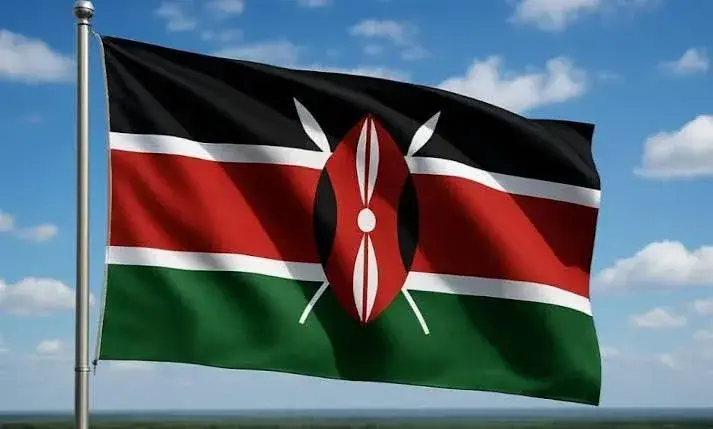
After Immigration Panic, Kenya Offers 90 Days for Foreign Businesses to Comply
10 Sept 2026
Partner with Follow Global Trends
Display banners, sponsored stories and founder spotlights.
You may also like
Africa
Crackdown on Foreign Traders Triggers Panic in Kenya Following Ruto’s Order
8 Sept 2026

Africa
Formula 1 Returns to Africa After 33 Years With Historic Rwanda Grand Prix Deal
13 Oct 2026
Africa
Kenya’s Ruto Tours Dangote Refinery Ahead of Lamu Refinery Launch
26 Sept 2026

Africa
Multi-Car Crash Kills 21 in South Africa’s Western Cape
14 Sept 2026
Africa
Former Sierra Leone President Koroma Returns Home Under Nigerian Escort
6 Sept 2026
Africa
ECOWAS Swears In Five Judges as Faye Calls for Stronger Public Trust in Regional Justice
7 Oct 2026