
South Africa Remains Africa’s Largest Economy at $489.1 Billion
South Africa is projected to remain Africa’s largest economy in 2026, with nominal gross domestic product of $489.1 billion, ahead of Egypt and Nigeria, according to the International Monetary Fund’s latest estimates.
South Africa is set to retain its position as Africa’s largest economy in 2026, with an estimated nominal gross domestic product (GDP) of $489.1 billion, according to the International Monetary Fund’s October economic projections. Egypt ranks second at approximately $442.9 billion, while Nigeria is third with an estimated $386.7 billion.
The latest figures put South Africa’s economy about $46.2 billion ahead of Egypt’s and more than $102 billion above Nigeria’s. Together, South Africa, Egypt, Nigeria, Algeria and Morocco account for an estimated $1.85 trillion in economic output, representing roughly 51 per cent of Africa’s combined GDP of $3.63 trillion this year.
The ranking is based on nominal GDP, which measures the value of goods and services produced in an economy at current prices and converts that output into US dollars using market exchange rates. It is a measure of overall economic size, not a direct measure of average income, living standards or how evenly wealth is distributed. The IMF’s October 2026 World Economic Outlook database contains estimates and projections that can change as national economic data are updated.
South Africa’s position reflects its broad economic base, which includes financial services, mining, manufacturing, retail and other industries, alongside relatively developed financial markets. Its Johannesburg Stock Exchange is also a major centre for capital raising and investment on the continent. However, the country’s leading position by economic size does not mean it is experiencing the fastest growth among Africa’s major economies. The IMF’s earlier 2026 projections placed South African real growth at around 1.1 per cent, highlighting the gap between the scale of an economy and the pace at which it expands.
Egypt, with a projected GDP of $442.9 billion, remains South Africa’s closest challenger. Its large domestic market, tourism industry, manufacturing activity and revenues linked to the Suez Canal contribute to its economic weight. Nigeria, Africa’s most populous country, follows at $386.7 billion. The value of Nigeria’s output measured in US dollars has been affected by the depreciation of the naira, illustrating how exchange-rate movements can change a country’s position in nominal GDP rankings even when domestic production follows a different trajectory.
The latest ranking also points to changes further down the table. Algeria is fourth with an estimated $331.9 billion, followed by Morocco at $195.6 billion. Angola ranks sixth at $157.3 billion, narrowly ahead of Kenya at $151.2 billion. Ghana and Ethiopia follow with estimated economies of $128.6 billion and $127.1 billion respectively, while the Democratic Republic of Congo enters the top ten at about $122.3 billion, ahead of Côte d’Ivoire.
The figures underline the concentration of economic output among a small number of African countries, while also showing the growing scale of economies across different regions. For investors and policymakers, the ranking offers a snapshot of market size, but it does not by itself establish which countries offer the strongest growth prospects or the greatest gains in household prosperity. Those assessments also depend on productivity, employment, inflation, infrastructure, income per person and the stability of the business environment.
South Africa’s continued lead is therefore an important measure of its economic weight, rather than a verdict on the wellbeing of its population or the strength of its current growth. The estimates remain subject to revision, and the wider contest among Africa’s leading economies will continue to reflect changes in production, commodity markets and exchange rates as well as the ability of countries to turn economic output into jobs and higher living standards.
More on Africa

Africa
Nigeria–South Africa Tensions Rise as Fani-Kayode Issues Strong Warning
13 Sept 2026
Africa
South Africa Reverses Asylum Policy After Vehicles Burned and Foreign-Owned Shops Looted
10 Oct 2026

Africa
Multi-Car Crash Kills 21 in South Africa’s Western Cape
14 Sept 2026
Africa
Business Forum 2026: Mauritius Pitches Itself as Africa’s Financial Bridge
13 Sept 2026
Africa
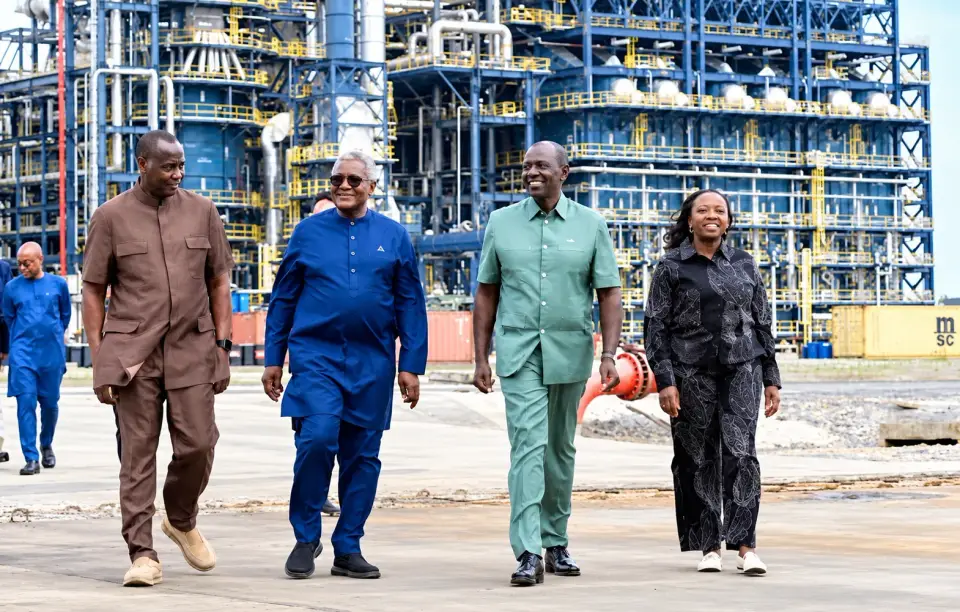
Kenya’s Ruto Tours Dangote Refinery Ahead of Lamu Refinery Launch
26 Sept 2026
Partner with Follow Global Trends
Display banners, sponsored stories and founder spotlights.
You may also like
Africa
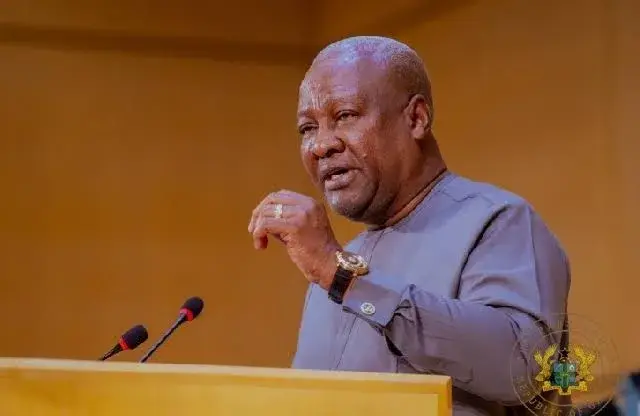
Mahama Challenges Global Financial System Over Africa’s Wealth Outflows
16 Oct 2026

Africa
Formula 1 Returns to Africa After 33 Years With Historic Rwanda Grand Prix Deal
13 Oct 2026

Africa
South African Surgeon Makes History With 3D-Printed Ear Transplant That Restores Hearing
17 Sept 2026

Africa
US Imposes Targeted Visa Restrictions on South Africans Over Land and Race Policies
16 Sept 2026
Africa
Immigration Tensions Rise as South African Activists Issue September Ultimatum
11 Sept 2026

Africa
24-Hour AfCFTA Certificate Reform Set to Accelerate Nigeria’s Non-Oil Exports
10 Sept 2026