
South African Surgeon Makes History With 3D-Printed Ear Transplant That Restores Hearing
A groundbreaking 3D-printed middle-ear transplant has helped a South African man regain hearing, marking a major advance in reconstructive medicine.
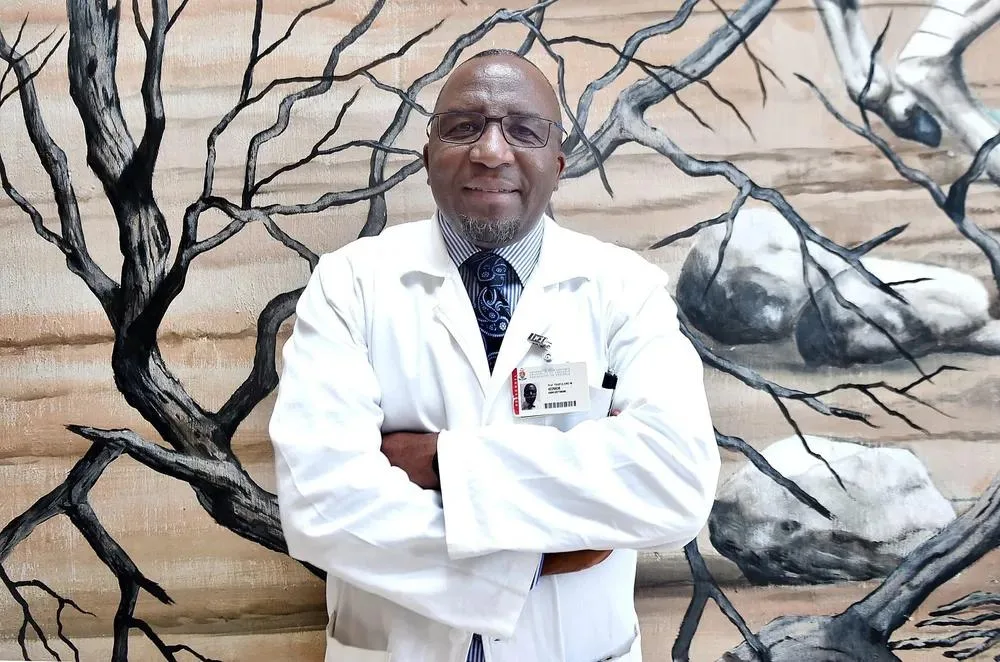
A South African surgical team has achieved a medical milestone after successfully restoring a patient’s hearing using a 3D-printed middle-ear transplant, becoming one of the first procedures of its kind to combine advanced imaging, personalized printing and reconstructive ear surgery in a living patient.
The pioneering operation was led by Professor Mashudu Tshifularo, an ear, nose and throat (ENT) specialist at the University of Pretoria, whose research has focused on developing patient-specific implants for hearing restoration. The procedure involved replacing damaged middle-ear structures with a customized implant produced using high-precision 3D-printing technology. Rather than relying on conventional prosthetic components, the surgical team created a bespoke implant tailored to the patient’s anatomy using detailed CT scans. The implant was designed to replace tiny bones within the middle ear—known as the ossicles—which transmit sound vibrations from the eardrum to the inner ear.
Damage to these delicate bones can result from chronic infections, trauma or congenital conditions, often leading to significant conductive hearing loss. By recreating the patient’s anatomy with a 3D-printed structure, surgeons aimed to restore the natural pathway through which sound travels.
The recipient, an adult South African man who had experienced hearing impairment due to middle-ear damage, reportedly regained hearing following the operation after the implant successfully transmitted sound vibrations. Doctors said the customized approach reduced the risk of implant displacement and improved anatomical compatibility compared with traditional reconstruction techniques.
Medical experts say the procedure represents more than a technological achievement; it demonstrates how personalized medicine is reshaping surgical care by allowing implants to be designed specifically for individual patients rather than relying on standardized components/
Hearing loss affects hundreds of millions of people worldwide, with many cases linked to preventable or treatable middle-ear disease. In many African countries, delayed diagnosis and limited access to specialised ENT services contribute to lifelong hearing disability, particularly among children and older adults.
Researchers believe advances in affordable medical 3D printing could eventually make complex reconstructive procedures more accessible across developing healthcare systems, especially as hospitals increasingly adopt digital imaging and additive manufacturing technologies.
While further clinical studies will be needed to evaluate long-term outcomes, the success of the South African operation highlights the growing role of African researchers in global medical innovation. It also signals a future in which personalized, 3D-printed implants may transform the treatment of hearing loss and other reconstructive conditions across the continent.
More on Africa
Africa
Immigration Tensions Rise as South African Activists Issue September Ultimatum
11 Sept 2026

Africa
Fatima Ezzahra El Mansouri Makes History as Morocco’s First Female PM
30 Sept 2026

Africa
US Imposes Targeted Visa Restrictions on South Africans Over Land and Race Policies
16 Sept 2026

Africa
Nigeria–South Africa Tensions Rise as Fani-Kayode Issues Strong Warning
13 Sept 2026
Africa
South Africa Reverses Asylum Policy After Vehicles Burned and Foreign-Owned Shops Looted
10 Oct 2026
You may also like
Africa
Afreximbank, ATDC Sign $500 Million Facility to Boost African Commodity Trade
23 Sept 2026

Africa
Multi-Car Crash Kills 21 in South Africa’s Western Cape
14 Sept 2026
Africa
Xenophobia: 1,695 Nigerians Evacuated from South Africa, Says Ambassador Ajayi Alexander
5 Sept 2026
Africa
Tigray Declares “Defensive War” as Fighting Escalates in Ethiopia
24 Sept 2026

Africa
24-Hour AfCFTA Certificate Reform Set to Accelerate Nigeria’s Non-Oil Exports
10 Sept 2026

Africa
From the Goalposts to the Throne: Ugandan Royalty Awaits Football Captain George Kamurasi
9 Sept 2026