Fatima Ezzahra El Mansouri Makes History as Morocco’s First Female PM
Morocco has appointed Fatima Ezzahra El Mansouri as its first female prime minister, placing a veteran politician at the centre of a new government facing major economic and social pressures.
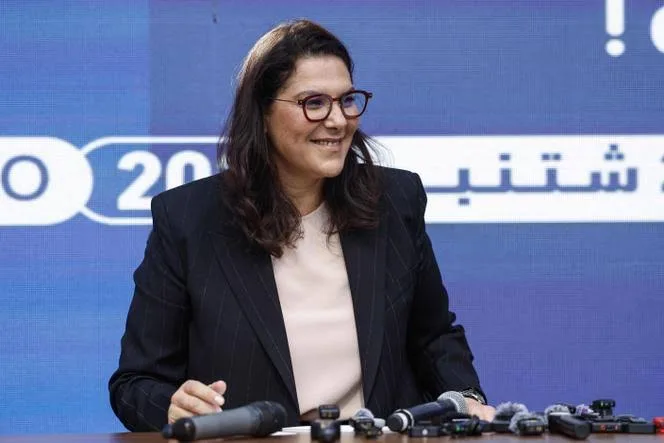
Morocco has appointed its first woman to head the government, with King Mohammed VI naming Fatima Ezzahra El Mansouri prime minister after her Authenticity and Modernity Party emerged with the largest number of seats in last week's parliamentary election.
The 50-year-old lawyer, who has served as Morocco's urban planning minister and mayor of Marrakech, was appointed on Tuesday and immediately tasked with forming a new government. Her appointment marks a significant moment in Moroccan political history and makes her only the second woman to serve as a prime minister in the Arab world, following Tunisia's Najla Bouden.
The appointment followed parliamentary elections held on September 23. El Mansouri's PAM won 97 of the 395 seats in the House of Representatives, finishing ahead of the National Rally of Independents, which won 66 seats, and the Istiqlal Party, which secured 65. The Islamist Justice and Development Party won 54 seats. PAM's result gives it the largest bloc but falls well short of the 198 seats needed for a parliamentary majority.
That means El Mansouri's first major political task will be negotiating a governing coalition. She has indicated that discussions with other parties will begin immediately, saying there would be no “red lines” in the coalition talks and that her government would need to respond to high expectations, particularly among young Moroccans.
Under Morocco's constitutional system, the king appoints the head of government from the party that wins the most seats in the House of Representatives. The monarch retains significant authority over areas including defence and foreign policy, meaning El Mansouri's appointment does not represent a transfer of all executive power from the palace to the prime minister's office.
El Mansouri brings considerable political and administrative experience to the role. She became Marrakech's first female mayor in 2009 and later served in government, including as minister responsible for housing and urban policy. Her background in local government and urban development is particularly relevant as Morocco continues to invest heavily in infrastructure and prepare to co-host the 2030 FIFA World Cup with Spain and Portugal.
Her rise also comes at a time of economic and social pressure. Youth unemployment, living costs and access to public services have become important concerns, while recent youth-led protests have highlighted dissatisfaction with the quality of healthcare, education and other public services. El Mansouri made younger Moroccans a central part of her campaign message, arguing that the government needs to provide practical solutions rather than promises alone.
The election itself was marked by relatively low participation. Reuters reported voter turnout at about 38%, reflecting a level of public engagement that will present the incoming government with a challenge as it seeks to build confidence among voters, particularly younger citizens.
El Mansouri's political career has also been closely associated with PAM, a party established in 2008 and positioned as a counterweight to Morocco's Islamist Justice and Development Party. The party promotes social modernisation and secular-leaning positions, although Morocco's political system remains heavily shaped by the constitutional role and authority of the monarchy.
Her appointment has been welcomed as a landmark for women's political representation. El Mansouri described the moment as historic and said it was a source of pride for Moroccan women. Yet the significance of the appointment will ultimately be measured not only by the symbolism of having a woman at the head of government, but by what her administration is able to deliver on jobs, public services, economic opportunity and social inclusion.
The new government will also inherit major strategic responsibilities, including overseeing preparations for the 2030 World Cup and managing the country's broader economic development programme. Morocco has been investing heavily in infrastructure ahead of the tournament, creating both opportunities and pressure for the incoming administration to deliver projects efficiently while addressing everyday economic concerns.
El Mansouri's appointment is therefore significant on two levels. It breaks a longstanding gender barrier in Morocco's highest executive office while placing a new political figure at the centre of a government that must navigate coalition negotiations, youth expectations and a demanding development agenda. The broader significance will depend on whether this historic change in representation is accompanied by measurable progress on the economic and social issues that shaped the country's latest political contest.
More on Africa

Africa
South African Surgeon Makes History With 3D-Printed Ear Transplant That Restores Hearing
17 Sept 2026
Africa
Tanzania Mourns Death of First Gentleman Hafidh Ameir Hassan
7 Sept 2026
Africa
Formula 1 Returns to Africa After 33 Years With Historic Rwanda Grand Prix Deal
13 Oct 2026
Africa
Ghana to Submit Formal Application to Join BRICS
8 Oct 2026
Africa
Tigray Declares “Defensive War” as Fighting Escalates in Ethiopia
24 Sept 2026
Partner with Follow Global Trends
Display banners, sponsored stories and founder spotlights.
You may also like
Africa
Burkina Faso Reintroduces Death Penalty After Eight-Year Abolition
21 Oct 2026
Africa
South Africa Remains Africa’s Largest Economy at $489.1 Billion
18 Oct 2026
Africa
Mahama Challenges Global Financial System Over Africa’s Wealth Outflows
16 Oct 2026
Africa
Mahama: Africa’s Youth Need Affordable Finance to Build Businesses
13 Oct 2026
Africa
South Africa Reverses Asylum Policy After Vehicles Burned and Foreign-Owned Shops Looted
10 Oct 2026
Africa
ECOWAS Swears In Five Judges as Faye Calls for Stronger Public Trust in Regional Justice
7 Oct 2026