Euracare Challenges Probe Into Death of Chimamanda Adichie’s Son
Euracare Hospital is asking a Lagos High Court to halt the coroner’s inquest into the death of Chimamanda Adichie’s 21-month-old son, with the court set to rule on October 12.

A legal battle over the circumstances surrounding the death of Chimamanda Ngozi Adichie’s young son has returned to the Lagos State High Court, with Eurapharma Care Services Nigeria Limited, operator of Euracare Multi-Specialist Hospital, asking the court to stop the ongoing coroner’s inquest.
Justice Aishat Opesanwo, sitting in Ikoyi, has reserved October 12, 2026, to rule on the hospital’s application after hearing arguments from Euracare, the child’s parents, the Lagos State Government and Atlantis Paediatric Hospital. The case centres on whether the coroner can continue with the inquiry and whether the hospital can be required to present evidence before the family has formally presented its allegations.
Nkanu Adichie-Esege, one of Adichie and her husband Ivara Esege’s twin sons, died on January 7, 2026, at Euracare in Victoria Island, Lagos, after receiving treatment at Atlantis Paediatric Hospital and subsequently being referred to Euracare for medical procedures. The family has alleged breaches of the duty of care in the treatment of the child. Euracare has rejected the allegations, describing claims of medical negligence as inaccurate and unfounded.
The hospital’s latest challenge focuses partly on the order in which evidence is expected to be presented. Its lawyer, Senior Advocate of Nigeria Taiwo Osipitan, argued that Euracare and its medical personnel should not be required to open their case before the family alleging medical incompetence has first presented evidence.
Osipitan also challenged the continuation of the inquest following the cremation of Nkanu’s remains. He argued that the absence of the body prevents a post-mortem examination and therefore creates a fundamental difficulty for an inquiry whose purpose includes determining how and why the child died. The hospital's position is that the coroner's jurisdiction is affected by the fact that the remains are no longer available for examination.
The child's parents have taken the opposite position. Represented by Kemi Pinheiro, SAN, they asked the High Court to dismiss the hospital's application, arguing that it had been brought too early. Pinheiro told the court that the coroner had not yet taken witness testimony or made a substantive finding that could be subjected to judicial review.
He also argued that Lagos State’s Coroners System Law allows an inquest to proceed where a body has been destroyed or cannot be recovered. In his submission, the cremation of Nkanu’s remains does not automatically remove the coroner’s authority to investigate the circumstances of the death. The Lagos State Attorney-General, Lawal Pedro, SAN, backed that position and also urged the court to dismiss the hospital’s challenge.
Atlantis Paediatric Hospital, where Nkanu had received earlier treatment, has also opposed Euracare’s application. Its lawyers told the court that the question over the order of evidence had already been addressed during proceedings in April, when it was agreed that the family would lead evidence first. They also relied on provisions of the Coroners System Law to argue that an inquest can proceed even when a deceased person's remains are unavailable.
The High Court's intervention follows an earlier order in June temporarily staying the coroner's proceedings while Euracare pursued its judicial review application. The hospital had obtained permission to challenge aspects of the inquest, resulting in the proceedings being adjourned to October.
The case has also developed on a separate medical-regulatory track. In March, the Medical and Dental Council of Nigeria's investigative panel said it had found a prima facie case of medical negligence against three doctors connected with the child's care and imposed interim suspensions pending disciplinary proceedings. The doctors include Euracare's medical director, its anaesthesiologist and the chief medical officer of Atlantis Paediatric Hospital. The panel's finding is preliminary and does not constitute a final determination of professional or legal liability.
That distinction is important as the different proceedings continue. A coroner's inquest is intended to establish facts surrounding a death rather than determine criminal guilt, while the medical disciplinary process addresses professional conduct. The High Court, meanwhile, is being asked to determine whether the hospital's legal challenge to the conduct and jurisdiction of the inquest can succeed at this stage.
For Nkanu's family, the October ruling represents another important step in a process that has already involved medical investigations, regulatory action and repeated court appearances. For Euracare and the other medical practitioners involved, the case remains a defence against allegations they have disputed. The broader significance is that the ruling could determine whether the coroner's inquiry can move forward despite the absence of the child's remains, while also shaping how questions of medical accountability and due process are handled in a case that has drawn national attention to the standards and oversight of paediatric care in Nigeria.

Health
65 Children Receive Life-Changing Free Surgeries in Peter Obi Birthday Initiative
3 Sept 2026
Health
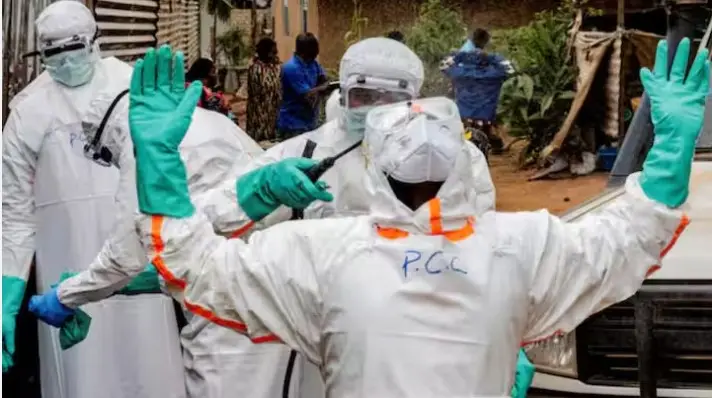
DR Congo Ebola Outbreak Spreads Exponentially, UN Warns as Death Toll Tops 2,500.
21 Aug 2026
Health
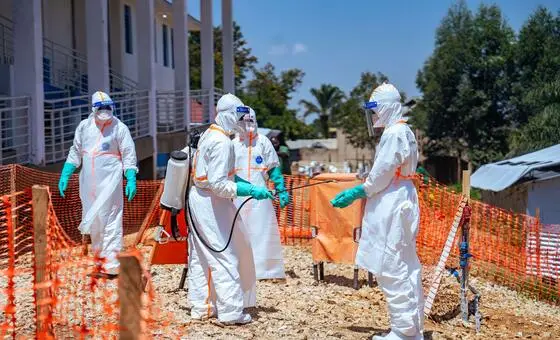
Ebola Breaks Deadliest-Outbreak Record in DR Congo as Death Toll Hits 2,325
17 Aug 2026

Health
Mbah Commissions Anchorage Pharmaceutical Production Facility in Enugu
22 Oct 2026

Health
France Confirms World’s First Human Case of Shamonda Virus
22 Oct 2026
Partner with Follow Global Trends
Display banners, sponsored stories and founder spotlights.
You may also like
Health
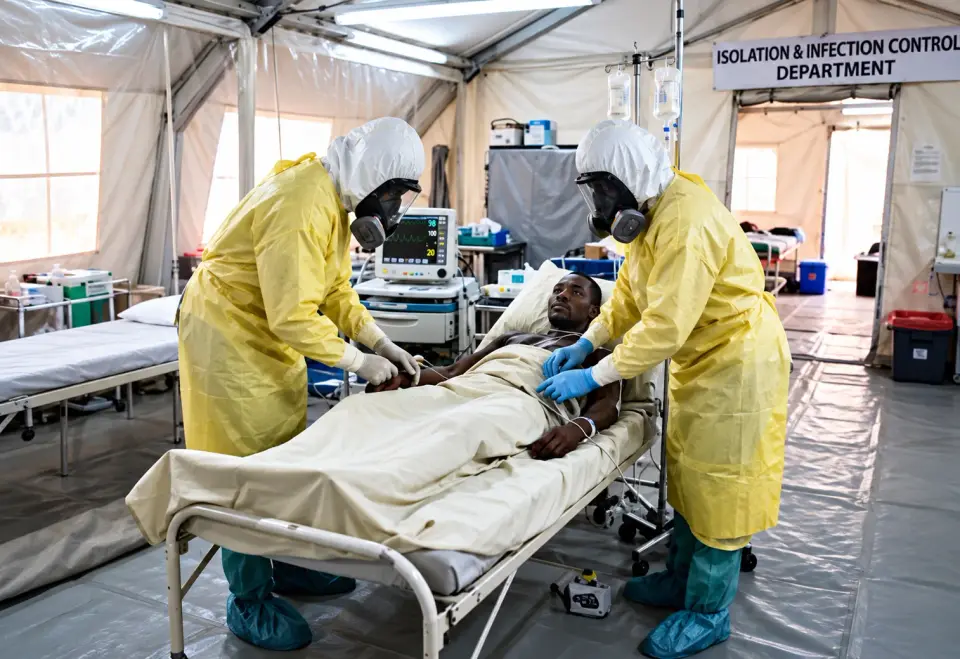
Nigeria Confirms First Ebola Case Since 2014, Tracks 44 Contacts
20 Oct 2026
Health
NAFDAC Uncovers Suspected ₦500m Fake Alcohol Factory
20 Oct 2026
Health
Pope Leo XIV Officially Diagnosed With Lung Cancer After Surgery
14 Oct 2026
Health
Pope Leo XIV to Undergo Surgery to Remove Early-Stage Lung Nodule
11 Oct 2026
Health
Kenya Confirms First Ebola Case Linked to DR Congo as Patient Dies
6 Oct 2026

Health
Light Meets the Brain: Three Scientists Win 2026 Nobel Medicine Prize
5 Oct 2026