
Enugu United Palm Products Begins Commercial Production, Invests $2.2m in Refinery
Enugu United Palm Products has begun commercial palm oil production, with plans to invest an additional $2.2 million in refining and expand into a fully integrated vegetable oil industrial complex.
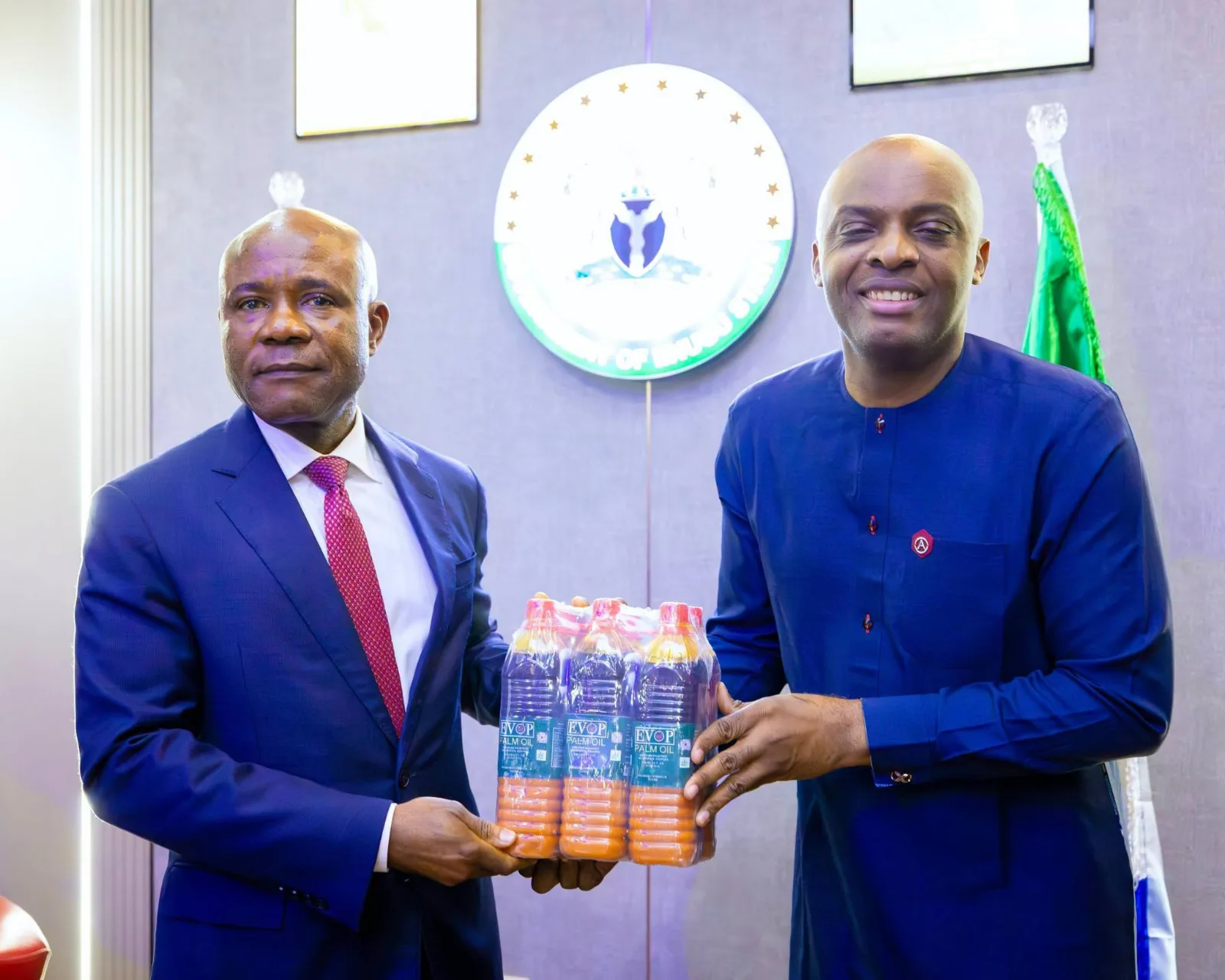
Enugu United Palm Products Limited (UPPL), the public-private partnership between Pragmatic Palms Limited and the Enugu State Government, has officially commenced commercial production of palm oil, marking a major milestone in the state’s drive to revive dormant agricultural assets and build a modern agro-industrial economy.
The company also announced a fresh $2.2 million investment in a refinery that will enable it to produce higher-value edible oil products, including vegetable oil, olein, stearin, refined palm kernel oil and sachet-packaged palm oil for households across Nigeria.
The development was unveiled at the Enugu Government House, where UPPL Managing Director Prof. George Nwangwu briefed Governor Peter Mbah on the company’s progress since assuming control of the formerly abandoned plantations two years ago. According to Nwangwu, estates in Ibite-Olo, Umulokpa and Ugwu-Oba have been restored to productive use after years of neglect, transforming what he described as overgrown forest into active commercial plantations. Facebook
More than 1,000 hectares have already been replanted as part of a long-term renewal programme aimed at replacing aging palm trees, many of which are over five decades old. Rather than relying solely on cultivation, the company says its strategy is built around complete value-chain integration, from harvesting fresh fruit bunches to milling, refining, packaging and distribution.
Nwangwu said the refinery will significantly expand the company’s production capacity by converting crude palm oil into premium edible products while also refining palm kernel oil, positioning UPPL to compete more effectively in Nigeria’s growing consumer oils market.
The company has already introduced its flagship palm oil brand, EVOP, which is now available in supermarkets and open markets nationwide. Sachet versions of the product are expected to enter the market within weeks, a move designed to make the brand more affordable and accessible to everyday consumers.
The EVOP name deliberately draws inspiration from AVOP, the iconic vegetable oil once produced in Nachi, Enugu State, reconnecting the new brand with the region’s industrial and agricultural heritage. Nwangwu said the company wanted the product to reflect both innovation and the legacy of eastern Nigeria’s once-thriving palm oil industry.
Beyond branding, UPPL says traceability will be one of its competitive advantages. Every product is produced in-house from its own plantations, carries regulatory certification from agencies including NAFDAC and SON, and features scannable codes that allow consumers to identify the product’s origin throughout the supply chain.
Governor Peter Mbah described the partnership as a model for unlocking the economic value of underutilized government assets, saying it reflects his administration’s broader strategy of attracting private investment into agriculture and manufacturing rather than relying on public ownership alone.
The governor pledged continued government support, including the delivery of 6,700 hectares committed under the partnership, improved security around the plantations and accelerated construction of key access roads linking the production estates. He also backed the company’s ambition to list on the Nigerian stock market within four years, describing it as the type of indigenous enterprise capable of attracting public investment and creating long-term wealth for the state.
Nigeria remains one of Africa’s largest consumers of palm oil, yet domestic production has struggled to keep pace with demand, leading to periodic shortages and increased imports of refined edible oils. Industry analysts have long argued that expanding local refining capacity, rather than exporting raw agricultural commodities, is essential to strengthening food security and creating higher-value manufacturing jobs.
For Enugu, UPPL’s commercial launch represents more than the return of a palm plantation. It signals an attempt to rebuild a once-celebrated agricultural industry through private capital, value addition and industrial processing, a strategy that could reshape the state’s economy while positioning it as a significant player in Nigeria’s edible oils sector.
More on Nigeria
Nigeria
Nigeria, US Sign Deal to Unlock $700bn Mineral Wealth
26 Sept 2026

Nigeria
World Bank: 67.27 Million Nigerians Covered by Cash Transfer Programme
21 Sept 2026
Nigeria
Four Rescued, One Feared Dead as Uncompleted Building Collapses in Enugu
13 Sept 2026

Nigeria
Peter Mbah Unveils 10,000+ Milestones Compendium as Enugu Transformation Accelerates
10 Sept 2026
Nigeria
Nigerian UN Envoy Rejects Claims of US Restrictions on Tinubu’s UNGA Trip
7 Sept 2026
You may also like
Nigeria
Nigeria Targets 24-Hour Electricity for Major Commercial Corridors
1 Oct 2026

Nigeria
Presidency: Tinubu to Return This Weekend After Extending Working Leave
22 Sept 2026

Nigeria
77 Enugu Families Get ₦1m Each After Returning From South Africa
19 Sept 2026

Nigeria
British High Commissioner-designate Pete Vowles Arrives in Nigeria
14 Sept 2026

Nigeria
Tinubu Ends Four-Week European Working Vacation, Returns to Nigeria
30 Sept 2026
Nigeria
Tompolo Boosts Tinubu’s 2027 Campaign With 50 Vehicles in Kano
28 Sept 2026