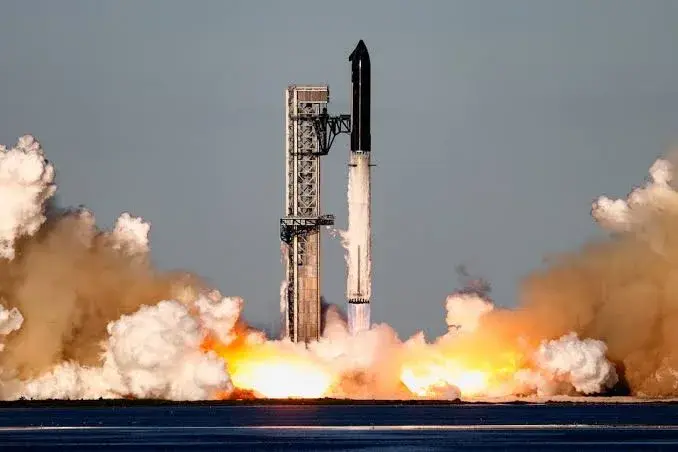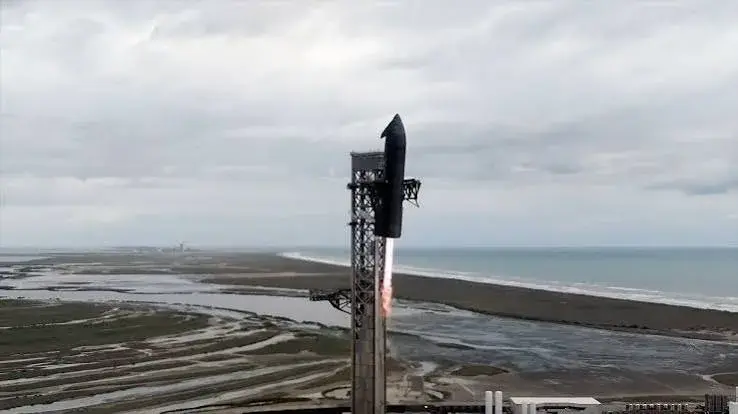
United States regulators have granted SpaceX landmark approval to deploy up to one million satellites into low Earth orbit to construct space-based data centres.
The Federal Communications Commission (FCC) issued the historic authorization on Wednesday, November 25, 2026. The license enables Elon Musk’s aerospace company to build "Starmind," a colossal orbital network designed to process massive artificial intelligence workloads beyond Earth's atmosphere.
Landmark FCC Approval for Orbital Computing
The FCC's Space Bureau approved the deployment in part, authorizing SpaceX satellites to operate at orbital altitudes between 500 and 1,002 kilometres.
Under the terms of the federal license, the satellites will communicate primarily through high-bandwidth optical laser links. Radiofrequency spectrum will be reserved strictly for backup and emergency telemetry.
FCC Chairman Brendan Carr praised the initiative as a transformative leap for American technological infrastructure.
"By moving compute capacity beyond Earth, SpaceX and the many competitors working on their own orbital data centers are meeting the moment," Carr stated. He added that the decision opens a bold new frontier to support America’s leadership in supercomputing and artificial intelligence.
Responding on social platform X, Musk welcomed the regulatory green light, stating the constellation will be a major asset to the global computing economy.
Harnessing Solar Power to Relieve Terrestrial Grids
The Starmind initiative seeks to bypass severe energy and land constraints currently threatening terrestrial data centres.
Rapid AI expansion has placed unprecedented stress on ground power grids and water cooling infrastructure. In orbit, satellites placed in sun-synchronous trajectories receive continuous, unfiltered sunlight.
SpaceX engineers estimate that solar panels in space can generate energy up to eight times more efficiently than terrestrial installations. Each satellite unit is designed to support computing payloads averaging 175 kilowatts, radiating waste heat directly into the cold vacuum of space.
Processed computational results will be beamed back to Earth using high-speed laser relays interconnected with the company's existing Starlink telecommunications network.
Hardware Milestones and the Nvidia Partnership
SpaceX intends to begin launching initial prototype modules in late 2027, with broader fleet deployment ramping up through 2028.
The company previously struck an agreement with chipmaker Nvidia to equip the Starmind satellites with space-hardened variants of its Vera Rubin NVL72 computing architecture. Engineers from both firms are currently adapting the processors to withstand intense cosmic radiation and extreme temperature swings.
The FCC has instituted strict deployment milestones extending through November 2040. SpaceX is required to launch its initial satellite by November 2033, reach 10 percent constellation capacity by 2035, and complete 50 percent deployment by 2038.
Fierce Objections from Tech Rivals and Astronomers
Despite securing regulatory approval, the Starmind project faces substantial pushback from aerospace competitors and the global scientific community.
Rival technology giant Amazon filed regulatory objections, dismissing the proposal as an unrealistic ambition that risks cluttering low Earth orbit. Satellite operator Viasat raised sharp warnings regarding collision risks, space debris accumulation, and atmospheric ozone depletion caused by deorbiting hardware.
Astronomical bodies, including the American Astronomical Society, expressed deep alarm over the unprecedented scale of the constellation.
Scientists warned that deploying one million reflective objects will severely disrupt ground-based optical and radio astronomy. In response, the FCC emphasized that SpaceX must comply with stringent orbital debris mitigation protocols and active collision avoidance standards throughout the lifespan of the network.