President Donald Trump has warned that American technology firms building artificial intelligence data centres outside the United States will face severe financial penalties.
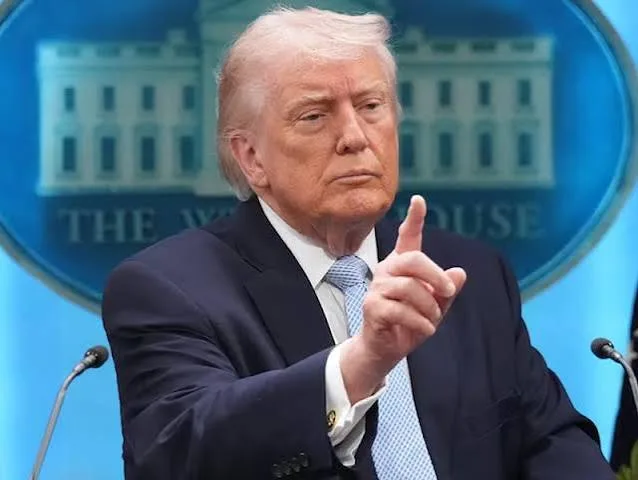
Speaking during a White House press briefing on Friday, Trump stated that his administration would impose “a tremendous tax” on companies choosing to expand computing hubs abroad.
The announcement signals a dramatic push to keep high-value computing facilities, energy investments, and tech jobs within American borders.
Keeping Critical AI Infrastructure On American Soil
Trump insisted that domestic tech firms must keep their primary AI infrastructure at home rather than seeking foreign locations.
“We’re not going to allow our companies to build data centres outside of our country,” Trump told reporters. “Because China will take all of them, and we’re not allowing that to happen.”
He added that if technology companies still decide to build overseas, they will pay steep penalties.
“If they do it, we want them to build it here,” Trump said. He acknowledged that he had not yet briefed his own officials on the policy before announcing it publicly.
Tech Hyperscalers Face Cross-Border Dilemma
The warning directly targets leading American cloud providers, including Microsoft, Alphabet, Amazon, Meta, and Oracle.
These technology giants have already spent billions of dollars constructing international data hubs across Europe, Asia, and the Middle East. Global facilities allow tech firms to deliver fast services to international users and comply with foreign data-privacy regulations.
Restricting foreign construction could disrupt planned international expansions. It may also complicate partnerships with foreign governments seeking access to advanced American artificial intelligence systems.
Legal Hurdles And Domestic Power Grid Realities
Trump did not specify how his administration would implement the proposed penalties or what existing executive authority he would use.
Under the United States Constitution, the legal power to levy federal taxes rests with Congress. Legal analysts note that creating a new tax on foreign corporate construction would require legislative approval or complex trade penalties.
At the same time, expanding data centres within the United States faces growing local resistance. Massive AI facilities require immense amounts of electricity and cooling water.
Local communities in several states recently voted against new projects, citing strained power grids and rising utility bills for residents.