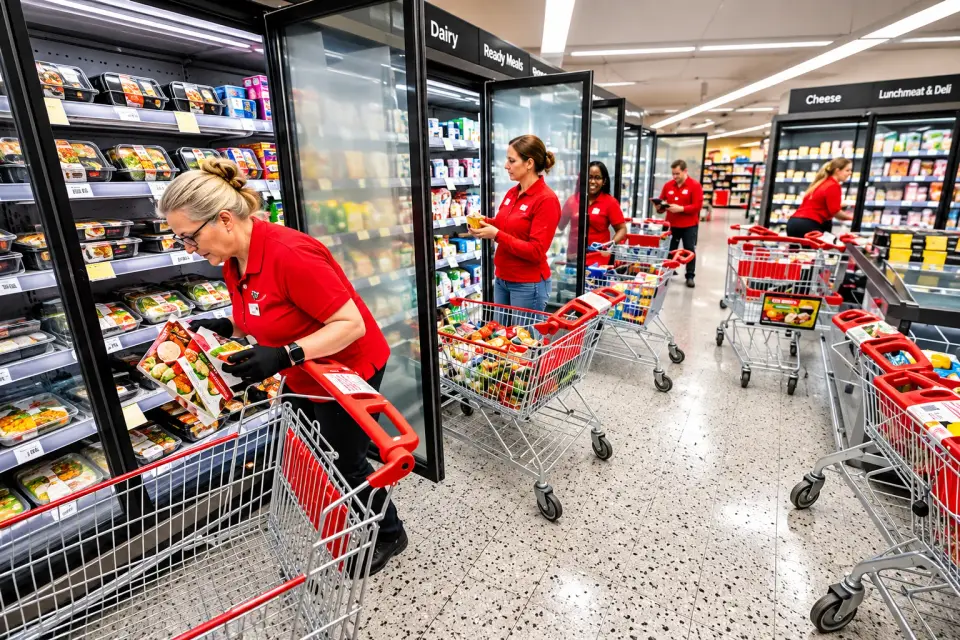
OpenAI announced research showing that its artificial intelligence systems are performing better at common domestic errands, particularly shopping and meal planning.
The findings come from an internal evaluation framework created to measure how well digital assistants handle practical household chores.
According to company data, the latest frontier model completed multi-step domestic tasks with higher accuracy than earlier versions.
The internal testing framework, named LifeVal, measures whether AI models can carry out multi-step domestic errands from start to finish.
Instead of evaluating coding skills or academic test scores, the benchmark focuses on tasks that people face in daily life.
Scenarios include planning customized weekly meals, finding local schools, organizing community volunteers, and managing personal household budgets.
Across the benchmark scenarios, OpenAI's flagship GPT-6 Astra model achieved an overall success rate of 80.6 percent.
That marks a clear increase from the 49.3 percent success rate recorded by its earlier GPT-5.2 model under identical criteria.
In specific tests, the model scored 90.4 percent when handling shopping and meal planning for people managing medical conditions like diabetes.
It also scored 93.1 percent on finding a kindergarten after a family move and 98 percent on coordinating volunteer relief ahead of a flood.
Building the Benchmark From Time Surveys
To create realistic tests, researchers examined established government surveys showing how people spend their waking hours.
The team reviewed data from major labor statistics to identify common domestic administrative burdens.
OpenAI then surveyed nearly four thousand active users across seven life categories, including health, education, caregiving, and retail.
A panel of about one hundred contributors provided specific household scenarios and scoring rubrics.
These participants outlined the personal context models needed to follow, including dietary restrictions and spending limits.
The benchmark rewarded models that navigated websites cleanly while applying personal instructions saved in earlier conversations.
Internal Grading and Practical Limits
While the reported scores indicate steady technical progress, the findings carry important reporting limitations.
OpenAI designed, administered, and graded the benchmark entirely within its own research team.
The company has not released the full task dataset, test prompts, or scoring code for independent external verification.
In addition, lab simulations differ significantly from live, unpredictable household commerce.
Real-world grocery ordering involves fluctuating inventory, sudden price changes, and payment verification checks that synthetic rubrics do not fully capture.
OpenAI acknowledged that completing web clicks does not always guarantee a practical result that satisfies a household's needs.
Tech Giants Race for Everyday Assistants
The announcement comes as major technology companies compete to develop autonomous agents that assist with personal logistics.
Rival firms across the industry are investing heavily in automated tools that coordinate schedules, organize travel, and assist with shopping and meal planning.
The industry's focus is steadily moving from basic conversational chatbots toward practical task execution.
For everyday users, the findings illustrate where personal AI assistants are heading, even as full real-world reliability remains an ongoing challenge.