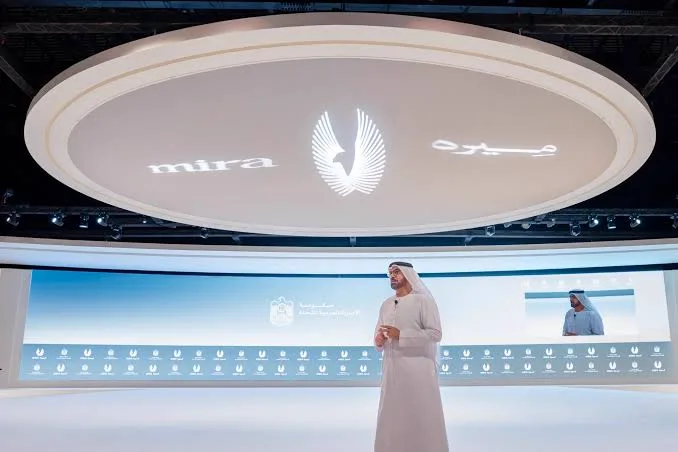
The United Arab Emirates has announced the creation of Mira, an artificial intelligence personal assistant designed to transform public administration by handling federal government services directly on behalf of citizens and residents.
Sheikh Mohammed bin Rashid Al Maktoum, Vice President, Prime Minister of the UAE, and Ruler of Dubai, unveiled the initiative on Monday, November 23, 2026, before an audience of approximately 1,000 ministers and state officials at the Dubai Exhibition Centre in Expo City Dubai.
Scheduled to begin its public rollout in March 2027, Mira represents a core pillar of the country’s Government 4.0 strategy. Officials confirmed the platform aims to transition 50 percent of all government services to artificial intelligence within the next two years.
Proactive Agentic AI Across Federal Departments
Unlike conventional informational chatbots that merely answer queries or point users to external web portals, Mira operates on "agentic" artificial intelligence.
The system is engineered to interpret user intent, coordinate directly between disparate government departments, and execute official tasks end-to-end. By securely accessing verified personal profile data, the platform eliminates repetitive paperwork and redundant data entry across agencies.
"Our goal is to make people’s lives easier, our goal is to save people time, our goal is a government that delivers the best services in the world," Sheikh Mohammed stated in an official announcement following the launch.
Sheikh Mohammed described the tool as a single, universal interface accessible on the mobile phone of every citizen, resident, and visitor across the Emirates.
Priority Services and Phased National Rollout
The federal platform will be deployed in progressive phases starting in March 2027, initially focusing on high-volume administrative procedures.
According to Mohamed Rashid bin Taliah, Assistant Minister of Cabinet Affairs for Government Experience Exchange Affairs, the first phase will cover identity and travel documentation, residency permits, healthcare coordination, and school administration.
Federal leadership plans to integrate all national government services into the Mira architecture before the end of 2027, creating a unified digital public service ecosystem.
Mohammad Abdullah Al Gergawi, Minister of Cabinet Affairs, described Mira as the first government assistant worldwide designed to work proactively for an entire national population.
Transforming Healthcare, Education, and Industry
Federal ministers detailed how Mira will directly impact daily life across key sectors:
- Education: Minister of Education Sarah Al Amiri explained that Mira will bridge the gap between families and schools. Parents will be able to track attendance, monitor academic performance, and receive AI-guided recommendations for their children's learning needs through a single conversational thread.
- Healthcare: Minister of State Ahmed Ali Al Sayegh noted that the system will significantly lower administrative hurdles for senior citizens and families. Users can check blood test results, review vaccination calendars, and schedule clinical consultations remotely without visiting health centres.
- Industry & Business: Dr. Sultan Al Jaber, Minister of Industry and Advanced Technology, announced that Mira consolidates 15 core industrial procedures. By cutting bureaucratic handoffs, the tool is expected to reduce corporate processing turnaround times from five days to just five minutes.
Strategic Vision and Data Governance Next Steps
The introduction of Mira builds upon the UAE's broader ambition to establish the world's most agile, AI-native civil service.
By automating routine administrative workflows, federal authorities project substantial economic efficiency gains and a sharp reduction in bureaucratic friction for businesses and investors.
Ahead of the March 2027 release, federal technical teams are conducting security assessments and user-experience trials across federal agencies. Officials emphasized that robust data protection and privacy protocols will govern the platform, ensuring verified citizen data remains protected within sovereign digital infrastructure.