
Obi: Nigeria Is Not Officially at War, Yet We Keep Counting Bodies.
Peter Obi says the latest killings and abductions show Nigeria needs prevention, not condolences after attacks.
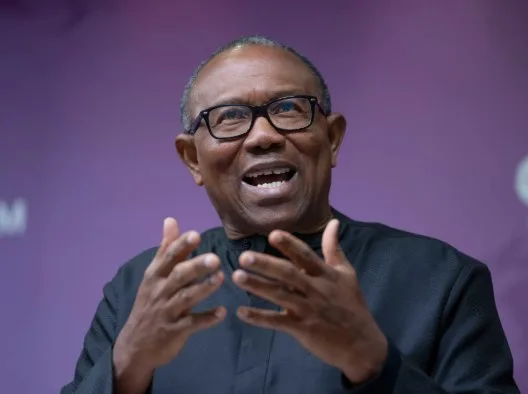
Former Anambra State governor and 2027 presidential candidate Peter Obi has condemned the latest wave of killings and abductions in Benue, Plateau and Niger states, warning that Nigeria cannot continue responding to attacks by simply counting the dead after each incident.
In a statement published on Sunday, Obi described the violence across the three North-Central states as part of a wider national security crisis rather than a collection of isolated incidents. He called on governments at the federal, state and local levels to take more decisive measures to protect communities, rescue abducted citizens and bring perpetrators to justice.
Obi pointed to the recent attack in Jwak Maitumbi, Mangu Local Government Area of Plateau State, where he said at least 23 people were officially reported killed. He added that residents had put the death toll above 30 and that more than 45 houses were reportedly destroyed. The differing figures underline the difficulty of establishing an immediate and independently verified toll following attacks in remote communities.
He also cited reports from Borgu Local Government Area of Niger State, where more than 40 people were reportedly killed and over 100 abducted. Obi acknowledged that those figures remained contested, making clear that they should not be treated as independently confirmed totals.
Benue, he said, was facing a similar pattern, with repeated attacks resulting in deaths, abductions and the destruction of homes and livelihoods. Obi argued that the concentration of recent violence in neighbouring North-Central states should be treated as a warning about a broader security problem affecting communities beyond the immediate locations of the attacks.
His central criticism was directed at what he sees as a reactive approach to insecurity. Rather than waiting for an attack and responding afterwards, Obi called for stronger intelligence gathering, faster security responses and better protection for vulnerable communities. He also urged authorities to intensify efforts to rescue abducted Nigerians and prosecute those responsible.
“Nigeria is not officially at war, yet citizens are being attacked in their villages,” Obi said, describing a situation in which people are abducted from their communities, forced from their homes and deprived of access to their farms. He warned that Nigeria must not become a “killing field.”
The remarks are not the first time Obi has used the absence of a formal war to highlight the scale of Nigeria's insecurity. In June 2025, he argued that Nigerians were living in internally displaced persons camps and that some had become refugees in neighbouring countries despite Nigeria not being formally at war.
The latest intervention comes as insecurity remains a major political and public concern ahead of the 2027 general election. Obi, who is now the presidential candidate of the Nigeria Democratic Congress, has increasingly made security, governance and accountability central to his political messaging.
But beyond the political debate, the immediate challenge for affected communities is practical: people need to be able to sleep safely in their homes, travel on roads and return to farms without fear of attack. Repeated displacement can also deepen food insecurity and undermine local economies, particularly in farming communities where losing access to land means losing both income and food production.
Obi's comments therefore put the emphasis on a question that extends beyond any single political party: whether Nigeria's security institutions can move from responding to attacks after lives have been lost to identifying threats early enough to prevent them. That requires reliable intelligence, coordination between security agencies, rapid deployment and sustained protection of vulnerable communities.
The broader significance is that Nigeria's security crisis is increasingly being measured not only by the number of attacks, but by the number of communities learning to live with fear. Obi's warning that the country cannot keep counting bodies after every attack captures the urgency of shifting the national conversation from condolences and post-attack operations to prevention. Whether governments can deliver that shift will have consequences far beyond the communities currently under attack.
More on Nigeria

Nigeria
Wike: If Atiku or Peter Obi wins, I'll be the first politician they come after
3 Sept 2026
Nigeria
Nigeria Reaffirms Support for WTO, Multilateralism at BRICS Summit
13 Sept 2026

Nigeria
Peter Mbah Unveils 10,000+ Milestones Compendium as Enugu Transformation Accelerates
10 Sept 2026
Nigeria
US Embassy Ends Routine Visa Processing in Abuja, Designates Lagos as Nigeria’s Visa Hub
8 Sept 2026

Nigeria
Nigeria’s Non-Crude Exports Overtake Crude as Trade Surplus Soars
8 Sept 2026
You may also like
Nigeria
Nigeria’s 2027 Election Race Enters New Phase as INEC Fixes Candidate List Date
5 Sept 2026
Nigeria
200 US Troops Set to Leave Nigeria as Washington Scales Back Mission
28 Aug 2026

Nigeria
Soludo Endorses Tinubu for 2027 During First Lady’s Awka Reception
12 Sept 2026
Nigeria
Nigerian UN Envoy Rejects Claims of US Restrictions on Tinubu’s UNGA Trip
7 Sept 2026
Nigeria
Dozens Feared Dead After Explosion at Suspected Illegal Oil Refinery in Rivers
4 Sept 2026
Nigeria
Tinubu Leaves Nigeria to ‘Refuel’ as Presidency Defends Three-Week Europe Break
31 Aug 2026