
Tinubu Leaves Nigeria to ‘Refuel’ as Presidency Defends Three-Week Europe Break
The Presidency says President Bola Tinubu’s three-week European leave is meant to recharge him after months of intensive governance and ahead of the 2027 campaign season.
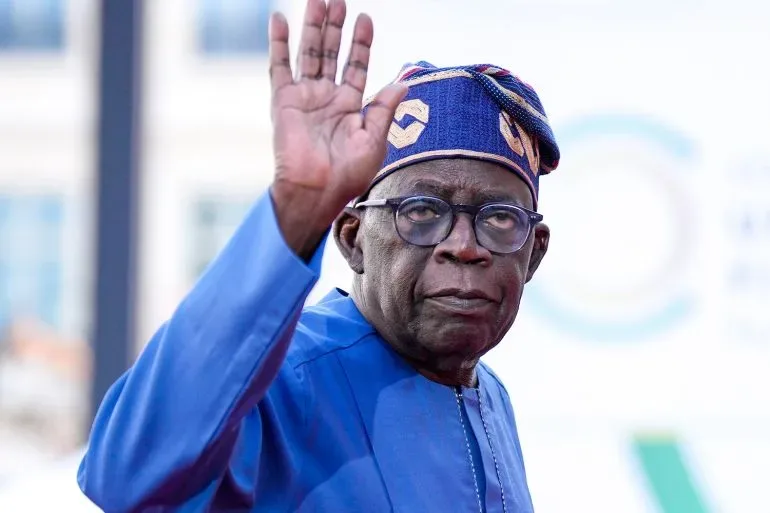
President Bola Tinubu has left Nigeria for a three-week annual leave in Europe, with presidential adviser Sunday Dare defending the timing of the trip by saying the President needs to “refuel” after months of intensive work on security, the economy and other matters of government.
Tinubu departed Abuja on Sunday, August 30, with London as his first destination, according to the Presidency. Special Adviser on Information and Strategy Bayo Onanuga said the President would return to Nigeria after the working vacation to join campaign activities ahead of the January 2027 general election.
Dare, speaking to journalists after seeing the President off at the presidential wing of Nnamdi Azikiwe International Airport, said Tinubu had spent the past six or seven months dealing with what he described as major state matters. He specifically pointed to decisions concerning Nigeria’s security and economy as evidence of the intensity of the President’s workload.
The presidential aide also linked the timing of the break to the approaching election season. According to Dare, the country is entering several months of intense political activity, meaning Tinubu will have to balance the demands of governing with campaigning as the 2027 elections draw closer.
But Dare stressed that the trip should not be interpreted as a complete withdrawal from government. He described it as a working vacation, saying Tinubu would continue to receive daily briefings from ministers, service chiefs and other officials responsible for key national decisions while he is abroad.
The Presidency's explanation comes against a backdrop of heightened political activity. Tinubu's return is expected to coincide with a more intense phase of preparations for the 2027 presidential election, in which he is seeking another term. His administration has spent much of recent months defending its economic reforms while also facing pressure over security and the cost of living.
The President's absence has, however, drawn criticism from the opposition. Former Vice President and African Democratic Congress presidential candidate Atiku Abubakar argued that the timing of the three-week trip was inappropriate given the difficulties facing Nigerians. He cited high petrol prices, food insecurity, rising transport costs and insecurity, and described the President's absence alongside Vice President Kashim Shettima's overseas engagement as creating what he called a “disturbing vacuum of political leadership.”
Atiku acknowledged that a president is entitled to travel and take time off, but said his objection was about the timing rather than the principle of annual leave. His criticism has added a political dimension to what the Presidency presents as a routine and necessary break before an unusually demanding election period.
There is also a constitutional distinction worth noting. The Presidency has said Tinubu will remain in communication with government officials and receive briefings while abroad, while Shettima was in Angola representing Nigeria at an African Union summit. Reports have raised questions about the simultaneous absence of the President and Vice President, although that does not by itself establish a constitutional crisis.
The trip also comes shortly after Tinubu ordered a comprehensive forensic audit of the Integrated Personnel and Payroll Information System and federal ministries and agencies following the discovery of fictitious government agencies within the Office of the Secretary to the Government of the Federation. That decision is among the latest major governance actions taken before his departure.
For the Presidency, the message is straightforward: a president can take annual leave without stepping away from the responsibilities of office. For the opposition, the issue is one of judgment and optics, whether leaving the country for three weeks is appropriate when many Nigerians are dealing with economic pressure and insecurity.
The broader significance of Tinubu's trip lies in that tension. As Nigeria moves closer to the 2027 election, the President's every major movement will increasingly be viewed through both a governance and political lens. Whether the European break is remembered simply as a necessary pause for a president preparing for another demanding stretch or becomes another flashpoint in the debate over Tinubu's leadership will depend less on the holiday itself than on what Nigerians see happening at home while he is away.