
200 US Troops Set to Leave Nigeria as Washington Scales Back Mission
The United States is preparing to withdraw about 200 troops from Nigeria by late September as a targeted counterterrorism mission winds down, although a smaller American security presence is expected to remain.
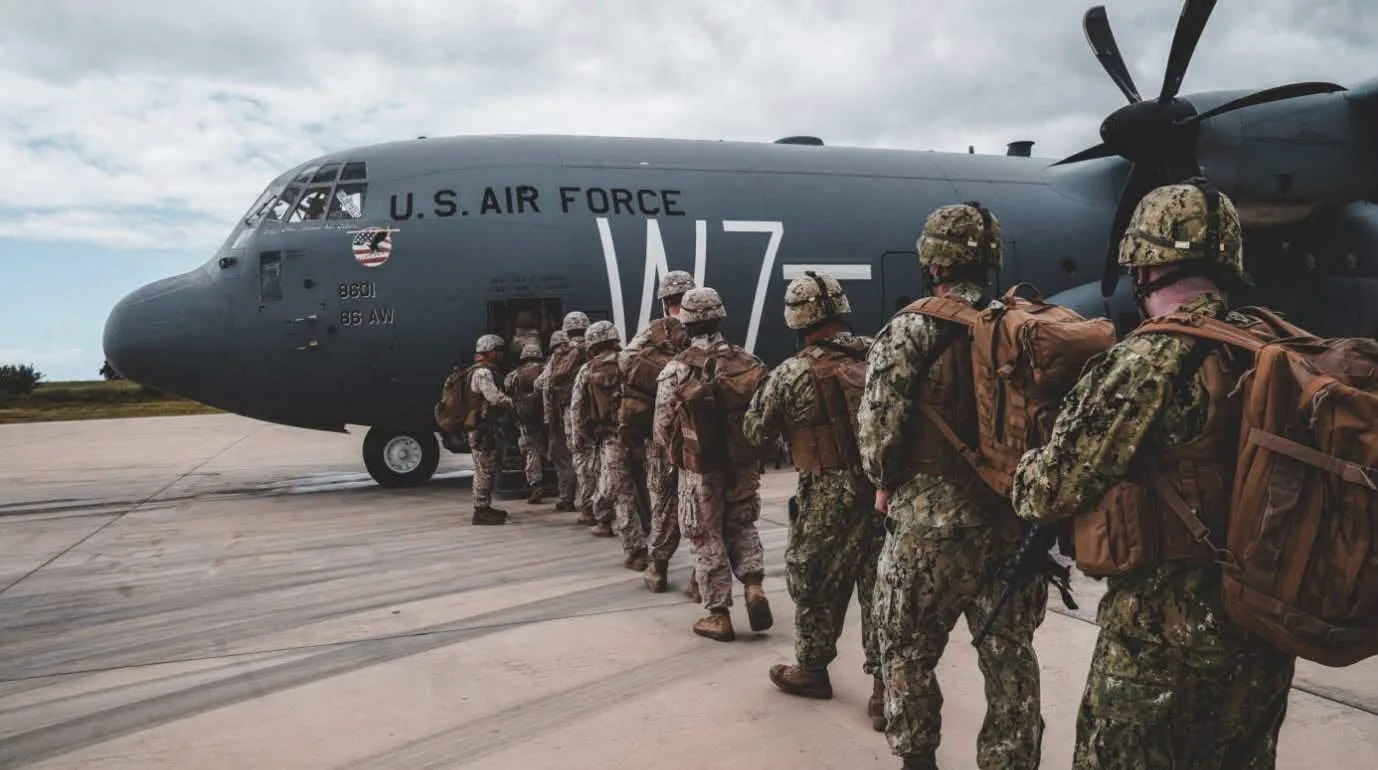
The United States is preparing to withdraw about 200 troops deployed to Nigeria earlier this year as part of a counterterrorism mission against Islamist militants, with the main contingent expected to leave by late September.
The planned drawdown, reported by The New York Times citing American and Nigerian officials, will not mark the end of Washington's security relationship with Abuja. Smaller teams of US military trainers and intelligence analysts are expected to remain in Nigeria after the larger deployment leaves.
The American personnel were deployed to northeastern Nigeria in February following an agreement between Washington and Abuja to deepen military cooperation against terrorist groups. Their mission was primarily focused on intelligence, training, surveillance and advisory support rather than establishing a permanent US combat force in the country. Nigerian authorities had repeatedly stressed that Nigerian forces remained responsible for combat operations and operational decisions.
The deployment produced one of its most significant publicly acknowledged results in May, when US and Nigerian forces carried out operations against Islamic State targets in the Lake Chad region. US Africa Command confirmed coordinated strikes against ISIS fighters in northeastern Nigeria on May 18, saying the operation was conducted in coordination with the Nigerian government.
US officials have subsequently pointed to the killing of Abu-Bilal al-Minuki, whom they identified as a senior Islamic State figure and the group's global second-in-command, as a major outcome of the cooperation. American officials have also said that subsequent operations weakened parts of the militant network.
The planned withdrawal, however, should not be read as a declaration that Nigeria's insurgency has been defeated. Islamic State West Africa Province, Boko Haram and other armed groups remain active, particularly in northern Nigeria. Recent attacks have continued to claim civilian and military lives, underscoring the limits of what a relatively small foreign deployment can accomplish against a conflict that has lasted for more than a decade.
The distinction is important because Washington had already begun reducing the number of personnel assigned specifically to the Lake Chad operation. In July, US Africa Command commander Gen. Dagvin Anderson said much of the force brought in for that operation had already been withdrawn, while stressing that intelligence-sharing cooperation with Nigeria would continue.
Nigeria's Defence Headquarters also clarified at the time that the forces withdrawn from the Lake Chad mission were not necessarily the same personnel as the approximately 200 Americans involved in the broader intelligence and training partnership. The military said the Nigeria-US security relationship remained in place.
That helps explain the latest development. Rather than a complete American exit, Washington appears to be moving towards a smaller footprint built around specialist support, intelligence and training. A Pentagon Africa Command spokesperson described the approach as a “tailored, temporary footprint” capable of producing significant security results.
The model is also significant for the wider US military strategy in Africa. After American forces were forced to leave Niger following the 2023 military coup, Washington has faced the challenge of maintaining counterterrorism capabilities in West Africa without relying on large, permanent military installations. American officials have presented the Nigeria operation as a possible model for future missions built around limited deployments and clearly defined objectives.
For Nigeria, however, the departure places greater responsibility on its own security forces. The country has continued to face attacks despite recent gains against militant leaders, and analysts have warned that any reduction in US intelligence and technical assistance could give armed groups an opportunity to reorganise if Nigerian forces cannot sustain the capabilities developed during the joint mission.
The drawdown therefore presents a test for both sides. Washington can point to a relatively short mission that produced a major counterterrorism result without creating a permanent American military footprint, while Abuja must demonstrate that it can translate the intelligence, training and operational experience gained from the partnership into lasting domestic capacity.
The broader significance lies in what happens after the Americans leave. The withdrawal does not necessarily represent a retreat from Nigeria, but it does shift the centre of gravity back towards Nigerian forces at a time when militant groups remain capable of launching deadly attacks. If Abuja can preserve the intelligence networks and operational improvements developed during the US deployment, the drawdown could become an example of successful security assistance. If those gains fade, the departure could instead expose how dependent Nigeria's counterterrorism campaign remains on external support.