
Indonesia Receives First Aircraft Carrier as Prabowo Accelerates Military Modernisation
The landmark acquisition marks a major shift in Indonesia’s naval ambitions as President Prabowo Subianto pursues a broader defence modernization strategy.
Indonesia has taken delivery of its first aircraft carrier, a milestone that significantly expands the country’s maritime defence capabilities and underscores President Prabowo Subianto’s ambitious drive to modernize Southeast Asia’s largest military.
The 41-year-old vessel, formerly operated by the Italian Navy as Giuseppe Garibaldi, arrived at Tanjung Priok Port in North Jakarta on Friday after sailing from Italy via Colombo and the Malacca Strait. The 180-metre carrier can accommodate up to 830 personnel and operate as many as 18 helicopters, and is expected to be renamed KRI Sriwijaya in honour of the ancient Srivijaya maritime empire that dominated parts of Southeast Asia between the seventh and 13th centuries.
According to Indonesian Navy Chief of Staff Admiral Muhammad Ali, the carrier’s primary mission will be humanitarian assistance and disaster response rather than conventional combat operations. He said the platform is designed to rapidly deploy helicopters carrying food, medicine and emergency supplies to isolated communities during earthquakes, tsunamis and other natural disasters across Indonesia’s vast archipelago.
“There are numerous disasters in this country, so we need a vessel or platform capable of carrying several helicopters, as they can quickly deliver logistics to remote areas,” Ali said.
The acquisition represents one of the most symbolic achievements of Prabowo’s defence agenda since taking office. A former defence minister, the president has prioritized upgrading Indonesia’s ageing military hardware through investments in naval platforms, fighter aircraft, submarines, drones and indigenous defence manufacturing, arguing that the country must be prepared to safeguard its territorial waters and strategic maritime routes.
Indonesia’s geographic position makes maritime security central to its national defence strategy. Stretching across more than 17,000 islands, the country sits along some of the world’s busiest shipping lanes, including the Malacca, Sunda and Lombok Straits, making naval readiness increasingly important as geopolitical competition intensifies across the Indo-Pacific.
Although Indonesia is not a claimant in most South China Sea disputes, it has repeatedly faced tensions around the North Natuna Sea, where Chinese vessels have operated near Indonesia’s exclusive economic zone. Jakarta has consistently maintained that it is protecting its sovereign maritime rights while avoiding formal alignment with major power rivalries.
Military analysts note that modern aircraft carriers are no longer viewed solely as instruments of war. For an archipelagic nation frequently affected by earthquakes, tsunamis and volcanic eruptions, a carrier can function as a mobile logistics hub capable of delivering helicopters, medical facilities, engineering teams and emergency supplies to islands where conventional infrastructure has been damaged or destroyed.
That humanitarian role forms a central part of Indonesia’s justification for expanding its naval capabilities, particularly as climate-related disasters increase the demand for rapid maritime response across the world’s largest island nation.
The arrival of KRI Sriwijaya therefore carries significance beyond defence procurement. It signals Indonesia’s determination to become a more capable maritime power while balancing regional security, disaster resilience and strategic autonomy in an increasingly contested Indo-Pacific.
More on Asia

Asia
Mirza Fakhrul Wins Bangladesh Presidency in First Contested Vote in 35 Years.
21 Aug 2026
Asia
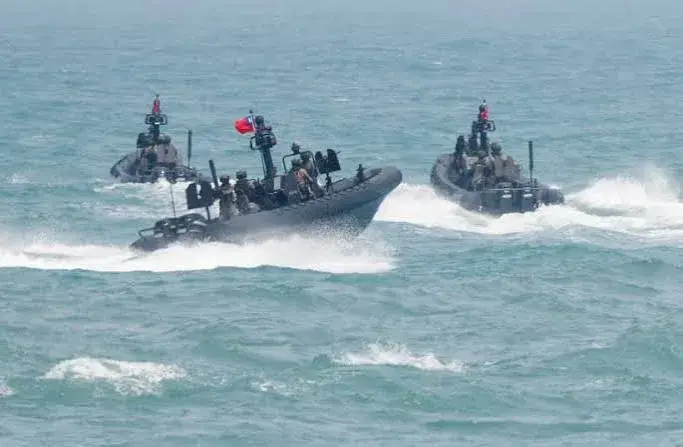
Chinese Militia Boat Spotted Off Taiwan’s East Coast for First Time
8 Oct 2026

Asia
India Keeps Judicial First Approach for Foreign Investment Claims
26 Sept 2026

Asia
Malaysia Closes Schools Across Six States as Toxic Haze Spreads From Indonesia
9 Oct 2026
Asia
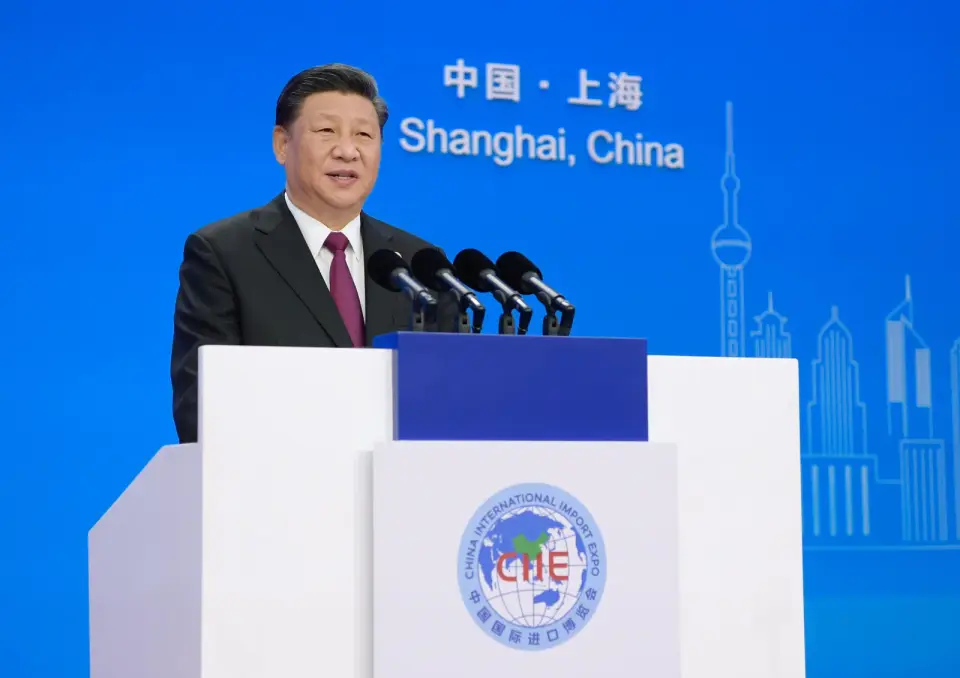
Xi Jinping to Lead Top Chinese Business Delegation on US Visit
20 Sept 2026
Partner with Follow Global Trends
Display banners, sponsored stories and founder spotlights.
You may also like

Asia
China Opens 134-km Pinglu Canal to Boost ASEAN Trade Connectivity
17 Sept 2026
Asia
China Raises Pressure on US with Sanctions and Drone Curbs Ahead of Xi Visit
5 Aug 2026
Asia
Pakistan School Roof Collapse Kills 34 Children and Teacher
15 Oct 2026
Asia
In Pakistan, Solar Panels Are Becoming the New Wedding Dowry
1 Oct 2026
Asia
Singapore Bus Passengers Face S$500 Fines for Loud Music, Feet on Seats
23 Sept 2026
Asia
Three Students Die in Philippine School Shooting, Including 16-Year-Old Gunman
18 Sept 2026