
China Opens 134-km Pinglu Canal to Boost ASEAN Trade Connectivity
The new inland waterway creates China’s first direct river-to-sea shipping route to the Gulf of Tonkin, reshaping trade links with Southeast Asia.
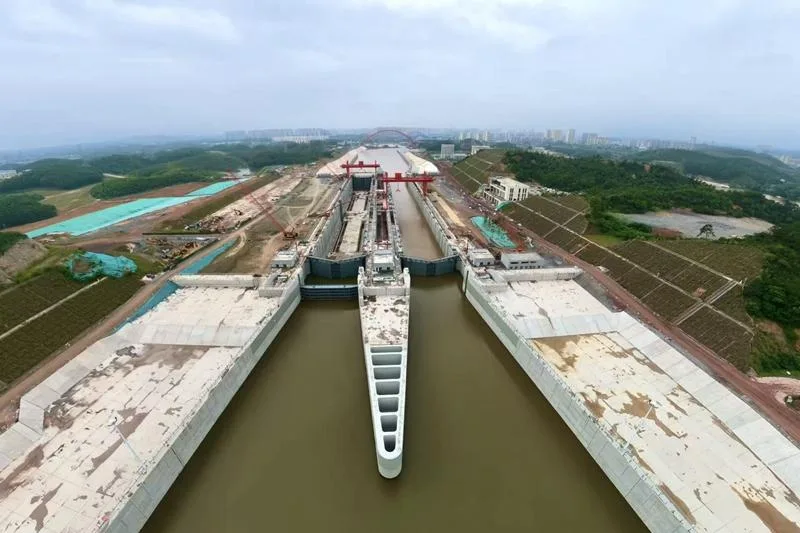
China has officially opened the 134-kilometre Pinglu Canal, a landmark transport project designed to strengthen economic connectivity with the Association of Southeast Asian Nations (ASEAN) by creating a faster and more efficient shipping corridor between inland southwestern China and the sea.
The canal, located in Guangxi Zhuang Autonomous Region, links the Xijiang River system with the Beibu Gulf (Gulf of Tonkin), giving cargo vessels from China’s vast inland waterways direct access to maritime routes serving Southeast Asia. Chinese officials describe it as the country’s first major canal connecting an inland river network directly to the coast since the founding of the People’s Republic.
For decades, manufacturers in Guangxi and neighbouring provinces often relied on longer river routes through the Pearl River Delta before reaching international shipping lanes. The Pinglu Canal is expected to shorten logistics distances by hundreds of kilometres, reducing transport time and freight costs for goods moving between inland China and ASEAN markets.
The canal forms part of the New International Land-Sea Trade Corridor, a strategic logistics network that connects western China with Southeast Asia through ports on the Beibu Gulf. Officials say the project will improve the movement of agricultural products, minerals, manufactured goods and containerized cargo across the region.
Construction of the canal began in 2022 and involved massive excavation, bridge construction and the installation of large navigation locks capable of accommodating sizeable inland cargo vessels. The project was built to support year-round commercial navigation while also incorporating flood control and water management infrastructure.
Chinese authorities say the canal has been designed to handle millions of tonnes of cargo annually, with capacity expected to expand as industrial activity and regional trade continue to grow.
ASEAN has remained China’s largest trading partner for several consecutive years, with bilateral trade reaching record levels as supply chains deepen across the region. Countries including Vietnam, Thailand, Malaysia, Indonesia and Singapore are expected to benefit from improved shipping efficiency through the Beibu Gulf ports, particularly for time-sensitive exports and industrial inputs.
Trade analysts believe the canal could further strengthen southern China’s role as a manufacturing and logistics hub while supporting regional economic integration under existing cross-border infrastructure initiatives.
While Chinese officials have celebrated the canal as a catalyst for development, large infrastructure projects of this scale have also prompted discussions among environmental experts about ecosystem management, biodiversity protection and long-term water resource sustainability. Authorities say ecological restoration and environmental monitoring formed part of the project’s construction and operational planning.
The opening of the Pinglu Canal represents more than a new waterway, it marks a significant shift in Asia’s transport geography. By connecting China’s inland industrial heartlands more directly to ASEAN’s fast-growing economies, the canal is poised to influence regional trade patterns, logistics investment and economic cooperation for decades to come.
More on Asia
Asia
Chinese Militia Boat Spotted Off Taiwan’s East Coast for First Time
8 Oct 2026

Asia
India Keeps Judicial First Approach for Foreign Investment Claims
26 Sept 2026

Asia
Vietnam’s Pham Thu Huong Overtakes Oprah, Taylor Swift in Billionaire Wealth
8 Sept 2026

Asia
African Journalists Seek Deeper China Media Cooperation as AI Reshapes Newsrooms
22 Aug 2026

Asia
Mirza Fakhrul Wins Bangladesh Presidency in First Contested Vote in 35 Years.
21 Aug 2026
You may also like
Asia
China Raises Pressure on US with Sanctions and Drone Curbs Ahead of Xi Visit
5 Aug 2026
Asia
Indonesia Receives First Aircraft Carrier as Prabowo Accelerates Military Modernisation
19 Sept 2026

Asia
China’s Pony.ai Targets Global Robotaxi Expansion as Revenue Jumps 691%
31 Aug 2026

Asia
Singapore Offers Up to S$70,000 Per Child in New Push to Boost Births
25 Aug 2026

Asia
South Korea Opens PR Shortcut for Foreigners Who Already Master Korean
19 Aug 2026
Asia
In Pakistan, Solar Panels Are Becoming the New Wedding Dowry
1 Oct 2026