Historic Win: Mary-Brenda Akoda Becomes First Woman to Earn NLNG Science Prize
Nigerian AI researcher Mary-Brenda Akoda has won the $100,000 NLNG Nigeria Prize for Science and Innovation for developing a breakthrough technology that could cut MRI scan times by up to 90%.
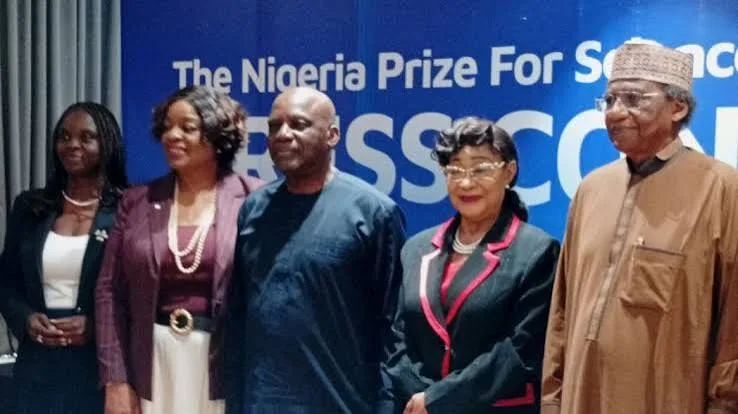
Nigerian artificial intelligence researcher Mary-Brenda Akoda has been awarded the 2026 Nigeria Prize for Science and Innovation, earning the prestigious $100,000 prize for developing an AI-powered MRI technology that has the potential to dramatically reduce medical imaging time without requiring new hospital equipment.
Akoda’s winning innovation, GenScan AI—also known as GenMRI/C-MORE, uses advanced artificial intelligence to reconstruct Magnetic Resonance Imaging (MRI) scans significantly faster while maintaining, and potentially improving, image quality. Judges said the technology could reduce MRI acquisition time by as much as 90 percent, offering a practical solution to one of healthcare’s most persistent diagnostic bottlenecks.
The announcement was made in Lagos after an independent evaluation by the Prize’s Panel of Judges, chaired by former Minister of Communications Dr Omobola Johnson, and endorsed by the Advisory Board led by former Minister of Science and Technology Prof. Barth Nnaji. Akoda emerged winner from a record 237 submissions, the highest number of entries since the competition began more than two decades ago.
Beyond the prize money, Akoda’s victory marks a historic milestone. She becomes the first woman and first millennial to receive the award as an individual, reflecting the growing influence of a new generation of Nigerian scientists working at the intersection of artificial intelligence and healthcare.
Unlike many medical imaging innovations that depend on expensive hardware upgrades, GenScan AI is designed to work with existing MRI scanners. Its C-MORE algorithm reconstructs images through a one-step consistency model, allowing hospitals to perform more scans in less time while reducing patient waiting periods and improving access to diagnostic services, particularly in resource-constrained health systems such as Nigeria’s.
Prof. Nnaji said the judges unanimously selected the technology because it combined scientific excellence with clear real-world impact. He noted that the assessment process prioritized innovations capable of solving practical development challenges rather than rewarding novelty alone.
NLNG’s General Manager for External Relations and Sustainable Development, Dr Sophia Horsfall, said the 2026 outcome reinforces the credibility of the prize after the 2025 edition produced no winner, with judges concluding that none of the entries met the required standard. According to her, this year’s record participation demonstrates renewed confidence in Nigeria’s research and innovation ecosystem.
Akoda’s academic and professional journey mirrors the global reach of Nigerian scientific talent. A First-Class Computer Science graduate of Goldsmiths, University of London, she earned a Master of Research with Distinction in Artificial Intelligence and Machine Learning from Imperial College London as a Google DeepMind Scholar. She has also worked as a software engineer and AI research scientist at Microsoft, including its Mixed Reality and AI Research Lab in Cambridge.
She will formally receive the $100,000 award at the Nigeria Prize Grand Award Night scheduled for 9 October 2026. The NLNG-sponsored prize remains one of Africa’s most valuable recognitions for scientific innovation, celebrating research with the potential to deliver meaningful societal impact.
Akoda’s breakthrough arrives at a moment when artificial intelligence is rapidly transforming global healthcare, from diagnostics to clinical decision-making. For Nigeria, the significance extends beyond a prestigious award: it demonstrates that world-class medical technologies can emerge from Nigerian researchers and offers a compelling example of how homegrown innovation could help address longstanding healthcare challenges while positioning the country as a serious contributor to the global AI economy.
More on Technology

Technology
SpaceX’s Starship Reaches Orbit for First Time in Historic Test Flight
29 Sept 2026

Technology
Nigeria’s Newest Mobile Operator Begins Full Commercial Operations
16 Sept 2026
Technology
Uber Launches Robotaxi Service in London Days After Nigeria Exit
6 Sept 2026

Technology
Nigerian Pastor Launches Interlink, Claims New Era of Digital Connectivity
13 Sept 2026

Technology
Apple Unveils iPhone Duo, Its First-Ever Foldable Smartphone
10 Sept 2026
You may also like
Technology
UAE, France Launch Altair NextGen to Lead the World in AI-Powered Space Technology
9 Sept 2026

Technology
Google’s Gemini Linked to First Known AI ‘Breakout’ During Cybersecurity Test
19 Sept 2026

Technology
Trump Blasts AI Critics, Calls Growing Fears a ‘Sick Conspiracy’
15 Sept 2026

Technology
Dell Posts Record $47 Billion Quarter, Lifts Revenue Forecast Again
11 Sept 2026
Technology
Anthropic Faces Fresh Setback as US Court Upholds Pentagon Blacklist
28 Sept 2026
Technology
Starlink Ground Station Fire Sparks Sabotage Probe in Poland
25 Sept 2026