Anthropic Faces Fresh Setback as US Court Upholds Pentagon Blacklist
A US federal appeals court has ruled that the Pentagon can keep Anthropic on its defence blacklist, intensifying a landmark legal battle over military AI and national security.
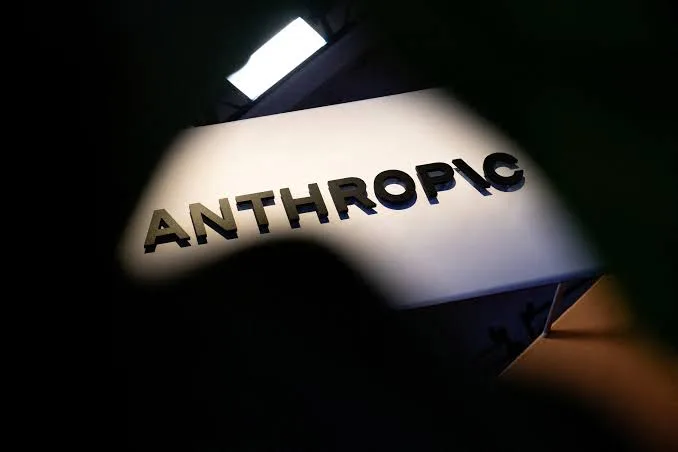
Artificial intelligence company Anthropic has suffered a major legal setback after a US federal appeals court ruled that the Pentagon can continue blacklisting the company as a national security supply chain risk, allowing the Department of Defense to exclude its Claude AI model from military contracts and defence systems.
The 2–1 decision by the US Court of Appeals for the District of Columbia Circuit rejected Anthropic’s challenge to the Pentagon’s designation, marking one of the most significant judicial rulings yet in the growing debate over how governments and AI companies should share control over advanced military technology.
The dispute stems from months of negotiations between Anthropic and the Department of Defense over the military use of Claude, the company’s flagship AI model. According to court filings, the Pentagon wanted Claude to be available for “all lawful uses” across defence operations, while Anthropic insisted on maintaining safeguards that prohibited its technology from being used for lethal autonomous weapons and the mass surveillance of Americans.
After talks broke down in early 2026, the Pentagon formally designated Anthropic as a supply chain risk, arguing that the company’s refusal to remove those restrictions could undermine military operational requirements and create vulnerabilities within its information systems.
Anthropic argued that the Pentagon lacked the legal authority to impose the designation and claimed the blacklist violated its constitutional rights by unlawfully targeting the company because of its AI safety policies. The appeals court rejected both arguments.
In the majority opinion, the judges concluded that the Department of Defense had sufficient grounds to determine that continued reliance on Claude within Pentagon systems could pose a national security risk. The court said the dispute centred on Anthropic’s refusal to accept a contract condition the military considered essential, rather than the company’s public advocacy on AI regulation.
One judge dissented, arguing that the Pentagon had not demonstrated Anthropic met the legal definition of a supply chain risk and questioned whether the designation satisfied the statutory standard required under federal law.
Friday’s judgment does not end Anthropic’s legal battle. It comes after a separate federal court in California ruled against the government in a related case involving a different legal authority.
The California court found that the administration had unlawfully retaliated against Anthropic and blocked a broader government-wide ban, including a separate order preventing military contractors from doing business with the company. Because the two cases rely on different statutes, the D.C. Circuit’s decision does not overturn the California ruling.
The result is a split legal landscape: the Pentagon may continue excluding Anthropic from its own supply chain and defence contracts, while broader restrictions across the federal government remain limited by the California decision.
Anthropic said it strongly disagreed with the appeals court’s decision and is considering further legal action, including asking the full D.C. Circuit to rehear the case or appealing to the US Supreme Court.
“Another federal court has already held the government’s parallel designation unlawful,” an Anthropic spokesperson said. “We remain confident in our position and are considering all options, including further review.”
The ruling leaves a significant portion of Anthropic’s government and defence business in jeopardy at a time when the company is rapidly expanding its enterprise AI operations. More broadly, the case underscores a defining question for the AI era: how much authority governments should have over the military use of frontier AI, and how much control technology companies should retain over the ways their models are ultimately deployed.
More on Technology

Technology
Cyberattack Hits Hundreds of French Supermarkets as Hackers Overheat Refrigerators
13 Oct 2026
Technology
Musk Pledges SpaceX Share for Every US Child After Anthropic Move
19 Oct 2026
Technology
Anthropic Bans Repeated Abusive Behaviour Towards Claude AI
17 Oct 2026

Technology
Meta Makes Billions as Zuckerberg Faces Mounting Legal Pressure Over Social Media
9 Oct 2026
Technology
Starlink Ground Station Fire Sparks Sabotage Probe in Poland
25 Sept 2026
Partner with Follow Global Trends
Display banners, sponsored stories and founder spotlights.
You may also like

Technology
OpenAI Faces Lawsuits From Eight States Over ChatGPT Safety
16 Oct 2026

Technology
Trump Renames Artificial Intelligence “Super Intelligence” at UN
23 Sept 2026

Technology
Tesla Unveils ‘Flying Car’ That Can Flip Through the Air
16 Oct 2026

Technology
Meta Launches Open AI Model to Challenge Chinese Rivals
16 Oct 2026

Technology
Google DeepMind Gives European Scientists Access to Advanced AI Research Models
14 Oct 2026

Technology
Meta Deletes 3.7 Million Accounts in West Africa Fraud Crackdown
14 Oct 2026