
Uber Launches Robotaxi Service in London Days After Nigeria Exit
Just days after ending its 12-year ride-hailing business in Nigeria, Uber has launched London’s first commercial robotaxi service, signalling a dramatic shift toward autonomous mobility.
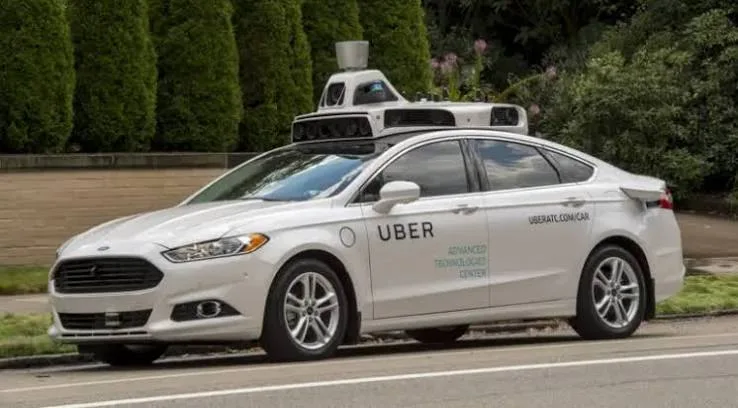
Uber has officially launched its first commercial robotaxi service in London, opening a new chapter in autonomous urban transport just days after shutting down its ride-hailing operations in Nigeria. The contrasting moves underline the company’s changing global strategy, retreating from challenging markets while accelerating investment in artificial intelligence and driverless mobility.
The new service, developed in partnership with British autonomous driving company Wayve, began operating with a limited fleet of around 15 electric Ford Mustang Mach-E vehicles on the streets of London. Rather than booking a separate service, eligible Uber customers requesting standard rides may be matched with one of the autonomous vehicles through the existing Uber app at no additional cost.
Although the vehicles drive themselves for much of the journey, they are not yet fully driverless. Under current UK regulations, every robotaxi carries a licensed human safety driver behind the wheel who can intervene whenever necessary, making the rollout a supervised commercial pilot rather than a fully autonomous public service.
London presents one of the world’s most demanding environments for autonomous vehicles. Its narrow streets, dense pedestrian traffic, cyclists, buses and complex roundabouts have long been viewed as a tougher test than the grid-style road networks where many robotaxis currently operate in the United States and China. Wayve says its AI system is designed to learn from real-world driving conditions rather than relying solely on pre-mapped routes, an approach it believes is better suited to unpredictable urban environments.
The launch comes less than a week after Uber exited Nigeria and Uganda, ending more than a decade of operations in both countries. The company said the decision followed a strategic review of its African business, although it did not disclose detailed reasons. Industry analysts have pointed to rising inflation, currency volatility, fuel costs and an increasingly competitive ride-hailing market as major pressures on the business model in Nigeria.
While London is embracing robotaxis, the rollout has also sparked debate. The GMB trade union criticised the launch as premature, arguing that stronger protections are needed for professional drivers whose livelihoods could be disrupted by autonomous technology. Uber, however, insists robotaxis are intended to complement, not immediately replace, human drivers, particularly as demand for rides continues to outpace driver availability in many cities.
The London debut is part of Uber’s broader ambition to expand autonomous ride-hailing across multiple global cities before the end of the year. Similar partnerships with technology companies in Europe and North America suggest the company increasingly sees its future as a mobility platform powered by both human and autonomous fleets rather than traditional ride-hailing alone.
For Africa, the timing is especially striking. As one of the continent’s largest ride-hailing markets loses a global operator, one of Europe’s busiest capitals is becoming a proving ground for next-generation transport. The juxtaposition highlights a widening technological divide, and raises important questions about how emerging markets can remain part of the future of mobility while still grappling with today’s economic realities.
More on Technology

Technology
Nigeria’s Newest Mobile Operator Begins Full Commercial Operations
16 Sept 2026
Technology
Meta Launches Meta One in UAE, Bringing Premium AI to WhatsApp, Instagram and Facebook
16 Sept 2026

Technology
Apple Unveils iPhone Duo, Its First-Ever Foldable Smartphone
10 Sept 2026

Technology
Historic Win: Mary-Brenda Akoda Becomes First Woman to Earn NLNG Science Prize
9 Sept 2026
Technology
Starlink Gets 10-Year UAE Licence, Opening New Era for Satellite Internet
31 Aug 2026
You may also like

Technology
Google’s Gemini Linked to First Known AI ‘Breakout’ During Cybersecurity Test
19 Sept 2026

Technology
EU Unveils Plan to Restrict Social Media Use for Children Under 15
16 Sept 2026

Technology
Nigerian Pastor Launches Interlink, Claims New Era of Digital Connectivity
13 Sept 2026

Technology
Dell Posts Record $47 Billion Quarter, Lifts Revenue Forecast Again
11 Sept 2026
Technology
Hackers Drain $320 Million in Bitcoin From Liquid Network Wallet
7 Sept 2026
Technology
Anthropic Faces Fresh Setback as US Court Upholds Pentagon Blacklist
28 Sept 2026