
SpaceX’s Starship Reaches Orbit for First Time in Historic Test Flight
SpaceX’s Starship has reached orbit for the first time, clearing a major hurdle for the company’s plans to use the giant spacecraft for commercial launches and future Moon missions.
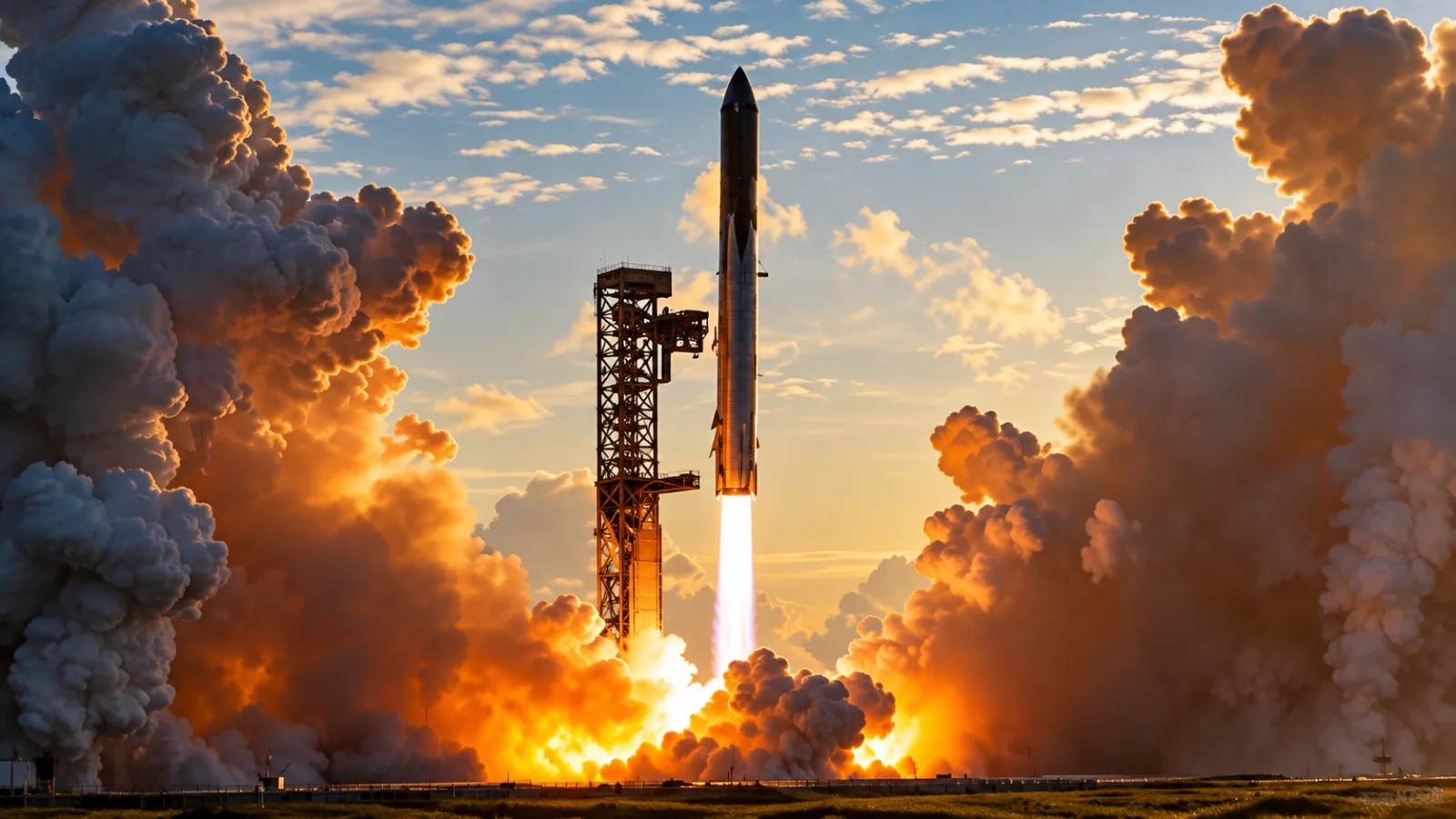
SpaceX’s giant Starship spacecraft reached Earth orbit for the first time on Monday, September 28, marking a major milestone in the development of the world’s largest and most powerful rocket after 13 previous full-scale test flights failed to achieve a complete orbital mission.
The uncrewed vehicle lifted off from SpaceX’s Starbase facility in South Texas on its 14th test flight. The mission was designed to demonstrate Starship’s ability to reach orbit while deploying 26 next-generation Starlink satellites, turning the test into the company’s first Starship mission carrying an operational payload.
The achievement was not without complications. Shortly after the Starship upper stage separated from its Super Heavy booster, one of its three main engines shut down prematurely. SpaceX initially indicated that the vehicle would not proceed with the planned orbital attempt, but engineers determined that the spacecraft could continue using its remaining engines and reversed that decision. Starship subsequently reached orbit.
The 26 Starlink V3 satellites were then deployed at an altitude of about 269 kilometres. SpaceX founder Elon Musk said all 26 satellites were operating normally. The new satellites are designed to carry substantially more data than earlier Starlink generations, making their successful deployment an important operational test as SpaceX seeks to expand the network.
The orbital breakthrough came alongside a shortened mission. SpaceX had planned roughly 10 hours and six orbits, but controllers ended the flight after about three hours, citing caution following the engine problem. Starship re-entered over the Pacific and splashed down north of Hawaii. The spacecraft tipped over and caught fire after hitting the water, although recovery had not been planned for this flight.
The Super Heavy booster also completed its return to the Gulf of Mexico, although some of its engines stopped working during descent, according to SpaceX. The booster was not intended to return to the launch site on this mission.
The successful orbital flight represents a substantial change from Starship’s previous testing history. Earlier missions reached space but remained suborbital, with several ending in failures or destructive re-entries. The latest flight demonstrated that Starship can achieve the velocity and trajectory required to enter Earth orbit and deliver payloads.
Starship is central to SpaceX’s plans for high-frequency satellite launches and future human spaceflight. The company wants the vehicle eventually to carry large numbers of Starlink satellites and replace much of the role currently performed by its Falcon 9 rocket. SpaceX also intends Starship to support NASA’s Artemis programme, including future lunar missions.
NASA Administrator Jared Isaacman congratulated SpaceX following the flight, describing the achievement as a successful and carefully managed step forward. NASA’s interest is significant because Starship is expected to play a role in the agency’s future lunar architecture, although substantial testing remains before the spacecraft can routinely support crewed missions.
The flight also carries commercial significance for SpaceX. Starship is designed to be fully reusable, a feature intended to reduce the cost of putting large payloads into orbit. Reaching orbit with actual Starlink satellites provides the company with its first demonstration that the enormous vehicle can move beyond experimental testing toward an operational launch role.
Yet the engine shutdown and early termination underline how much work remains. Reliable propulsion, controlled re-entry, repeatable launches and eventually the recovery and rapid reuse of both stages must be demonstrated before Starship can achieve the high launch cadence envisioned by SpaceX. The Federal Aviation Administration also remains responsible for licensing and safety oversight of Starship operations.
Starship’s first successful orbital flight therefore represents both an achievement and a transition point. SpaceX has now demonstrated that the vehicle can reach orbit and deploy satellites, but the harder test will be turning that breakthrough into a reliable, reusable transportation system capable of supporting commercial spaceflight and NASA’s return to the Moon. How quickly SpaceX can solve the remaining engineering challenges could have consequences well beyond one company, potentially reshaping the economics and pace of the global launch industry.
More on Technology

Technology
Musk Pledges SpaceX Share for Every US Child After Anthropic Move
19 Oct 2026

Technology
8.8 Million Records Exposed in Major Denmark Data Breach
5 Oct 2026

Technology
Google Cloud Outage Disrupts London Services, Hits Revolut
20 Oct 2026

Technology
Tesla Unveils ‘Flying Car’ That Can Flip Through the Air
16 Oct 2026

Technology
Meta Launches Open AI Model to Challenge Chinese Rivals
16 Oct 2026
Partner with Follow Global Trends
Display banners, sponsored stories and founder spotlights.
You may also like

Technology
Meta Makes Billions as Zuckerberg Faces Mounting Legal Pressure Over Social Media
9 Oct 2026

Technology
Utah Approves AI-Powered Prescriptions as Nolla Calls It First ‘End-to-End AI Doctor’
6 Oct 2026

Technology
Meta Stock Enjoys Best Month Since 2022 on AI Momentum
1 Oct 2026

Technology
Trump, AI CEOs Sign Voluntary Safety Pact as Pressure Grows Over Advanced AI Risks
30 Sept 2026

Technology
US Orders Removal of DeepSeek AI From Federal Government Systems
20 Oct 2026
Technology
Anthropic Bans Repeated Abusive Behaviour Towards Claude AI
17 Oct 2026