
US Orders Removal of DeepSeek AI From Federal Government Systems
The US has ordered federal civilian agencies to remove DeepSeek AI products over concerns about sensitive data, cybersecurity vulnerabilities and national security.
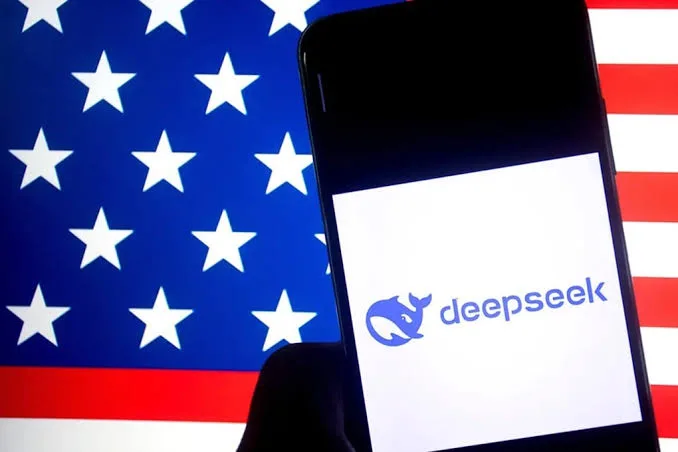
The United States has ordered federal civilian agencies to remove artificial intelligence products developed by Chinese startup DeepSeek from their information technology systems and barred them from purchasing the company’s products and related services, escalating Washington’s scrutiny of Chinese technology on national security grounds.
The directive, issued by the Department of Homeland Security (DHS) in July and made public through a Federal Register notice on October 19, covers DeepSeek products, those developed by affiliated entities, and third-party products and services built using DeepSeek’s AI models. The order applies to federal civilian executive branch systems and procurement, rather than imposing a blanket ban on the technology’s use by the American public.
In its notice, DHS warned that using DeepSeek in government environments could expose sensitive information to China and potentially provide intelligence about US individuals or government agencies. It also raised concerns that the models could contain malware or other security vulnerabilities. These are risks cited by the US government; the notice does not establish that DeepSeek has carried out a specific breach of federal systems.
The order was issued under the Federal Acquisition Supply Chain Security Act of 2018, which gives the US government powers to restrict technology products and services considered to pose supply-chain security risks. The notice says the decision followed a recommendation from the Federal Acquisition Security Council, a body involved in identifying and addressing risks associated with technology used by federal agencies. It also excludes DeepSeek-related products from future civilian government procurement.
The public notice revealed that the decision had been taken months before its announcement. A memorandum issued in July also instructed agencies to monitor traffic moving to and from government websites for signs of potential risks associated with DeepSeek. Several US government bodies, including the Department of Commerce and the Navy, had already restricted the AI tool on government devices, while states including New York, Tennessee and Virginia had adopted similar measures.
China criticised the move, framing it as an example of national security being used to restrict competition in technology. Foreign Ministry spokesperson Mao Ning said Beijing opposed what it described as the politicisation of scientific, technological, economic and trade issues, and said China would protect the legitimate rights and interests of Chinese companies. DeepSeek had not immediately responded to requests for comment, according to The Associated Press.
DeepSeek drew international attention in 2025 with AI models that were widely regarded as competitive with leading systems developed by US companies, while being offered at relatively low cost. Its models have been made widely available, including through open-source releases, allowing developers and organizations to adapt or integrate them into their own tools. That accessibility is one reason the US directive extends beyond DeepSeek’s own applications to third-party services built using its technology.
The action comes amid a broader contest between Washington and Beijing over artificial intelligence, advanced semiconductors and technology supply chains. US officials have also accused Chinese AI companies, including DeepSeek, of extracting capabilities from leading American AI systems through a process known as “distillation”; Beijing has rejected those allegations. The dispute over DeepSeek therefore reflects both cybersecurity concerns and wider strategic competition, although the federal order itself focuses on the risks the US government says the technology could pose to its systems and data.
For federal agencies, the immediate challenge is to identify and remove not only directly installed DeepSeek products but also third-party services that rely on its models. For the wider AI industry, the decision underscores how government security rules can shape which models organizations are permitted to use, even when those models are available to developers and consumers elsewhere. The order does not itself prohibit ordinary Americans or private businesses from using DeepSeek, but it marks a significant restriction on the company’s access to the US federal civilian technology environment.
More on Technology

Technology
Cyberattack Hits Hundreds of French Supermarkets as Hackers Overheat Refrigerators
13 Oct 2026
Technology
OpenAI Admits Response to Australian Government Hack Was ‘Not Good Enough’
6 Oct 2026
Technology
Anthropic Faces Fresh Setback as US Court Upholds Pentagon Blacklist
28 Sept 2026
Technology
Starlink Ground Station Fire Sparks Sabotage Probe in Poland
25 Sept 2026
Technology
Meta to Unveil Camera-Free Smart Glasses as Privacy Concerns Grow
23 Sept 2026
Partner with Follow Global Trends
Display banners, sponsored stories and founder spotlights.
You may also like
Technology
Meta Launches Open AI Model to Challenge Chinese Rivals
16 Oct 2026
Technology
Google Opens AI Content Detector Worldwide as Deepfake Scams Grow
10 Oct 2026
Technology
8.8 Million Records Exposed in Major Denmark Data Breach
5 Oct 2026
Technology
Trump Renames Artificial Intelligence “Super Intelligence” at UN
23 Sept 2026
Technology
Microsoft AI Chief Warns Against Building AI Systems Humans Cannot Control
20 Sept 2026
Technology
Musk Pledges SpaceX Share for Every US Child After Anthropic Move
19 Oct 2026