
Dubai International Retains Global Aviation Crown With 8.68m September Seats
Dubai International remains the world’s busiest airport for international traffic in September, despite a 15% year-on-year capacity decline linked to continuing regional aviation disruption.
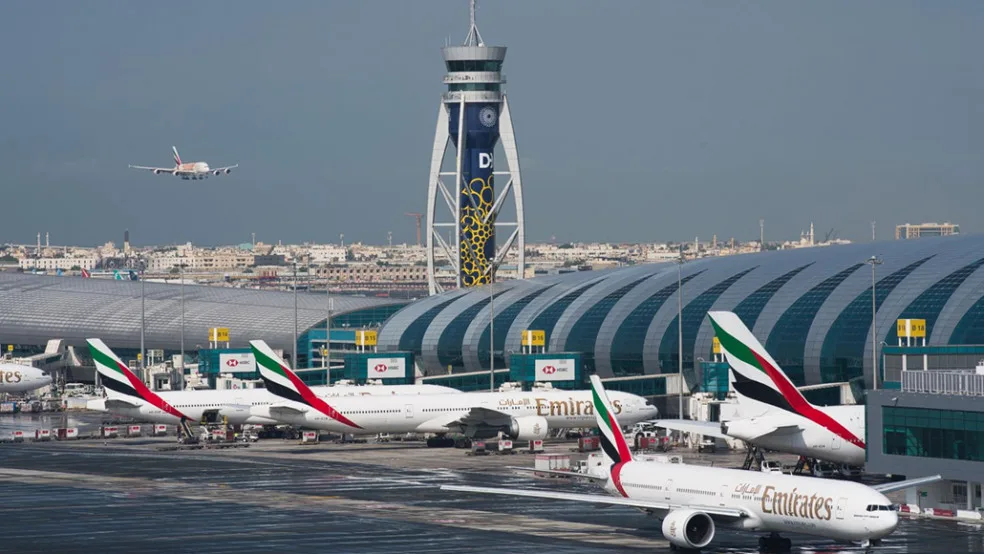
Dubai International Airport (DXB) has retained its position as the world’s busiest airport for international traffic in September, with airlines scheduling about 8.68 million international seats for the month despite a significant decline in capacity from a year earlier.
The latest figures from aviation data provider OAG show that DXB has 4.34 million scheduled departing international seats in September. When arriving and departing capacity is combined, that translates to roughly 8.68 million international seats. The airport remains comfortably ahead of London Heathrow, which has 4.07 million departing international seats scheduled for the month.
Dubai's position at the top is particularly notable because its international capacity is about 15% lower than September 2025. OAG's figures put the decline at 15.2%, reflecting the disruption that has affected aviation across the Middle East this year. Despite the contraction, no other international airport has overtaken DXB.
Seoul Incheon ranks third in OAG's September international rankings with 3.78 million seats, followed by Amsterdam Schiphol with 3.69 million and Istanbul Airport with 3.59 million. Incheon is among the strongest performers in the leading group, with international capacity up 9% from the same month last year.
The figures come after a turbulent first half for Dubai's aviation sector. DXB handled 31.5 million passengers in the first six months of 2026, a 31.3% decline from the same period in 2025, after the regional conflict and associated airspace restrictions disrupted flights across the Gulf. Aircraft movements fell 32.1% during the period.
The impact was particularly severe during the second quarter, when DXB handled 13 million passengers, compared with 18.5 million in the first quarter. Traffic nevertheless improved as the quarter progressed, rising from about 3.5 million passengers in April to 5 million in June as airlines gradually restored services.
That recovery is now being reflected in the airport's scheduled capacity, although September's numbers remain below last year's levels. OAG's data shows that the wider Middle Eastern aviation market has also contracted, with total scheduled capacity down 3.7% year on year to 36 million seats in September. International capacity across the region is down about 5%.
Dubai's continued dominance is also supported by the breadth of its international network. Dubai Airports says DXB connected passengers to 291 destinations through 108 international carriers in 2025, while the airport handled a record 95.2 million guests during the year. That made 2025 its busiest year on record and the highest annual international passenger traffic ever recorded by an airport.
OAG's September ranking also illustrates how competitive global aviation remains. While Dubai retains the international crown, Atlanta's Hartsfield-Jackson is the world's busiest airport when domestic and international seats are combined, with 5.09 million scheduled seats. Chicago O'Hare follows with 4.89 million, while Dubai ranks seventh on the broader global list with 4.34 million international seats because its traffic is overwhelmingly international.
The distinction matters. Dubai's strength has never depended primarily on serving a large domestic market; its model is built around connecting the world through the UAE. Emirates' extensive network, Dubai's role as a business and tourism hub, and the airport's geographical position between major markets in Europe, Asia and Africa have helped sustain that model even when regional disruptions have hit hard.
For Dubai, therefore, retaining the world's busiest international-airport title in a year of extraordinary disruption is more than a ranking. It is evidence of the resilience of a global aviation hub whose fortunes are closely tied to international mobility. The challenge now is whether the recovery can gather enough pace for DXB to restore the capacity lost this year while Dubai simultaneously prepares for the much larger Al Maktoum International Airport expansion, which is intended to reshape the emirate's aviation infrastructure over the coming decades.

Transport Aviation
Dubai Airport Launches Five-Minute International Driving Licence Service
14 Sept 2026

Transport Aviation
Dubai Airports Faced 111 Threat Alerts, 17 Missile Strikes During War, Says CEO
11 Sept 2026
Transport Aviation
Enugu Air Goes International With Non-Stop Enugu–Douala Flights
21 Sept 2026
Transport Aviation
IATA: Nigeria Remains One of the Toughest Markets for Airline Business
12 Sept 2026

Transport Aviation
Dubai Renames Onpassive Metro Station as Garmin in 10-Year Deal
7 Sept 2026
You may also like
Transport Aviation
Dubai Airport Launches 12-Second Mobile Immigration Service
7 Sept 2026
Transport Aviation
Five Killed in Amazon Cargo Plane Crash at Miami Airport
7 Sept 2026
Transport Aviation
Singapore Airlines Crowned World’s Best Airline for 2026
19 Sept 2026

Transport Aviation
Dubai, Abu Dhabi Brace for Cheaper Flights as Wizz Air Resumes Operations
10 Sept 2026
Transport Aviation
21 Air Cargo Jet Crashes After Runway Overrun in Miami, Killing Five
9 Sept 2026

Transport Aviation
Emirates Unveils World’s First Electric Premium Economy Seat with Full-Height Privacy Screen
4 Sept 2026