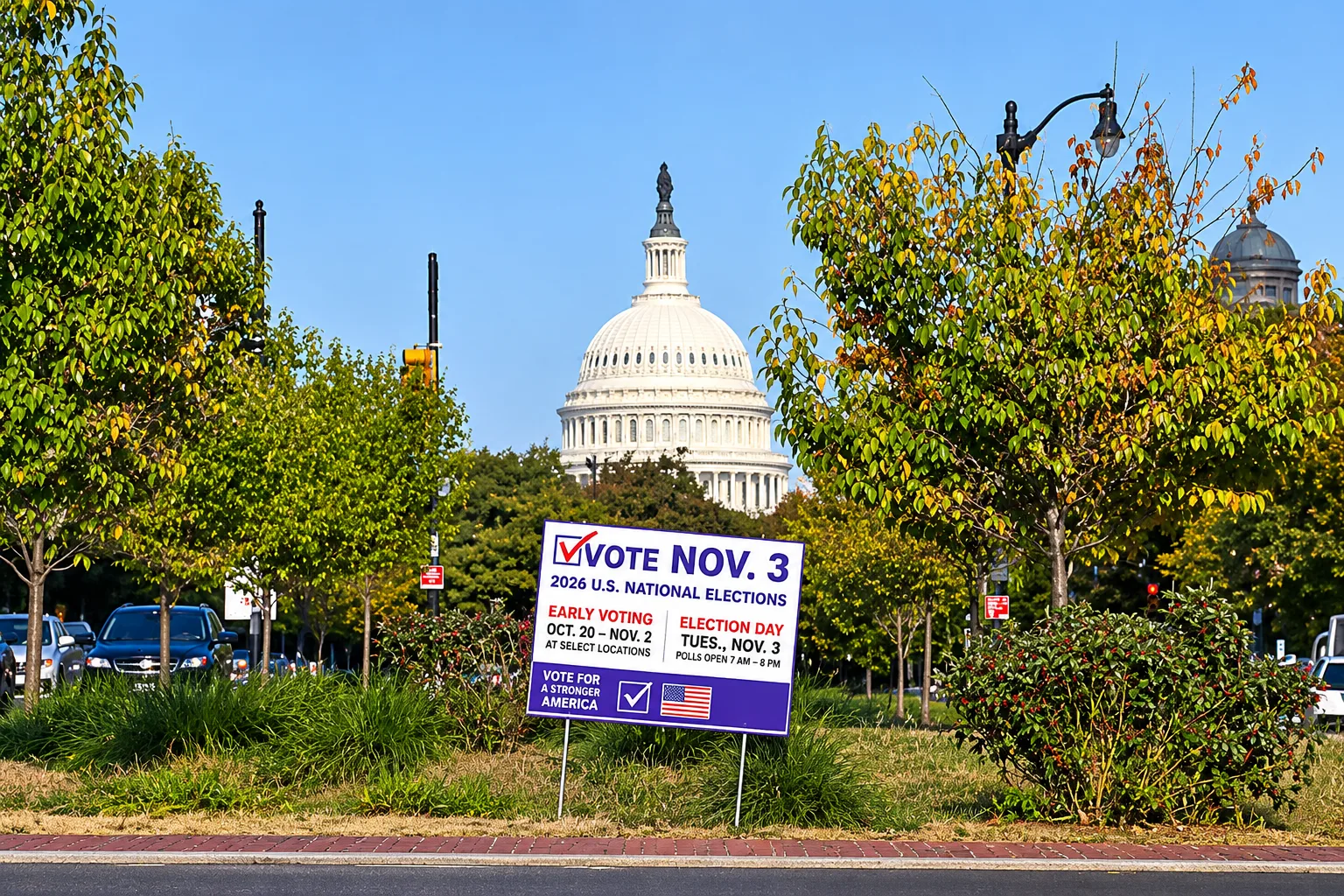
Voters delivered a sweeping verdict on Tuesday as Democrats take control of Congress for the first time since 2023. Race calls across key states confirmed that the party successfully flipped majorities in both the Senate and the House of Representatives.
The outcome reshapes the federal power structure in Washington. Lawmakers secured decisive pickups in districts previously carried by double digits by the governing party during the last presidential contest.
Turnout surged across suburban corridors, metropolitan hubs, and competitive rural districts. The coordinated victories ensure that federal power will be split between opposing parties when the newly elected lawmakers take office in January.
Shifting the Balance in the Senate
The battle for the upper chamber concluded with seven Republican-held Senate seats flipping into Democratic hands. Surging vote counts carried candidates to victory in North Carolina, South Carolina, Ohio, Texas, Iowa, and Maine.
The most historic breakthrough occurred in Kansas, where voters elected their first Democratic senator in nearly a century. Incumbents also successfully defended competitive seats in battlegrounds like Georgia to seal a durable working majority.
Campaigns focused heavily on everyday economic pressures, healthcare stability, and political accountability. Rising consumer costs and inflation emerged as central voter frustrations, motivating widespread dissatisfaction with the administration's policy direction.
Legislative Oversight and the Road Ahead
Securing the House alongside the Senate grants the opposition party total authority over congressional gavels, budget appropriations, and federal committee investigations. Legislative leaders have already signaled plans to establish rigorous oversight panels and review recent executive agency decisions.
Presidential appointments, including judicial confirmations, will now face thorough scrutiny in a newly configured Senate chamber. With neither party holding an outright filibuster-proof margin, broad bipartisan negotiation will be essential to pass any major statutory reforms.
The midterm results fundamentally redefine the next two years of American governance. As final state certifications conclude, Washington enters a tense period of divided government, setting the stage for intense policy clashes leading into the next national election cycle.