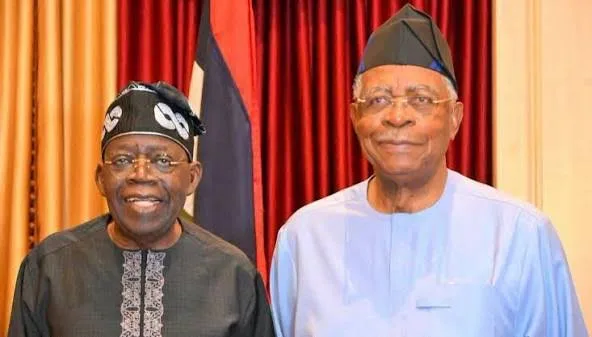
Retired General Theophilus Yakubu Danjuma has formally endorsed President Bola Tinubu’s re-election campaign, introducing a major strategic realignment ahead of the 2027 presidential poll. The elder statesman and former Minister of Defence is directing his considerable political network to consolidate voter backing across the pivotal Middle Belt and North-East regions.
Danjuma made his position public during an anniversary gathering in Yola, Adamawa State, where former Chief of Army Staff General Ishaya Bamaiyi presented his remarks. The elder statesman explained that a single four-year tenure does not provide adequate time for the administration to execute major industrial initiatives, transport corridors, and policy restructuring programs.
The public backing followed an extensive consultative engagement at the Presidential Villa in Abuja. Danjuma led a delegation of regional leaders to meet with President Tinubu to address grassroots security, regional infrastructure development, and long-term political cooperation.
High-Powered Middle Belt Delegation at the Villa
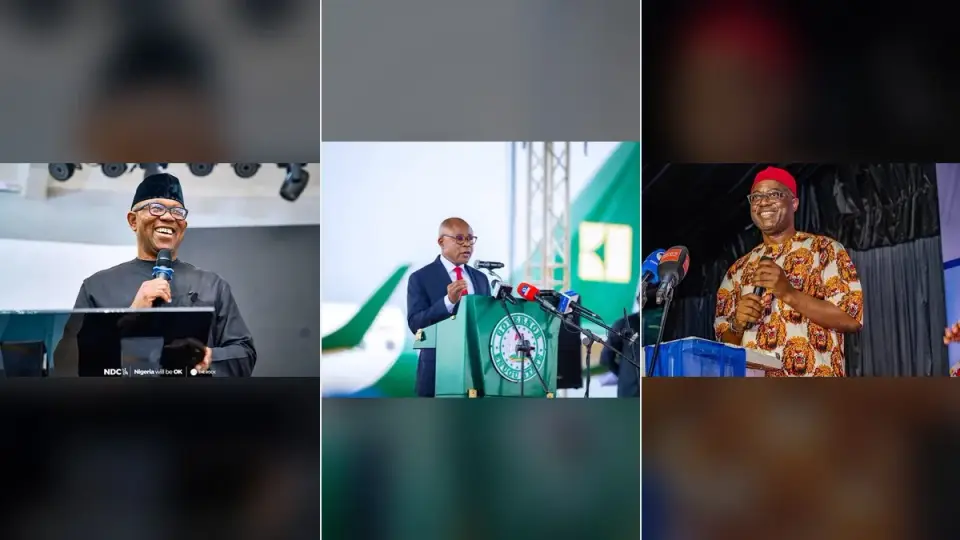
The leaders accompanying General Danjuma to the State House included serving governors, former presiding legislative officers, and senior defence officials. Among the prominent figures were Plateau State Governor Caleb Mutfwang, Taraba State Governor Agbu Kefas, and former Speaker of the House of Representatives Yakubu Dogara.
Minister of Defence General Christopher Musa, prominent northern industrialist Thomas Etuh, and Middle Belt Forum President Dr. Poju Bitrus also took part in the closed-door dialogue. Addressing State House correspondents after the talks, Dogara explained that regional stakeholders convened to express solidarity with the administration and build lasting grassroots momentum.
Dogara highlighted measurable improvements in regional transport safety, observing that key corridors such as the Abuja-Kaduna highway have achieved sustained stability. Governor Mutfwang emphasized that community-level dialogue across Plateau State is bridging ethnic and religious divides, creating stronger local cohesion without relying exclusively on state intervention.
Rotational Fairness and Political Calculations
Political analysts view Danjuma’s endorsement as an important signal grounded in Nigeria’s traditional rotational conventions. Stakeholders close to the retired general noted that because former President Muhammadu Buhari concluded two full terms representing the North, equity supports allowing the South to serve an equivalent eight-year cycle through President Tinubu.
Danjuma has spent decades as an influential patron and civic leader across northern Christian populations. His political influence carries substantial weight across electoral battlegrounds in Taraba, Plateau, Benue, Adamawa, Kaduna, and Nasarawa.
Proponents of the partnership maintain that aligning closely with the federal government ensures continued public investment in agricultural belts, local mining developments, and regional transport infrastructure. Danjuma also commended the president for demonstrating inclusive governance by appointing qualified leaders from diverse religious and ethnic backgrounds into executive positions.
Grassroots Realities and Ongoing Insecurity Concerns
Despite the high-level endorsement, commentators note that converting elite consensus into local votes remains a delicate task. Rural communities across North-Central states continue to manage the aftereffects of prolonged farmer-herder skirmishes, rural banditry, and communal displacement.
Opposition groups and regional critics have raised questions regarding whether high-profile endorsements will sway communities that still face daily security vulnerabilities. Several community advocates have stressed that long-term political stability depends on addressing lingering economic hardships and securing remote agricultural settlements.
With the electoral timeline narrowing ahead of the January 2027 ballot, Danjuma’s open support has recalibrated regional campaign dynamics. The development places the Middle Belt at the centre of national electoral calculations as both ruling and opposition coalitions prepare their regional voter mobilisation drives.