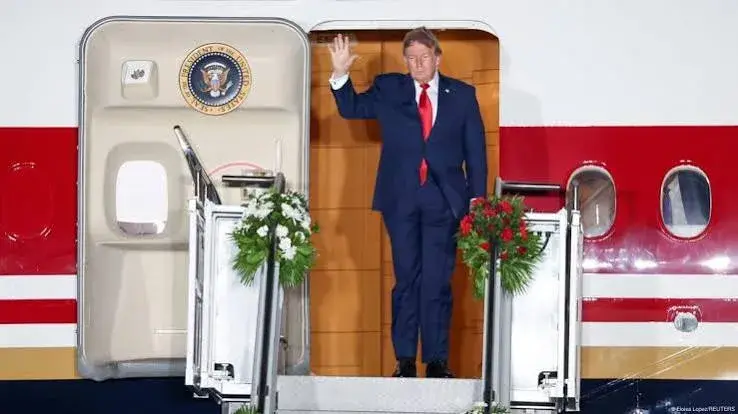
The red carpet was ready. The cameras were waiting. Then Xi Jinping did something unusual: he personally welcomed Donald Trump at the foot of Air Force One.
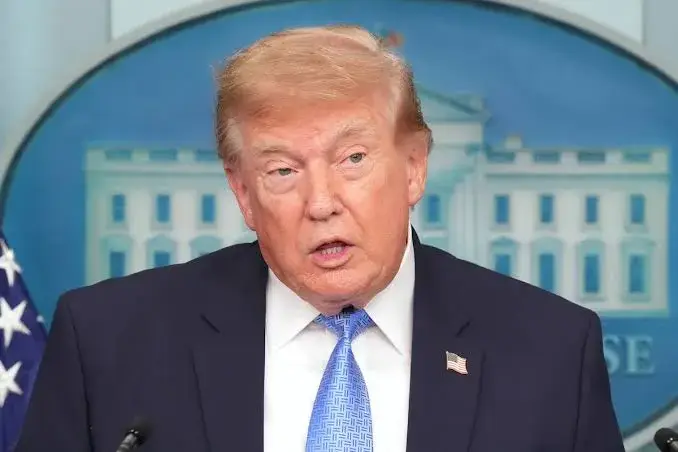
The US president arrived in Shenzhen, southern China, on Wednesday, November 18, ahead of a meeting that could become a defining diplomatic moment.
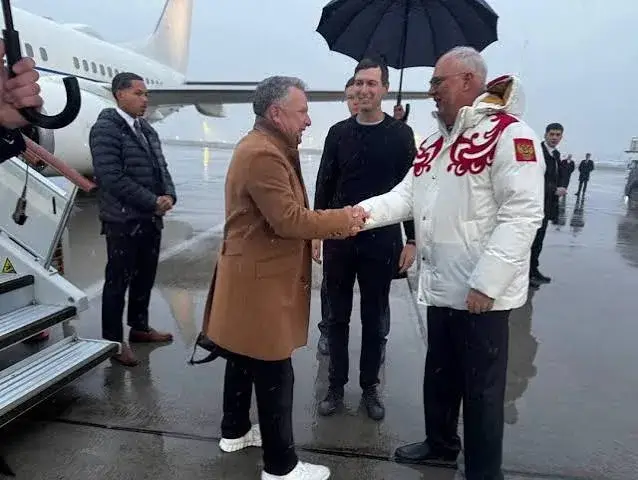
Xi greeted Trump at Shenzhen Bao'an International Airport. The two leaders shook hands and briefly embraced before walking together along the red carpet.
The welcome was more than ceremonial. It returned a gesture Trump had extended to Xi during the Chinese president's visit to Washington in September.
The arrival ceremony included military honours, flag-waving crowds and dancers. Trump had travelled to China after meetings in the Philippines.
But another encounter soon added to the significance of the day.
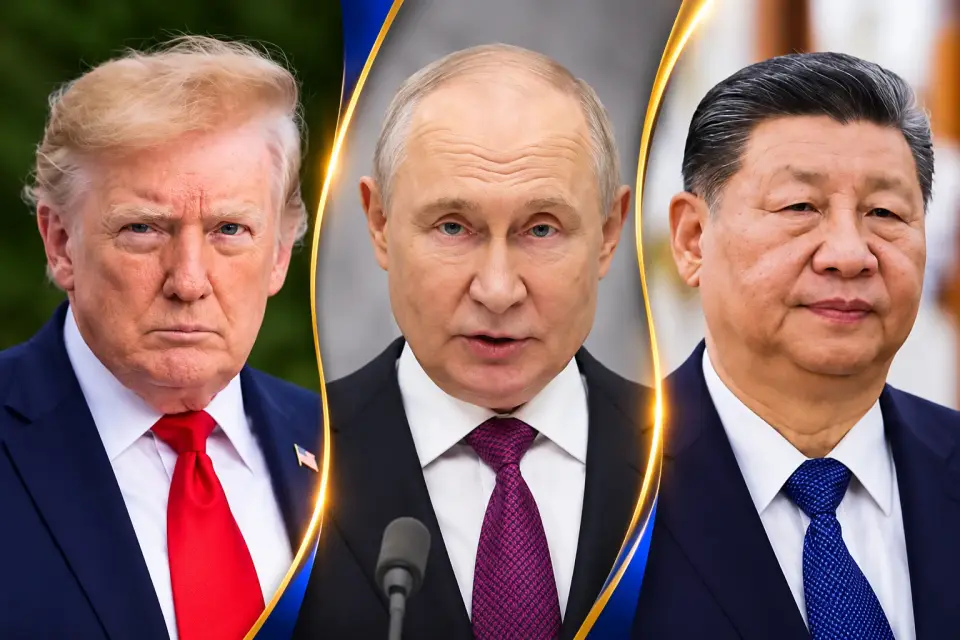
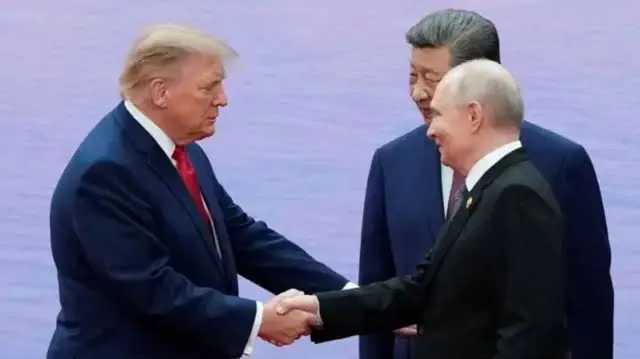
At the Asia-Pacific Economic Cooperation (APEC) gathering, Trump and Russian President Vladimir Putin shook hands as Xi watched. The three leaders were photographed together before the welcome banquet.
Their formal trilateral summit is scheduled for Thursday, November 19.
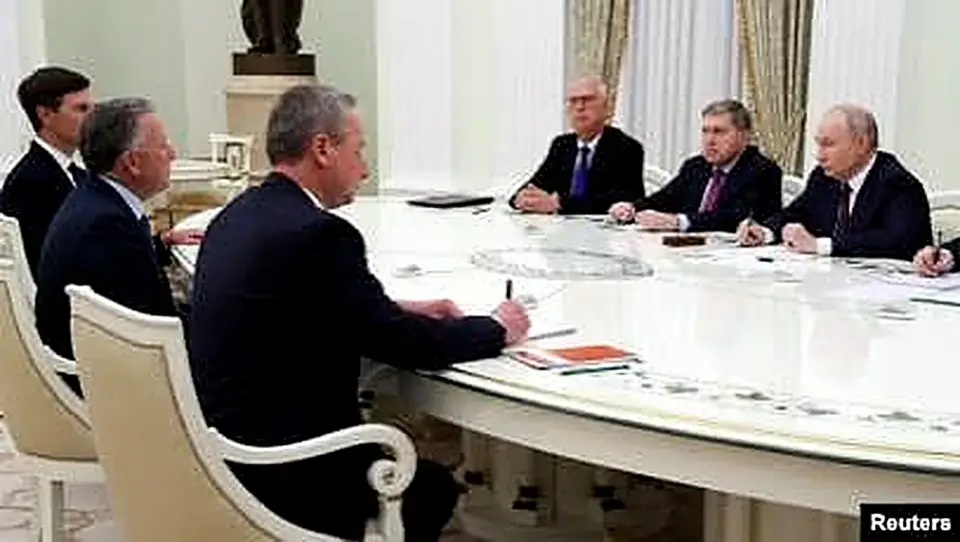
It will bring the leaders of the United States, China and Russia together for their first dedicated three-way summit. Although all three attended the wider G20 gathering in 2019, this meeting is different: it is specifically organised around talks among the three presidents.
What Trump, Xi and Putin could put on the table
The summit arrives at a moment of deep international tension.
The three countries hold enormous influence over global security, trade, technology and nuclear weapons. Their decisions can affect conflicts and economies far beyond their borders.
Nuclear arms control is expected to feature prominently.
Trump has expressed interest in reducing nuclear arsenals. US officials have described the meeting as an opening for discussions, rather than a session expected to produce an immediate agreement.
Iran is another potential subject. The United States is involved in the conflict, making regional security a significant concern for Washington.
Ukraine presents a more complicated diplomatic question.
US officials had previously indicated that Russia's war against Ukraine would not be a central subject of the trilateral meeting. Trump has since said he intends to raise the conflict with Putin and Xi.
That difference matters. Ukraine is directly affected by the war, yet its president, Volodymyr Zelenskyy, is not part of the three-leader meeting.
Other possible subjects include trade tensions, artificial intelligence and strategic competition.
China's Foreign Ministry has described the meeting as an opportunity for exchanges on world peace and strategic stability. It has not published a detailed agenda.
The White House, Kremlin and Chinese government have confirmed the planned gathering. However, the precise discussions and any possible agreements remain uncertain.
Xi and Putin send messages before Trump's arrival
Trump was not the only leader making diplomatic statements in Shenzhen.
Before his arrival, Xi addressed the APEC gathering and defended freer trade and investment. He criticised protectionism and called for greater international economic cooperation.
His remarks come amid tensions over US restrictions on China's access to advanced artificial intelligence chips. Beijing has warned that it could respond to measures affecting its technology sector.
Putin also used his APEC appearance to challenge Western economic pressure.
He criticised sanctions imposed on Russia over its invasion of Ukraine. He argued that the restrictions had failed to weaken his country.
The speeches offered an early indication of the issues surrounding Thursday's meeting. Washington, Beijing and Moscow may share an interest in strategic stability, but they approach trade, security and international conflicts from different positions.
The diplomatic choreography was also notable.
Xi personally greeted Trump at the airport, while Putin was received separately. The three leaders later appeared together at the APEC welcome events.
That sequence placed China at the centre of the diplomatic gathering. It also showed that the upcoming summit is not simply a meeting between Washington and Moscow, with Beijing watching from the sidelines.
Reuters+3
Why the meeting matters beyond the three countries
The planned summit has attracted attention because its participants have the power to influence major international disputes.
The United States remains a central military and economic power. China is a major global manufacturing and technology force. Russia retains a significant nuclear arsenal and continues its war against Ukraine.
A discussion involving all three governments could therefore carry consequences well beyond their borders.
But the meeting also raises a question about countries not represented at the table.
Ukraine is fighting a war against Russia. European governments have major security interests in its outcome. Iran is also central to regional tensions.
If the three leaders discuss these matters, their decisions or statements could affect countries that have no direct seat in the trilateral meeting.
Some observers have compared the gathering with the 1945 Yalta Conference. That meeting involved the United States, Britain and the Soviet Union discussing Europe's post-war settlement.
The comparison reflects concerns about powerful states negotiating arrangements that affect others. It should not be treated as proof that the Shenzhen meeting will produce a similar division of influence.
The political circumstances are different, and the outcome of Thursday's discussions is not yet known.
The world waits for Thursday's historic encounter
China's Foreign Ministry has officially scheduled the summit for November 19 in Shenzhen.
The meeting will take place alongside the 33rd APEC Economic Leaders' Meeting, which runs from November 18 to 19.
The leaders are expected to discuss major international issues. However, there is no confirmed guarantee of a joint agreement or breakthrough.
Trump's personal diplomacy will face a difficult test. Xi wants to protect China's strategic and economic interests. Putin wants to challenge Western pressure while defending Russia's position internationally.
Their interests may overlap on some issues. On others, their differences remain substantial.
For now, the handshake between Trump and Putin, watched by Xi, offers a striking preview of the diplomatic moment ahead.
Three powerful leaders are preparing to sit together. What they decide, what they disagree on and what they leave unresolved could matter far beyond Shenzhen.