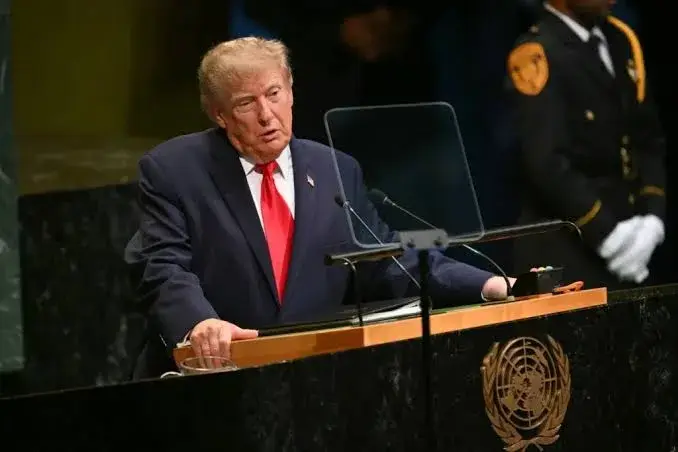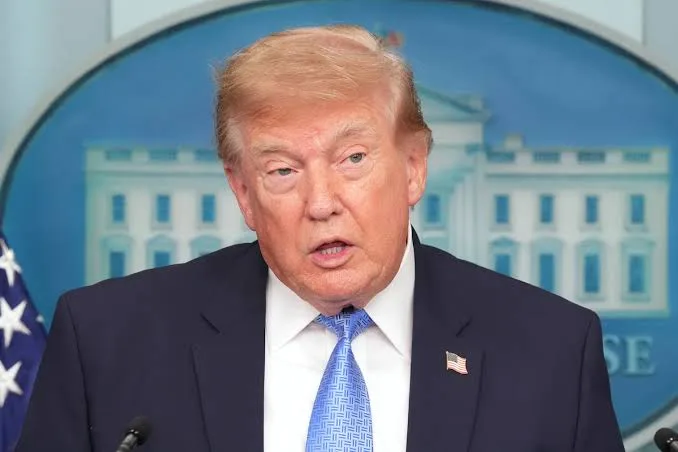
President Donald Trump on Sunday broke his public silence on the weekend’s nationwide flight disruption, blaming former President Joe Biden’s administration for failing to modernize the nation's air traffic control network.
Writing on his social media platform Truth Social, Trump demanded that Congress immediately approve massive funding for a comprehensive rebuild. He insisted that the federal government must replace aging technology all at once rather than continuing gradual upgrades.
The comments follow a rare nationwide ground stop ordered by the Federal Aviation Administration (FAA) on Friday. The outage halted domestic departures for roughly four hours, cascading into weekend flight cancellations and leaving thousands of passengers stranded across major US airports.
The federal aviation network handles more than 45,000 flights daily. Any total system shutdown raises immediate economic and national security concerns.
Truth Social Attack and the 50-Year Legacy Problem
In his public statement, Trump sharply criticized the previous administration’s handling of aviation infrastructure spending.
"The Biden Administration was an FAA disaster. Everything they touched turned bad," Trump wrote. "Big money spent unwisely, making an old and broken system worse than when they began."
The president argued that large portions of America's flight tracking and routing systems date back fifty years. He maintained that piecemeal repairs can no longer keep skies safe and reliable.
"If Congress approves the desperately needed money for Air Traffic Control, we can get it built quickly and efficiently," Trump added. "It will be the BEST SYSTEM anywhere in the World. We have already started the work, but it should be done all at once, not in drips and drabs."
The Router Failure That Triggered the Ground Stop
Friday's nationwide ground stop was only the third time in modern history that federal regulators suspended nearly all US flight departures simultaneously.
Federal investigators traced the disruption to routine technical maintenance conducted by federal defense contractor L3Harris Technologies. Technicians were replacing old copper telecommunications lines with high-speed fiber-optic connections at a remote facility.
During that maintenance, a newly installed network router overloaded critical communications lines. The error triggered intermittent failures across radar displays and voice communications between air traffic controllers and pilots.
Controllers could not reliably confirm flight paths or maintain required separation distances in several busy airspaces. Federal regulators halted departures nationwide until engineers stabilized data streams.
Duffy’s $50 Billion Pitch and Congressional Scrutiny
The Trump administration quickly turned the technical failure into a legislative push for major federal capital investments.
US Transportation Secretary Sean Duffy warned that legacy equipment will suffer catastrophic failures without a complete structural replacement. Duffy estimated the full modernization project will cost approximately $50 billion.
"Let’s not do a patchwork fix to a system that’s critical for every single family," Duffy said during an agency briefing. Duffy confirmed plans to submit a formal emergency funding proposal to congressional leaders on Monday.
House Speaker Mike Johnson signaled support for increasing federal investment, noting that several core facilities rely on hardware dating back to the 1980s. Johnson dismissed calls for punitive congressional investigations into the contractor, urging lawmakers to focus on upgrading equipment instead.
Unresolved Political Battles Over Aviation Modernisation
Despite bipartisan agreement that aviation technology needs upgrading, the administration's demands face intense scrutiny on Capitol Hill.
Congressional Democrats pointed out that the 2021 Bipartisan Infrastructure Law and the 2024 FAA Reauthorization Act already directed tens of billions of dollars toward air traffic control facilities, controller hiring, and technical modernization.
FAA Administrator Bryan Bedford previously confirmed the agency had already received $12.5 billion earmarked specifically for modernization programs. Lawmakers from both parties are asking why existing capital allocations did not prevent Friday's contractor-induced router failure.
Budget analysts also question whether the FAA can effectively absorb and spend an additional $50 billion all at once without triggering supply chain backlogs and project delays.
Congress will begin reviewing Secretary Duffy's formal funding package early this week as federal regulators continue auditing contractor maintenance protocols across all regional control centers.