
ProTaxi Launches Electric Ride-Hailing Service in Abuja, Targets 1,000 Drivers
Nigerian mobility company PromiseLand Innovations has launched ProTaxi in Abuja with electric vehicles, while targeting 1,000 drivers and families in a major push into the country’s emerging EV ride-hailing market.
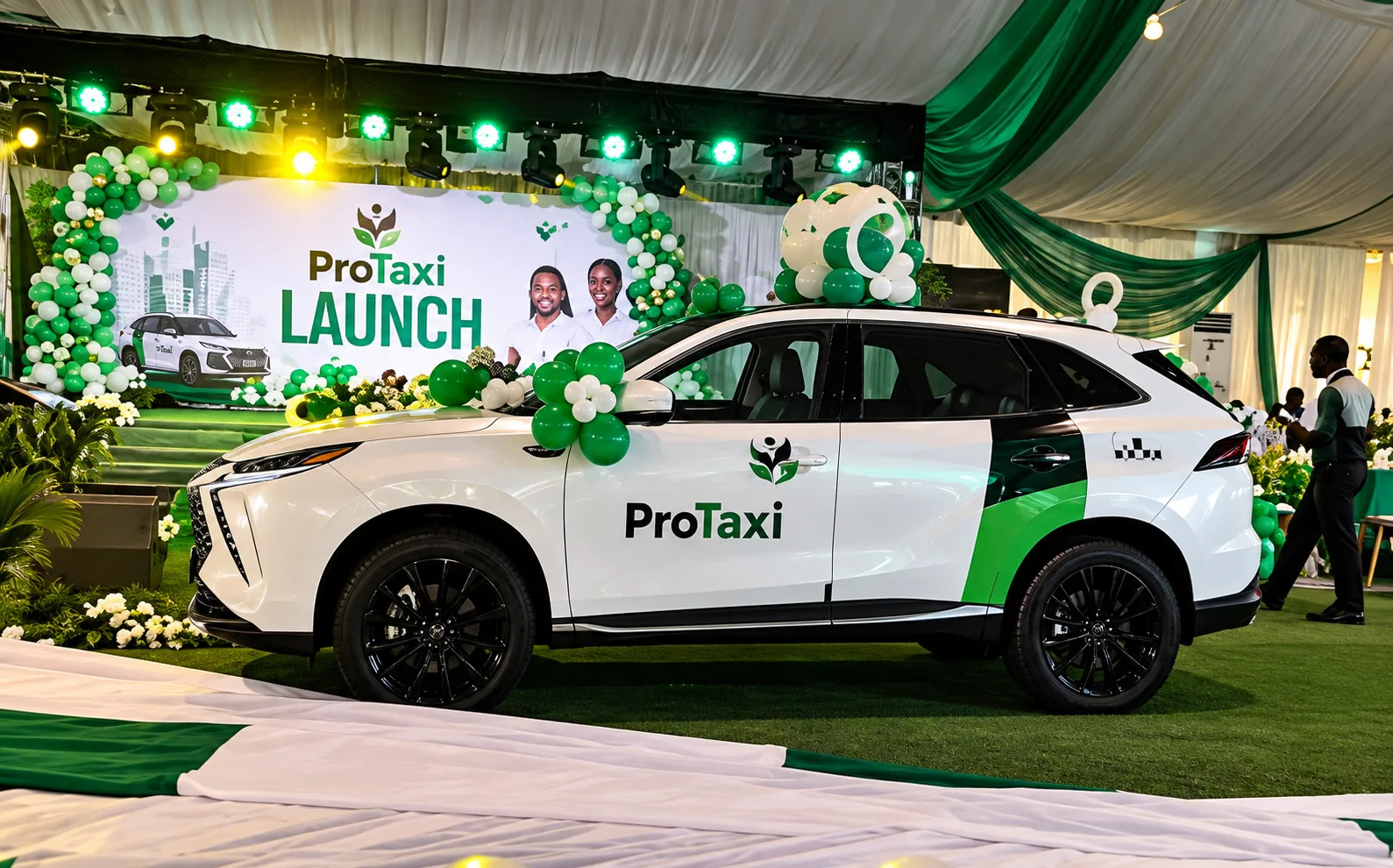
Nigeria’s ride-hailing market has gained a new local player as PromiseLand Innovations officially launched ProTaxi in Abuja on Thursday, introducing an electric-vehicle-focused service as the country looks for alternatives to petrol-powered transportation.
The launch, held on October 1, Nigeria’s Independence Day, marks ProTaxi’s entry into the competitive e-hailing sector. The company says its initial operations will focus on Abuja before expanding to other parts of Nigeria.
A central part of the initiative is a plan to empower 1,000 drivers or families with new electric vehicles. PromiseLand says prospective drivers will have to register and go through screening, verification and onboarding before participating. Earlier announcements described the programme as an effort to create income-generating opportunities for Nigerians, including people who may not previously have worked as commercial drivers.
Speaking at the launch, PromiseLand Innovation Chief Executive Officer Ambassador Emmanuel Lawrence Oloche said the idea behind ProTaxi was connected to the organisation’s broader ambition of using innovation and technology to help ordinary people improve their livelihoods.
Oloche said PromiseLand Innovation was founded on the belief that a person’s circumstances should not determine their future, arguing that access to the right tools, opportunities and environment could help transform people’s lives.
Introducing ProTaxi, he said the platform was designed to be more than another e-hailing service. According to Oloche, the company wants the platform to create economic opportunities for drivers and, by extension, support the families and communities that depend on their income.
“Today, we introduce a ProTaxi that is not just another e-hailing application. It is a platform that creates opportunity and changes destiny,” he said.
Oloche said every journey booked through the platform represents more than a passenger travelling from one location to another. Behind each trip, he noted, is a driver whose income may contribute to paying a child’s school fees, covering rent and meeting other household needs.
He said the company's ambition was therefore to create opportunities for thousands of drivers, with the potential impact extending beyond individual participants to their families and wider communities. “When we create opportunities for thousands of drivers, we are not watching families, but we are reshaping communities,” he said.
The company is positioning ProTaxi as more than another ride-booking application. Its model combines app-based transport with rechargeable electric vehicles, with the stated aim of reducing drivers’ exposure to petrol costs while making urban transportation more affordable and environmentally friendly.
For passengers, the platform provides ride booking, location services, multiple payment options, trip information and electronic receipts. ProTaxi also advertises driver verification, real-time trip tracking, ratings and reviews, as well as the ability for passengers to share their live location with family or friends.
Oloche also framed the launch as part of a larger African technology ambition. He said PromiseLand Innovation intends to build an African technology company capable of transforming everyday life and eventually competing with major technology companies globally.
The timing is significant for Nigeria’s transport industry. The removal of petrol subsidies in 2023 dramatically changed the economics of road transportation, increasing operating costs for drivers and contributing to higher fares. Ride-hailing operators have consequently faced a market in which fuel expenditure is one of the most important costs associated with each trip.
Electric vehicles offer a potential alternative, particularly for high-mileage commercial drivers. Electricity can be cheaper than petrol on a per-kilometre basis, while EVs generally have fewer moving parts and lower routine maintenance requirements. Those potential savings, however, depend heavily on reliable access to electricity and charging infrastructure.
That remains one of Nigeria’s biggest obstacles to widespread electric mobility. Reuters reported in August that nearly 4,000 electric vehicles had been approved for import in the first half of 2026, but the country’s electricity system and charging network remain underdeveloped. The report noted that Nigeria’s national grid supplies roughly 4,000 megawatts for a population of more than 200 million, while the country had only about 48 public EV charging stations by late 2025.
For an e-hailing business, the challenge is particularly important because vehicles may spend most of the day on the road. Charging downtime, the location of charging points and the reliability of the electricity supply can directly affect how many trips a driver can complete and, ultimately, how much the driver earns.
ProTaxi is entering the market as Nigeria’s federal government is also expanding its support for electric mobility. In March, President Bola Tinubu approved the expansion of the Presidential Initiative on Compressed Natural Gas to include electric vehicles, giving the programme responsibility for supporting EV deployment, charging infrastructure and related investments nationwide.
The government’s broader Energy Transition Plan envisages a gradual shift toward electric mobility, with a target of 100% electric vehicles in Nigeria’s transport system by 2060. The plan also identifies the development of charging infrastructure as an important part of that transition.
There are already early signs of that policy shift. The federal government’s Pi-CNG & EV programme says it has deployed electric buses and vehicles alongside CNG-powered transport, while a Northern CNG and EV corridor launched in Kano in May included seven electric vehicles and 200 CNG-powered tricycles.
ProTaxi’s approach is different because it puts electric vehicles directly into the commercial ride-hailing market. That could provide a practical test of whether EV economics can work for drivers who depend on their cars for income rather than simply using electric vehicles as private cars.
The company will also have to compete for both drivers and passengers in a market where established ride-hailing platforms have already built large user networks. ProTaxi's advantage will therefore depend not only on its electric fleet but on factors such as vehicle availability, fares, charging arrangements, driver earnings, safety and the reliability of the technology.
Oloche said the vision behind ProTaxi extends beyond Nigeria, describing the project as part of PromiseLand Innovation’s effort to build an African technology company with global ambitions. He also described the launch as another step toward the organisation’s goal of using innovation to create opportunities for families to earn a living and improve their circumstances.
The 1,000-vehicle target should also be understood as a company-announced programme rather than a claim that 1,000 EVs are already operating on Abuja’s roads. The company has announced the target and opened registration, but participation remains subject to screening and onboarding.
For Nigeria’s transport sector, ProTaxi represents a useful test of whether electric mobility can move beyond pilot projects and government-backed buses into everyday commercial transportation. If the company can make EV ride-hailing financially workable for drivers while maintaining reliable charging and affordable fares, it could offer a model for wider adoption. The larger question is whether Nigeria can build the electricity and charging infrastructure needed to support that transition at scale. ProTaxi has put 1,000 vehicles at the centre of its ambition; the real measure of success will be whether those vehicles can stay on the road, earn for their drivers and give passengers a dependable alternative to petrol-powered transport.

Transport Aviation
Dubai Trials AI-Powered Electric Pods That Run on Dedicated Tracks
11 Oct 2026
Transport Aviation
Lagos Begins Diesel Bus Phase-Out, Targets Fully Electric Fleet
4 Oct 2026

Transport Aviation
Dubai Airport Launches Five-Minute International Driving Licence Service
14 Sept 2026

Transport Aviation
Dubai Changes Speed Limits on Five Major Roads From November 1
23 Oct 2026

Transport Aviation
Mayday Call After Private Jet Loses Door Shortly After Take-Off in Abuja
16 Oct 2026
Partner with Follow Global Trends
Display banners, sponsored stories and founder spotlights.
You may also like

Transport Aviation
Abuja Rail Network to Connect Kaduna, Zaria, Kano, Daura and Katsina
16 Sept 2026

Transport Aviation
Emirates Signs Seven Tourism Partnerships at Arabian Travel Market 2026
14 Sept 2026

Transport Aviation
Nigeria’s Vehicle Imports Surge 146% to ₦1.18tn in H1 2026 as Transport Import Bill Soars
13 Sept 2026
Transport Aviation
Tesla’s Rocket-Powered Roadster Arrives on UAE Booking List, With a Catch
20 Oct 2026
Transport Aviation
UK Cracks Down on Loud Music on Public Transport With Fines
19 Oct 2026

Transport Aviation
Airlines Cancel Saudi Arabia Flights After Deadly Attacks on Riyadh Airport
13 Oct 2026